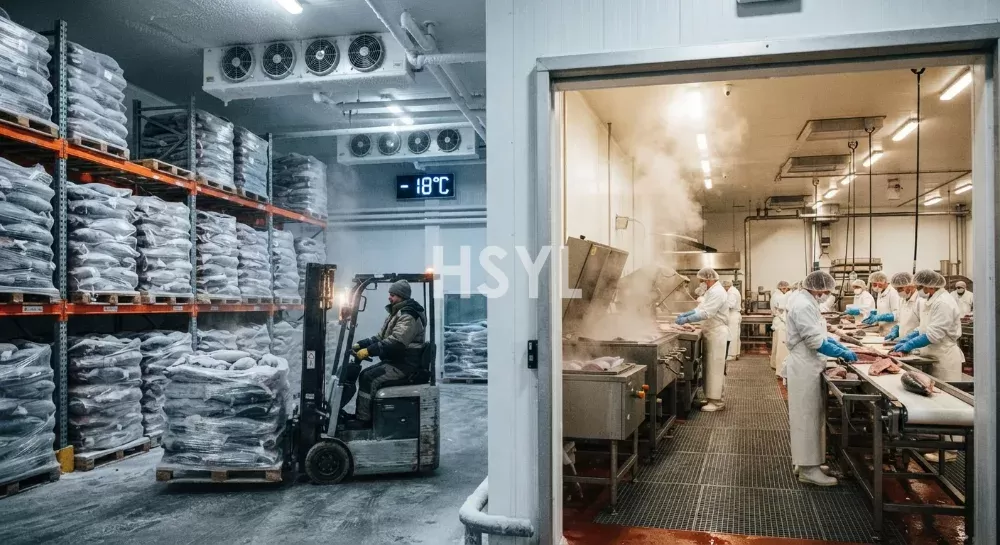
Seasonal Fish Canning: Cold Storage, Multi-Species Rotation and Year-Round Line Utilization
Direct AnswerThe most expensive asset in a fish cannery is not the retort or the...

Model 126 Fish Membrane Cleaning Machine, 40 fish/min, 3kW 3-phase, CE certified. Built for salmon and trout processing lines. Request layout & quote.
The Model 126 Fish Membrane Cleaning Machine is designed for continuous removal of residual membrane and connective tissue from fresh or semi-thawed fish during primary processing. In salmon and trout operations, incomplete membrane cleaning affects surface appearance, trimming efficiency, and downstream portioning accuracy. The Model 126 ensures stable throughput while maintaining product integrity and yield control.

| Parameter | Details |
|---|---|
| Model | Model 126 |
| Capacity | 40 fish/minute (Fresh / Semi-Thawed) |
| Power | 3 kW, 380V, 3-Phase (Voltage Customizable) |
| Dimensions | 2500 × 1220 × 1330 mm |
| Weight | 280 kg |
| Compatible Fish | Trout, Salmon, Pink Salmon, and similar medium-sized species |
High-Speed Continuous Processing + Stable Line Throughput: With a verified processing rate of 40 fish per minute, the Model 126 supports medium- to large-scale seafood plants operating multiple parallel lines. The 3 kW drive system provides sufficient torque for consistent membrane removal without speed fluctuation.
Precision Roller & Blade Assembly + Yield Protection: The membrane removal mechanism combines a pressure roller with a hardened stainless steel blade system. Adjustable compression allows operators to optimize contact pressure based on fish size and condition, minimizing flesh loss while achieving clean surface finish.
Washdown-Ready Hygienic Structure + Reduced Downtime: The open-frame stainless steel construction supports high-pressure sanitation routines in accordance with HACCP-oriented plant standards. Quick-access components reduce cleaning time and simplify daily inspection.
Heavy-Duty Transmission + Long-Term Reliability: Equipped with industrial-grade bearings and sealed transmission components, the machine maintains stable performance under continuous 8–12 hour production shifts. The 3-phase motor configuration ensures electrical stability in high-load environments.
Within a complete salmon processing workflow, the Model 126 is typically positioned downstream of primary processing equipment such as the Fish Skinning Machine, and upstream of portioning systems like the Fish Fillet Cutting Machine. This configuration ensures uninterrupted material flow and consistent product grading.
The Model 126 operates using controlled mechanical traction between a driven pressure roller and a stationary scraping blade. As fish pass through the processing zone, residual membrane and connective tissue are gripped and separated through differential friction.
The 3 kW motor transmits power through a reduction gearbox designed to provide stable low-speed torque output. This ensures smooth handling of both fresh (0–4°C) and semi-thawed fish without tearing or excessive deformation.
The frame is fabricated from stainless steel structural tubing with reinforced support legs to minimize vibration. Critical rotating components are supported by sealed bearings to prevent moisture ingress during washdown. Electrical controls include overload protection and emergency stop functions to comply with industrial safety practices.
In salmon processing plants handling 2,000–2,400 fish per hour per line, the Model 126 maintains consistent membrane cleaning performance when product core temperature is controlled between -1°C and 4°C. For trout and pink salmon operations, tension settings can be adjusted to accommodate varying muscle firmness.
The machine can be integrated into turnkey seafood processing lines, connecting with grading conveyors, trimming stations, and automatic weighing systems. In larger facilities, multiple units are arranged in parallel to balance production flow and eliminate bottlenecks.
HSYL engineering teams provide layout optimization to ensure ergonomic operator positioning, correct drainage slope, and logical workflow alignment within wet processing zones.
Hongsheng Yuanlin (HSYL) manufactures industrial seafood processing equipment under CE compliance standards. Fabrication follows structured quality control procedures, and product-contact surfaces are polished to meet food processing hygiene requirements.
We provide OEM and ODM customization, including voltage adaptation (220V/380V/415V), material upgrades, and integration with automated conveying systems. Detailed 2D layout drawings and workflow simulations are available during project planning.
Our team supports overseas installation and commissioning. Standard wear parts such as blades and rollers are designed for easy replacement and global shipment, ensuring minimized downtime for international clients.


Direct AnswerThe most expensive asset in a fish cannery is not the retort or the...
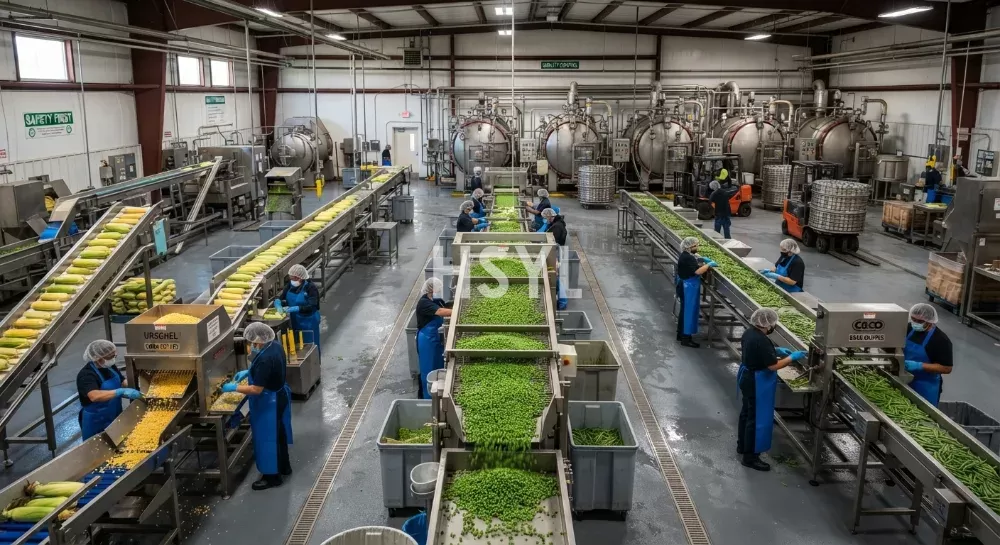
Low-acid canned vegetable processing line for corn, peas, and green beans. Press...
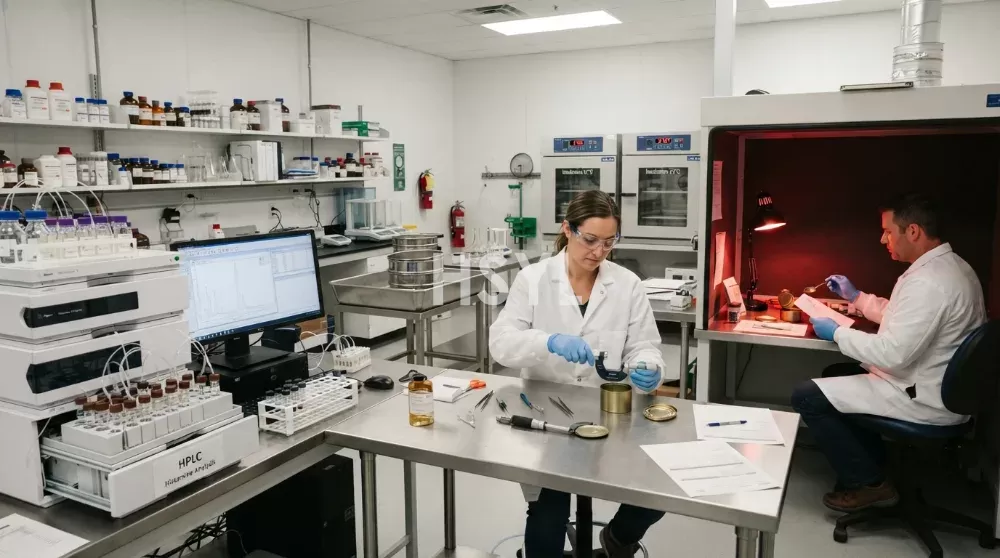
Complete sardine and mackerel canning line: heading and gutting automation, can ...
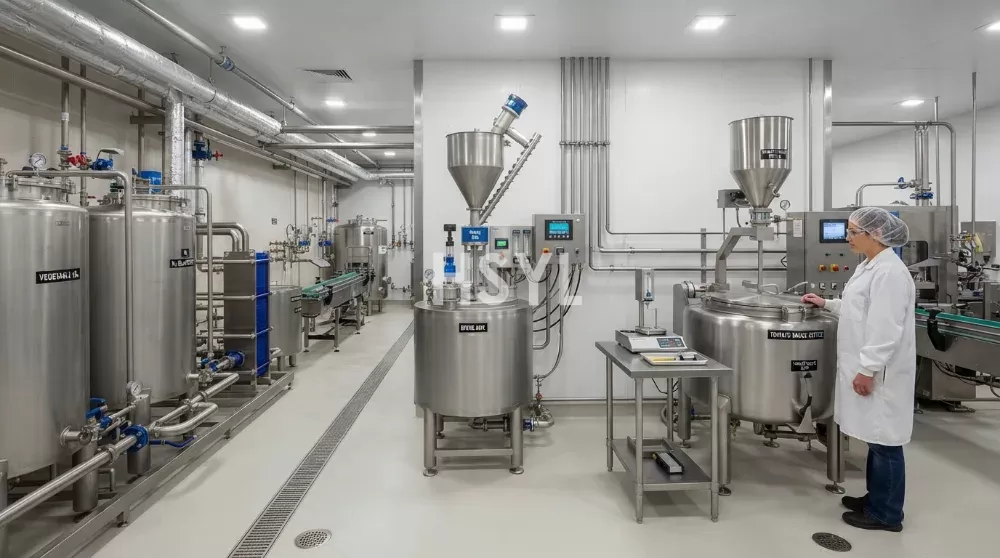
The filling medium — the liquid that fills the void spaces between the fish piec...