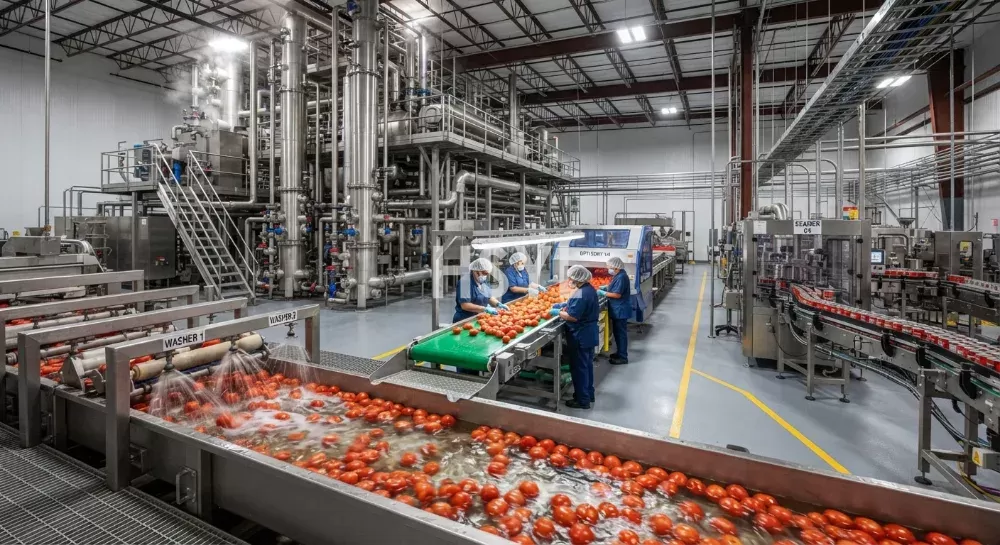
Tomato Products Canning Line: Paste, Whole Peeled, Diced and Sauce Processing
Complete tomato products canning line covering tomato paste, whole peeled tomato...


High-capacity wet pet food canning line engineered for chunks in gravy and pâté formulations. Features F0 thermal control, vacuum filling, and SUS304 construction. Request a turnkey layout.
Managing a commercial-scale wet pet food canning operation requires strict thermal control and uninterrupted seaming mechanisms to maintain commercial sterility. High-viscosity meat emulsions and chunk-in-gravy formulations frequently present challenges regarding air pocket entrapment and inconsistent dosing weights. The Al-Series dog food canned production line addresses these mechanical bottlenecks by integrating micro-pressure vacuum filling technology with synchronized double-seaming architecture, ensuring high-speed output while meeting HACCP and USDA hygiene standards.
The following parameters represent the standard operational capabilities of our core industrial models. Dimensions and utility consumptions are strictly calculated based on continuous 8-hour shift deployments.
| Model | Dimensions (mm) | Capacity (kg/h) | Gas Consumption (kcal/h) | Electric Power (kW/380V) | Gas Caliber | Water Caliber | Drainage Caliber |
|---|---|---|---|---|---|---|---|
| Al-300 | 15520 x 4015 x 3435 | 300 | 129,000 | 33.2 | DN50 | DN20 | DN50 |
| Al-450 | 18000 x 4000 x 3145 | 450 | 180,600 | 49.5 | DN50 | DN20 | DN50 |
| Al-600 | 19500 x 4000 x 3537 | 600 | 296,700 | 52.5 | DN50 | DN20 | DN50 |
Pet food formulations differ vastly from human-grade liquids, requiring specialized mechanical handling to prevent the degradation of meat fibers during the extrusion and canning phases.
The core of this production line relies on the synchronization between the filling carousel, the seaming station, and the sterilization retort. Once the cans receive the predetermined volume of meat paste and gravy, they are immediately transferred via a star-wheel mechanism into the double seamer. This station utilizes titanium-coated rollers to fold and hermetically seal the lid to the can body at speeds exceeding 150 cans per minute, depending on the chosen model capacity.
Following the seaming process, the sealed units are automatically loaded into the thermal processing module. The Siemens PLC actively monitors the internal temperature and pressure, calculating the precise F0 value required to destroy Clostridium botulinum spores while preserving the nutritional profile of the dog food. Servo-driven motors dictate the pace of the modular conveyor, ensuring that no single can is exposed to excessive thermal load.
Space optimization and utility management are critical when installing a 600 kg/h production line. The Al-600 model, measuring 19.5 meters in length, is engineered with a linear layout that minimizes the required footprint while allowing operators unobstructed access to critical maintenance nodes. For facilities handling deep-frozen raw materials at -5℃, the mechanical load on the mixing and filling stations is substantially higher. We compensate for this by equipping the line with heavy-duty gearboxes and reinforced pneumatic cylinders.
Furthermore, because pet food canning is an energy-intensive process, the integration of specialized thermal equipment is necessary. We routinely configure this line to feed directly into an industrial retort sterilizer, creating a true turnkey solution that manages the product from raw meat emulsion down to the final washed and dried commercial can.
Every component that makes direct contact with the pet food is fabricated according to European CE and American USDA directives. The welds are argon-arc polished to eliminate microscopic crevices where pathogens might accumulate. Before any equipment is crated for international shipping, it undergoes a rigorous Factory Acceptance Test (FAT) using simulated high-viscosity materials to verify the 296,700 kcal/h gas consumption metrics and the 52.5 kW electrical load distribution.


Complete tomato products canning line covering tomato paste, whole peeled tomato...
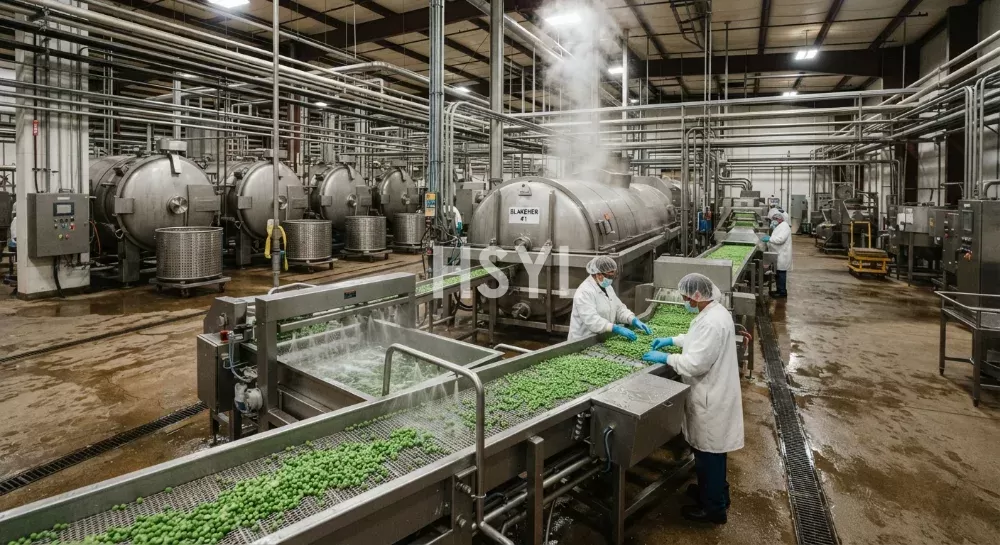
Complete canned vegetables production line guide covering raw material receiving...
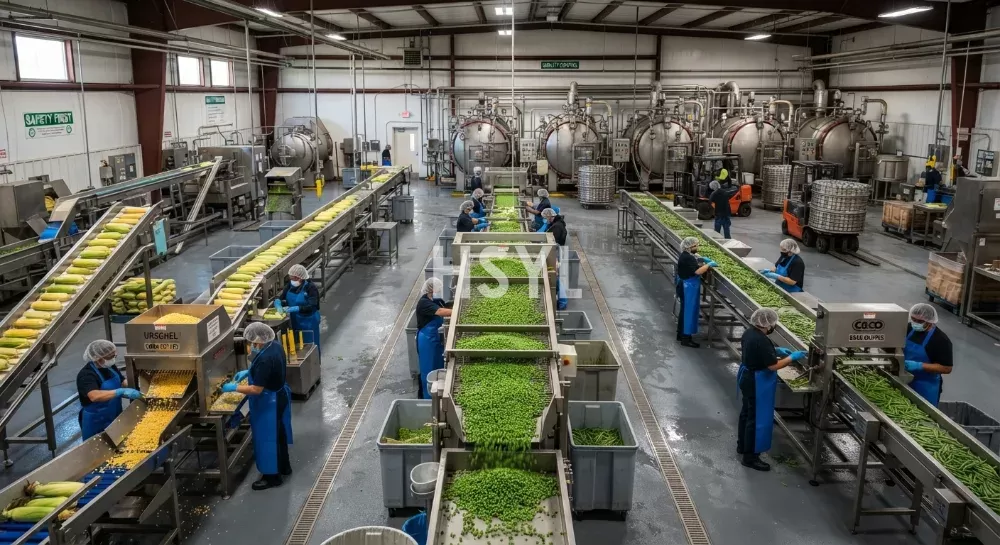
Low-acid canned vegetable processing line for corn, peas, and green beans. Press...
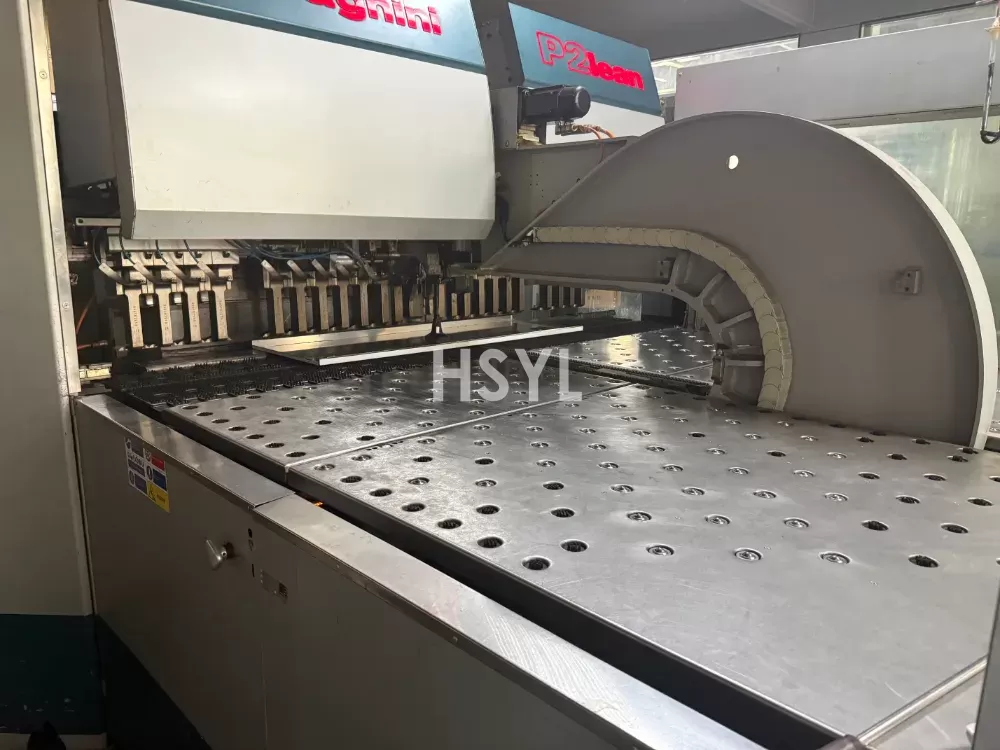
Learn how automated bending equipment improves precision, consistency, productio...