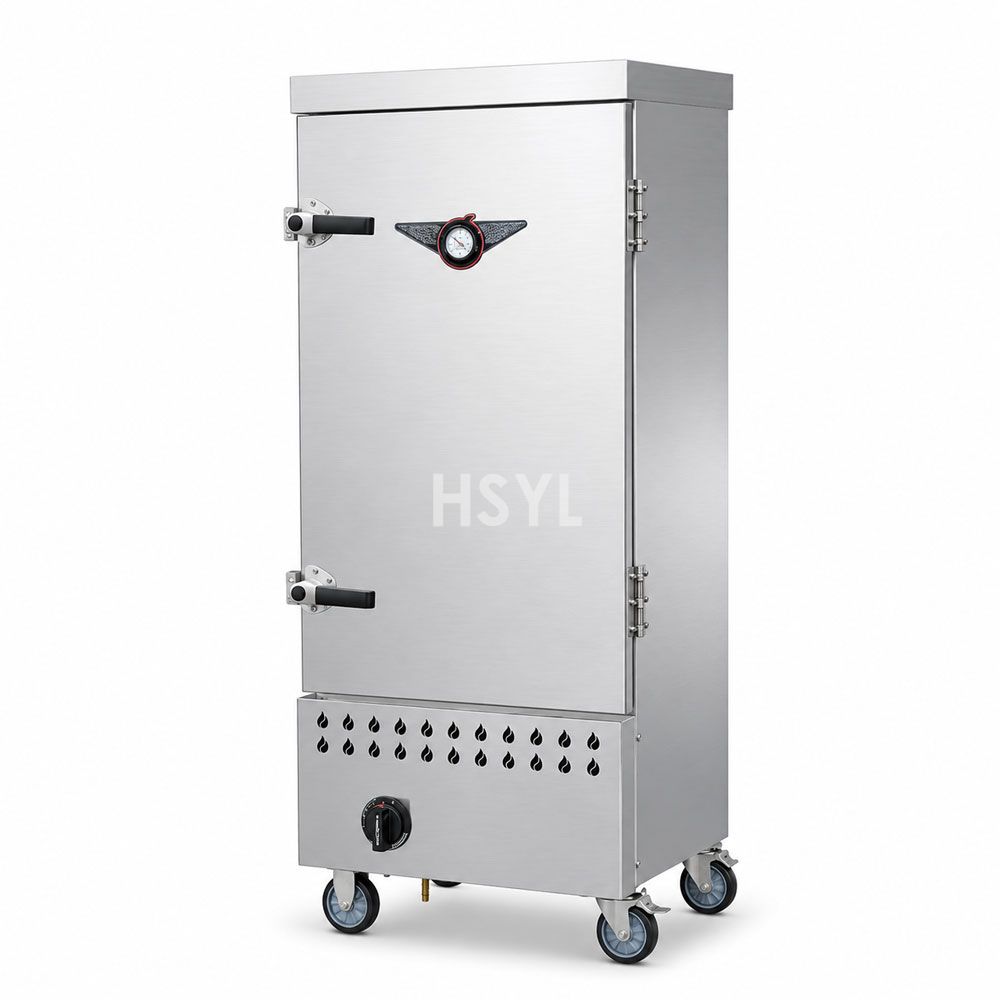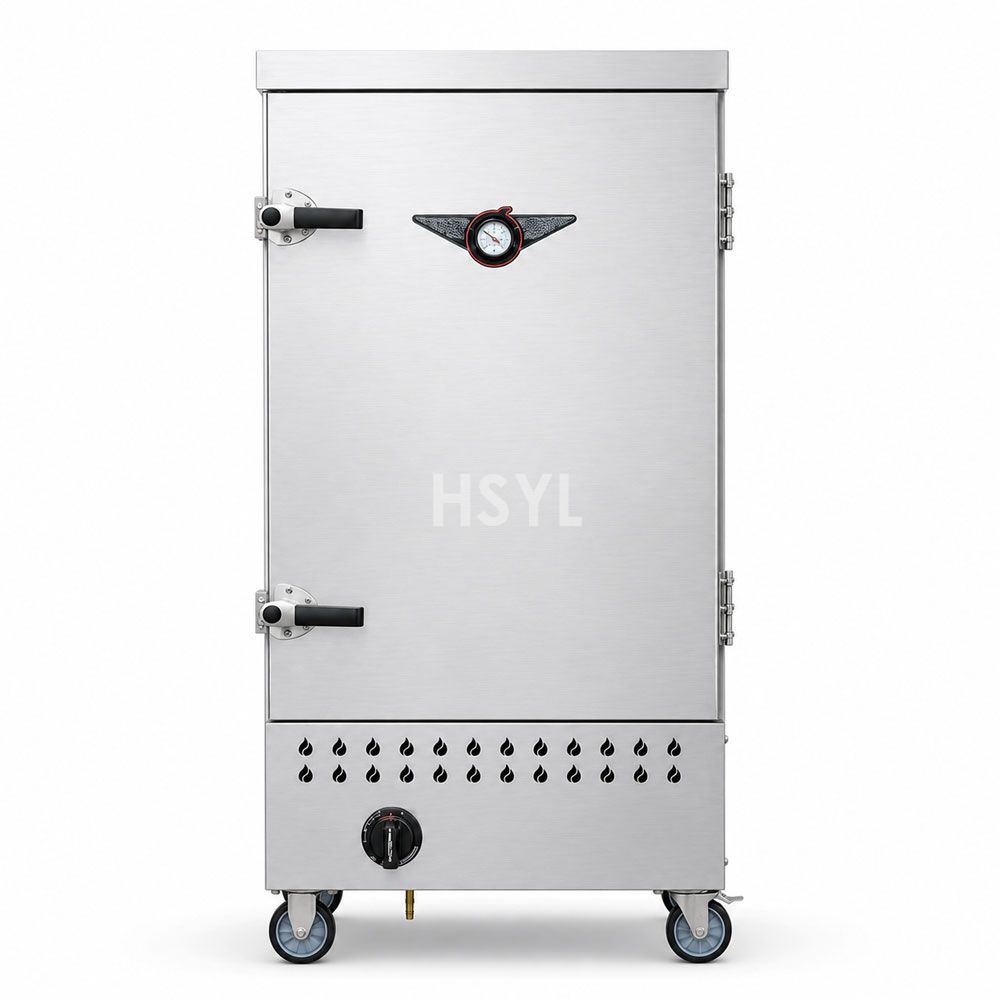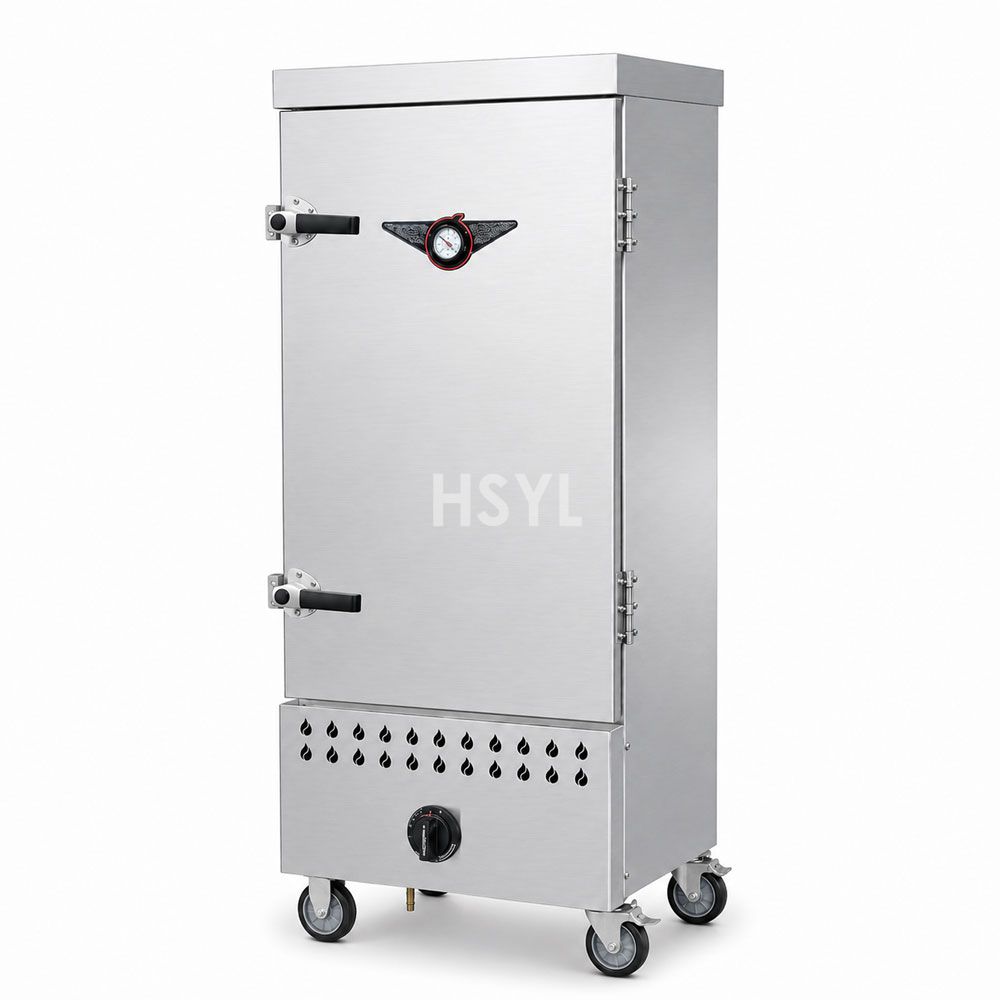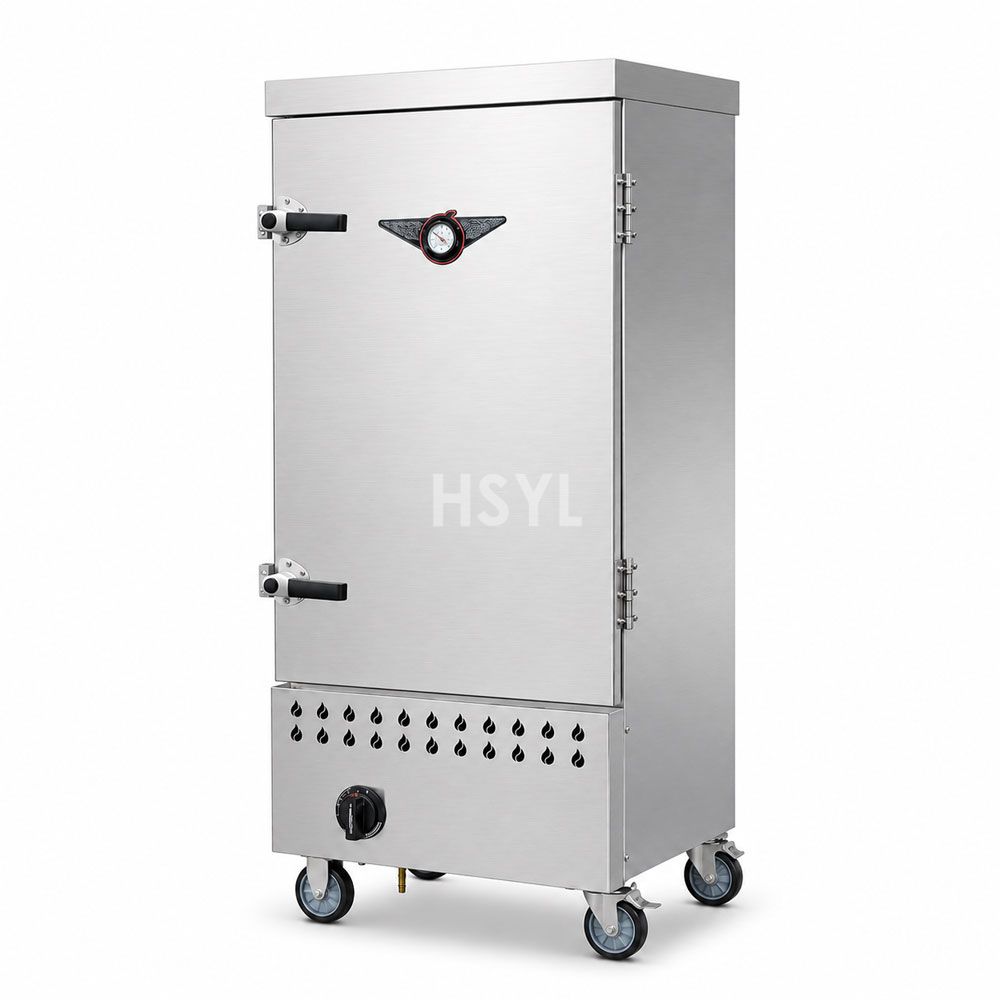
Gas Steamer Cabinet (CNG/LPG) — Dual-Fuel Commercial Steaming Equipment

HSYL EB-CNGS Gas Steamer Cabinet runs on natural gas or LPG with flame-out protection and rotary electronic ignition. 6 to 36V tray models for restaurants, canteens, and hotels seeking fuel-flexible commercial steaming equipment.

Detailed Equipment Introduction
Gain in-depth insights into Gas Steamer Cabinet (CNG/LPG) — Dual-Fuel Commercial Steaming Equipment equipment’s working principles, application scenarios, and technical highlights.

Product Introduction

The HSYL EB-CNGS Gas Steamer Cabinet represents the only gas-powered option within the HSYL steamer cabinet portfolio — engineered for commercial kitchens where natural gas or liquefied petroleum gas (LPG) is the preferred or more economical energy source compared to electricity. Unlike its electric-powered siblings — the Economic Steamer Cabinet (electric boiler only), the Intelligent Steamer Cabinet (hybrid external steam plus electric boiler), and the Automatic Steamer Cabinet (fully automated electric) — the EB-CNGS generates steam directly through gas combustion, eliminating dependency on electrical heating elements or facility steam infrastructure.

This fuel-type differentiation delivers tangible value in three common scenarios: kitchens with limited electrical panel capacity but adequate gas supply lines; facilities in regions where natural gas costs significantly less per unit of energy than grid electricity; and operations that want to diversify their energy sources so that a single utility outage does not halt all cooking equipment. For buyers planning a comprehensive commercial kitchen equipment solution, the EB-CNGS fills the gas-side gap in what would otherwise be an all-electric steaming lineup.

The series covers 7 models from compact 6-tray units suitable for small restaurants and snack bars up to 36-tray vertical configurations designed for high-volume institutional canteens and central kitchens. Every model supports dual-fuel operation — configurable for either natural gas or LPG at installation — and incorporates a flame-out gas cut-off protection device that automatically stops gas flow if the burner extinguishes unexpectedly, making it one of the safest gas-powered steaming solutions in its category.

Technical Specifications

ModelTraysCabinet Size (W×D×H, mm)Air InletsGas ConsumptionNozzle Caliber (mm)CapacityWater Input PressureGas Input PressureTray SizeGas TypeNet Weight
EB-CNGS-66695 × 660 × 124511.1 m³/hour1.034KG / Tray≤4 kPaNatural gas: 2000 Pa400 × 600 × 50 mmLiquid gas / Natural Gas36 kg
EB-CNGS-88695 × 660 × 141511.1 m³/hour1.0343 kg
EB-CNGS-1010695 × 660 × 158511.1 m³/hour1.0347 kg
EB-CNGS-1212695 × 660 × 175511.1 m³/hour1.0352 kg
EB-CNGS-24241400 × 660 × 175522.2 m³/hour1.0396 kg
EB-CNGS-24V (Vertical)121000 × 860 × 175522.2 m³/hour0.9584 kg
EB-CNGS-36V (Vertical)241580 × 860 × 175533.3 m³/hour0.95145 kg

Note: Gas consumption values are rated at nominal operating conditions. Actual consumption varies with water temperature, ambient conditions, and loading density. For LPG installations, confirm local regulator pressure requirements — the specification sheet lists natural gas input pressure at 2000 Pa; LPG equivalent to be confirmed per regional standard.

Working Process

The EB-CNGS converts gas combustion heat into saturated steam inside an integrated boiler chamber, delivering consistent steaming performance through four operational stages:

  1. Ignition & preheat. Turn the rotary electronic ignition switch — the pull-out ignition device activates the pilot flame, which lights the main burner(s). The gas cut-off protection device monitors flame presence from this moment onward. Water enters via the AUTOFFILL system and heats to steam temperature within the insulated chamber (3cm overall foaming layer minimizes heat loss during this phase). Preheat time is typically shorter than electric boilers because gas combustion delivers higher immediate heat flux.
  2. Loading & steaming. Open the door, load food trays onto the rack guides, close and latch the door (the new multiple-airbag embedded silicone seal ensures steam-tight closure). Set the mechanical timer or temperature controller to the desired duration. Steam circulates evenly around all tray positions. The six-bolt large hinge and双侧 supporting ribs maintain door alignment and cabinet geometry even under repeated thermal cycling.
  3. Cycle completion & unloading. When the timer ends, open the door carefully allowing residual steam to vent downward and away from the operator. Remove trays using heat-resistant gloves and transfer to the next station — such as a griddle or frying station for finishing, or to a chilled prep area for cook-chill workflows. The SUS304 electric heating pipe (for auxiliary functions) and pure copper vapor cap ensure consistent vapor quality cycle after cycle.
  4. Reset & maintenance. Wipe down the chamber interior. Check the water tank level — the detachable and replaceable water tank design allows quick inspection, cleaning, or swapping without tools. Inspect the flame condition through the sight port before the next cycle. The brake silent wheels (on mobile-configured units) allow repositioning for cleaning access or end-of-shift storage.

Applications by Industry & Food Type

What Can You Steam? — Complete Food Compatibility List

The HSYL EB-CNGS Gas Steamer Cabinet handles an exceptionally wide range of foods, making it a true multi-functional kitchen workhorse:

Food CategorySpecific ItemsSteaming Benefit
Rice & GrainsWhite rice, brown rice, sticky rice, glutinous rice, milletFluffier texture; more even cooking than rice cookers
Dim Sum & DumplingsSiu mai, har gow, char siu bau, dumplings (all varieties), baozi, xiaolongbaoProfessional restaurant-quality results; consistent across batches
SeafoodWhole fish, fish fillets, shellfish (clams/mussels), crab, lobster, prawns, scallopsPreserves natural moisture and flavor; no oil needed
Bread & Baked GoodsSteamed bread (mantou), steamed buns, bao, cornbreadSoft, moist texture; no dry crust
VegetablesCorn on cob, potatoes (all types), broccoli, cabbage, carrots, leafy greens, pumpkinNutrient-preserving; retains color and vitamins better than boiling
Meat & PoultryChicken (whole/pieces), pork ribs, beef brisket, meatballs, sausagesTender results; fat renders away during steaming
Eggs & CustardsSteamed eggs, egg custards, chawanmushiSilky smooth texture; no bubbles
Special ApplicationsHigh-temperature steam sterilization for meals and tea setsSanitizes serving ware and tableware between services

Industry Applications

  • Mining areas & industrial camps. Remote sites often rely on bottled LPG as the primary cooking fuel because grid electricity is unavailable or unstable. The EB-CNGS dual-fuel design accepts LPG directly, making it the practical choice over electric steamers in these environments. A 12-tray or 24-tray unit feeds shift crews with rice-based meals and steamed proteins.
  • Factory & workshop canteens. Manufacturing facilities with existing natural gas lines for space heating or process use can tap into the same supply for the steamer cabinet, avoiding costly electrical upgrades. The flame-out protection meets industrial safety requirements for gas equipment in occupied workspace environments.
  • Schools & universities. Institutional dining halls serving thousands of breakfast and lunch portions daily benefit from the faster preheat time of gas versus electric boilers — important when service windows are tight. An EB-CNGS-24 or EB-CNGS-36V handles bulk rice and vegetable steaming for student meal programs.
  • Troops & military mess halls. Field and permanent military kitchens prioritize fuel redundancy — gas steamers continue operating during power outages that would disable all-electric equipment. The robust construction (six-bolt hinges, supporting ribs) withstands heavy-duty field kitchen conditions.
  • Hotels & resort restaurants. Hotels with natural gas infrastructure for guest room heating and laundry can extend the same fuel source to the kitchen steamer, simplifying utility management. The EB-CNGS complements other gas equipment in the hotel kitchen lineup.
  • Restaurants & individual caterers. Small restaurants and independent caterers choose the EB-CNGS-6 or EB-CNGS-8 for its compact footprint and low electrical draw (only the ignition and control circuit need electricity — the heating load is entirely gas). This is valuable in older buildings with limited electrical panels.

Key Advantages

✅ Advantage 1: Dual-Fuel Flexibility (Natural Gas or LPG)

Every EB-CNGS model is designed to operate on either natural gas or liquid petroleum gas, configured at installation by adjusting the nozzle/regulator setup. This dual-fuel capability means:

  • Natural gas sites — connect directly to building NG supply at 2000 Pa input pressure; enjoy continuous fuel delivery without tank changes.
  • LPG sites — connect to bottled or bulk LPG tank with appropriate regulator; ideal for remote locations, outdoor events, or regions without piped gas infrastructure.
  • Fuel-switching future-proofing — if your facility transitions from LPG bottles to piped natural gas (or vice versa), the EB-CNGS can be reconfigured by a qualified technician rather than requiring full equipment replacement.

This makes the EB-CNGS the most fuel-versatile steamer in the entire HSYL portfolio — all three electric sibling series (Economic, Intelligent, Automatic) are locked to electricity as their sole energy input.

✅ Advantage 2: Flame-Out Safety Protection System

Gas safety is non-negotiable in commercial kitchen environments. The EB-CNGS integrates a dedicated flame-out then gas cut-off protection device as a standard feature on every model:

  • Continuous flame monitoring — the protection device senses burner flame status throughout operation.
  • Automatic gas shut-off — if the flame extinguishes due to wind gust, spillage, component failure, or any unexpected cause, the solenoid valve immediately cuts gas flow to the burner.
  • Prevents unburned gas accumulation — by stopping gas flow at the moment of flame loss, the system eliminates the hazard of gas pooling inside the cabinet or kitchen space.
  • Restart safety — after a flame-out event, the operator must manually re-initiate ignition via the rotary electronic ignition system, ensuring intentional restart rather than automatic re-ignition into a potentially hazardous condition.

This safety architecture exceeds basic gas appliance standards and represents one of the strongest selling points for facility managers and safety officers evaluating kitchen equipment.

✅ Advantage 3: Rotary Electronic Ignition System

The EB-CNGS uses a rotary electronic ignition system combined with a pull-out ignition device, offering reliable startup under repeated daily use:

  • Rotary electronic ignition — turn the ignition knob to generate a spark sequence that lights the pilot/main flame; no matches or lighters needed.
  • Pull-out ignition device — the ignition assembly extends outward for easy operator access and retracts safely during normal operation, protecting the ignition components from heat and splashing.
  • No standing pilot waste — unlike older gas appliances that keep a continuously burning pilot light, the electronic ignition fires only when activated, reducing standby fuel consumption.

✅ Advantage 4: Commercial-Grade Durability & Construction Features

The EB-CNGS is built to withstand the demands of professional kitchen environments with these construction highlights:

FeatureSpecificationBenefit
Cabinet BodyHigh-quality stainless steel plate, smooth finishEasy to clean; sanitary; beautiful appearance
Insulation LayerOverall foaming, 3cm thicknessExcellent thermal insulation effect — saves energy, protects operators from burns
Electric Heating ElementSUS304 electric heating pipe with pure copper vapor capCorrosion-resistant; high heat transfer efficiency; long service life
Door SealNew multiple airbags + embedded silicone door seal, securely sealedSteam-tight closure; zero leakage; maintains cooking efficiency
Hinge SystemSix-bolt large hingeHeavy-duty; more sturdy and durable than standard 4-bolt designs
Structural ReinforcementSupporting ribs on both sides of cabinetPrevents deformation under repeated heating/cooling cycles
Safety: AUTOFFILLAuto water-fill + water-shortage power-off protectionAnti-dry burning protection — safer and more reliable
Water Tank DesignDetachable and replaceableEasy maintenance; can be removed for cleaning, descaling, or replacement
MobilityBrake silent wheels with pure copper vapor capQuiet movement; locks in place during operation; pure copper cap resists corrosion

✅ Advantage 5: Scalable Air Inlet Architecture

Unlike electric steamers where power scales linearly with wattage, the EB-CNGS uses a proportional air inlet design that matches burner capacity to tray volume:

Model GroupTraysAir InletsGas ConsumptionDesign Logic
EB-CNGS-6/8/10/126 – 1211.1 m³/hSingle burner sufficient for compact chambers
EB-CNGS-24, 24V12 – 2422.2 m³/hDual burners distribute heat evenly across wider chamber
EB-CNGS-36V2433.3 m³/hTriple burners for maximum vertical-chamber throughput

This scalable architecture ensures that every model achieves uniform steam generation without hot or cold spots — the 36V vertical flagship with 3 air inlets and 3.3 m³/hour consumption is specifically engineered to match the steam output demands of a 24-tray vertical chamber configuration, something a scaled-up single-burner design could not achieve reliably.

✅ Advantage 6: Energy Cost Independence from Electrical Grid

In many global markets, natural gas costs 30–60% less per unit of energy than commercial electricity rates. By shifting the primary heating load from electric resistance elements to gas combustion, the EB-CNGS offers:

  • Lower utility cost per steaming cycle in gas-affluent markets (actual savings depend on local NG/LPG tariffs vs electricity rates — request a cost comparison based on your regional utility pricing).
  • Reduced electrical infrastructure requirement — the EB-CNGS draws minimal current (ignition circuit + controls only), so it does not demand dedicated high-amperage circuits or three-phase power panels that electric steamers require.
  • Operational continuity during electrical outages — when paired with a small UPS or battery backup for the ignition circuit, the EB-CNGS can continue producing steam during grid failures that would completely shut down all-electric kitchens.

CTA

Ready to evaluate whether a gas-powered steamer fits your kitchen's energy profile and capacity requirements? HSYL provides model-specific gas consumption calculations, installation site assessments, and side-by-side comparisons with our electric steamer series.
  • Request a quote — send your tray capacity target, available floor dimensions, and gas supply type (natural gas or LPG) for a tailored EB-CNGS model recommendation and project quotation.
  • Talk to an engineer — discuss gas line routing, ventilation requirements, and flame-out safety integration with your existing kitchen layout.
  • Compare with electric options — if you are undecided between gas and electric, request a utility-cost analysis comparing the EB-CNGS against the Economic, Intelligent, or Automatic series based on your local energy prices.

Frequently Asked Questions

Can the EB-CNGS switch between natural gas and LPG?
Yes, the EB-CNGS series is designed as a dual-fuel appliance compatible with both natural gas and liquid petroleum gas (LPG). The fuel type is selected at installation by configuring the appropriate nozzle size and regulator pressure. Conversion between fuels after initial installation requires a qualified gas technician to adjust the nozzle, regulator, and air shutter settings. The specification sheet confirms Liquid gas / Natural Gas as supported gas types for all models.
What happens if the flame goes out during operation?
The EB-CNGS is equipped with a flame-out then gas cut-off protection device as standard safety equipment. If the burner flame extinguishes for any reason (wind, spillage, component failure, gas supply interruption), the protection system immediately closes the gas solenoid valve and stops fuel flow to the burner. The operator must manually restart using the rotary electronic ignition system after confirming the safe condition, preventing automatic re-ignition into a potentially hazardous gas-accumulated chamber.
How much gas does an EB-CNGS consume per hour?
Gas consumption varies by model capacity: 6-tray through 12-tray models consume 1.1 m³/hour (1 air inlet); the 24-tray standard and 24V vertical models consume 2.2 m³/hour (2 air inlets); the 36V vertical flagship consumes 3.3 m³/hour (3 air inlets). These are nominal consumption values under standard operating conditions. Actual hourly consumption depends on loading density, incoming water temperature, ambient conditions, and how frequently the door is opened during service.
Does the gas steamer need electricity to operate?
The EB-CNGS requires minimal electrical power for the rotary electronic ignition circuit and control system only. The primary heating energy comes entirely from gas combustion. This means the electrical draw is very low (typically under 50W for ignition and controls) compared to electric steamers that require 9kW to 24kW of electrical power. For locations with unreliable or limited electrical supply, this makes the EB-CNGS a practical choice — some operators pair it with a small battery backup or UPS to ensure ignition functionality during brief power interruptions.
What ventilation is required for a gas steamer cabinet?
As a gas-combustion appliance, the EB-CNGS requires adequate kitchen ventilation to safely exhaust combustion byproducts and any potential unburned gas. Minimum requirements include: a commercial-grade exhaust hood positioned above or near the steamer with sufficient CFM capture rating for the maximum gas consumption (3.3 m³/hour for the 36V model); make-up air intake to replace exhausted air and prevent negative pressure that could affect burner operation; and compliance with local gas safety codes and fire department regulations for indoor gas appliance installation. Consult a licensed HVAC or gas contractor familiar with commercial kitchen ventilation standards for site-specific guidance.
How do I choose between the gas steamer and the electric steamer series?
The primary decision factor is your facility’s energy infrastructure and relative utility costs. Choose the EB-CNGS Gas Steamer Cabinet if: your kitchen has natural gas or readily available LPG and electricity is expensive or limited; you want fuel redundancy so that a single utility outage does not stop all steaming; your electrical panel lacks spare capacity for 9kW–24kW electric heating loads. Choose an electric series (Economic EBJ-DRS, Intelligent EBI-DRS, or Automatic EBA-DRS) if: your facility has no gas supply and installing one is impractical; electricity is cheap and reliable; you prefer simpler utility connections (water + electricity only, no gas piping, regulators, or ventilation upgrades).
What is the difference between standard and vertical type models?
Standard models (EB-CNGS-6/8/10/12/24) have a horizontal door orientation with a narrower depth (660mm) and wider front width that increases with tray count. Vertical type models (EB-CNGS-24V/36V) rotate the door and internal rack orientation 90 degrees, resulting in a deeper footprint (860mm) but narrower front width. Vertical types are designed for kitchens with limited front-to-back aisle space where a wide standard cabinet would block walkways. Functionally, both types produce identical steam quality — the choice is purely about fitting the cabinet geometry within your specific kitchen layout constraints.
Is the water tank easy to clean and maintain?
Yes, the EB-CNGS water tank adopts a detachable and replaceable design specifically for easy maintenance. The tank can be removed without tools for routine descaling, interior cleaning, or complete replacement if needed after extended service life. Combined with the AUTOFFILL function (automatic water fill with water-shortage power-off protection), the water management system requires minimal day-to-day operator attention beyond periodic tank inspection during cleaning cycles.
What safety features does the EB-CNGS have for commercial kitchen use?
The EB-CNGS includes multiple layers of safety protection: flame-out then gas cut-off protection device (automatically stops gas if flame extinguishes); AUTOFFILL with water-shortage power-off protection (prevents dry-burn damage); overall foaming insulation layer (3cm thick, protects operators from contact burns); six-bolt large hinge (prevents door detachment under thermal stress); supporting ribs on both sides (prevents cabinet deformation); new multiple airbags embedded silicone door seal (prevents steam leakage); and brake silent wheels (secure positioning during operation). These features collectively meet commercial kitchen safety expectations for gas-powered cooking equipment.
Certifications
Internationally recognized certifications guarantee equipment reliability and compliance.
CE Certification

CE Certification

ISO 9001

ISO 9001

FDA Certification

FDA

Halal Certification

Halal Certified

Environmental Certification

Environmental Certification

Patented Technology

Patented Technology

Are you ready to customize your next production line?

Get professional customized solutions

Fill in your requirements, and our expert team will tailor the optimal food equipment solution for you.

Format: +[country code][number] (e.g. +8615098926008)

Your information will be kept strictly confidential, and we guarantee a response to your inquiry within 24 hours.