Nominal cube size is a setup reference, not the complete result of meat dicing. The actual output can include a distribution of pieces, fragments and material needing further work. A useful trial measures these outcomes against the intended product specification.
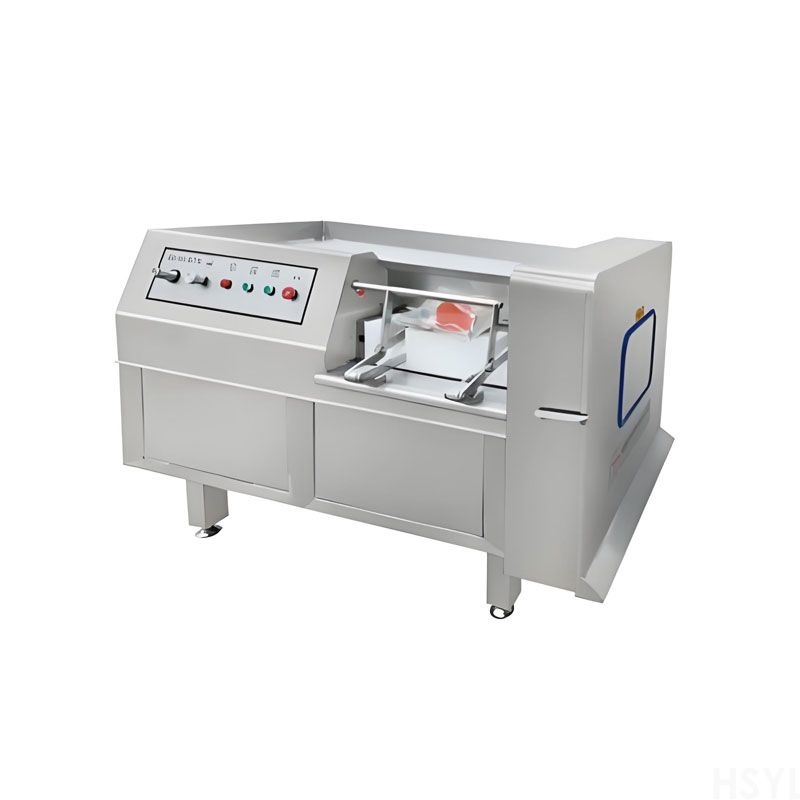
For a meat dicing machine, identify the proposed tooling and the material range. Keep fresh, prepared and frozen conditions clear rather than assuming one demonstrated setting covers all inputs.
Define accepted pieces
Agree the dimensions, assessment method and classification rules that matter to the next process or customer. Record how irregular shapes and fragments are handled. Avoid calling every piece that leaves the machine an accepted cube.
| Measure | Role in the trial |
|---|---|
| Nominal setting | Identifies the proposed machine setup |
| Piece distribution | Shows the measured range in the sample |
| Fines or fragments | Identifies material outside the intended form |
| Accepted recovery | Connects useful output to the defined input basis |
Select representative samples
Keep material lot, condition and sampling time connected to the measurements. Include justified variation over the run instead of selecting only the most regular pieces. Report the assessment method so that another reviewer can interpret the distribution.
Where the trial compares materials or settings, identify each change. Do not attribute all differences to the dicer when the raw material changed at the same time.
Include feeding and collection
Observe loading, accumulation and the condition in which diced material reaches the next operation. Manual correction and collection work affect practical accepted output. A cutting-only demonstration may not establish the complete work cycle.
Use the dicer material-condition guide for the broader input review. The nominal tooling dimension should remain connected to, but distinguishable from, the measured product result.
Use the result in the offer
Ask suppliers to state the tested material, setup, acceptance method and operating boundary when quoting performance. Retain the actual distributions and recovery calculation, including rejects and unaccounted material.
This supports a product-specific decision without inventing a universal accuracy, waste reduction or capacity claim. Review the evidence when the material form, condition, tooling or required finished product changes.
Frequently Asked Questions
Is the average piece dimension enough to assess dicing?
Can total output mass be reported as accepted yield?
Related Articles





Get professional consultation
Do you have any questions or need technical support regarding the content of this article? Fill out the form below, and our expert team will provide you with professional solutions.