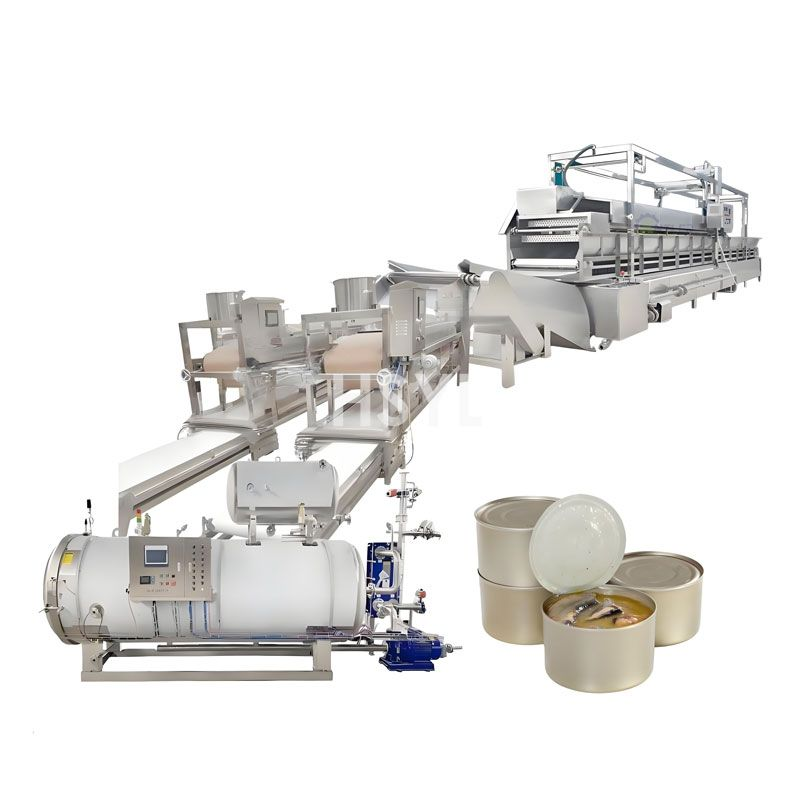
Fish canning by-products need an identified route from their generation points to an approved destination. Heads, trimmings and other removed material can affect space, container movement, cleaning work and the separation of production activities.
Map these streams alongside the fish canning factory layout. Do not treat them as an undefined arrow leaving the preparation area, and do not assume that every removed material is suitable for sale or further processing.
Identify each generation point
List the preparation operations and classify the material they remove under the factory's approved procedures. Keep potentially useful by-products, rejects and other waste distinguishable where their handling or destination differs.
- Generation. Operation, material and expected variability.
- Collection. Container type, identification and responsible role.
- Movement. Route, timing and handling equipment.
- Destination. Authorized receiver and applicable requirements.
- Cleaning. Collection-area and container procedure.
Include containers in the layout
Review the space occupied while containers are filling and awaiting removal. Identify safe access, movement routes and the relationship to raw fish, prepared product and packaging. A route that works on an empty drawing may create conflicts during a busy preparation period.
For the fish canning line, ask the supplier where removed material leaves each proposed module and which collection components are included. Assign the interfaces between machine discharge and the factory's removal arrangement.
What the material balance can establish
Record the actual mass basis when estimating the stream. Material generated is not automatically saleable recovery. Suitability for a destination depends on its condition, segregation and the receiver's requirements, which need confirmation outside a generic equipment proposal.
Use representative operating observations to assess container changes, manual handling and cleaning work. Keep unusual rejects visible because they may need a different response from routine by-products.
Make responsibilities explicit
Identify who checks container identity, authorizes movement, manages the receiving arrangement and records exceptions. Include the return and cleaning of reusable collection containers in the route. Avoid allowing an apparently minor by-product interface to become unassigned work at commissioning.
The final flow should connect each stream to a named handling method and approved destination, with open questions assigned for closure before operation.
Frequently Asked Questions
Can fish by-products be assigned a resale value in the equipment budget?
Should by-products and rejects share one route?
Related Articles



Get professional consultation
Do you have any questions or need technical support regarding the content of this article? Fill out the form below, and our expert team will provide you with professional solutions.