A sauce can have the correct recipe yet reach the filler with a changing solids distribution. Fish canning sauce supply should therefore be assessed across preparation, holding, transfer and filling, using actual product and timed samples.
The fish canning filling-media guide covers the broader choice of oil, brine and sauces. This review addresses a narrower question: whether the proposed supply arrangement delivers the intended sauce consistently throughout a run.
Describe the sauce beyond a name
Identify the approved recipe, suspended ingredients, particle range and relevant product condition. State which measurements the factory uses to characterize consistency and composition. Do not assume that tomato sauce or flavored sauce describes a uniform material for equipment selection.
| Location | Observation to retain |
|---|---|
| Prepared batch | Recipe identity and initial product condition |
| Holding vessel | Time, visible separation and approved operating state |
| Transfer route | Changes in flow or product presentation |
| Filled packs | Timed samples and component distribution |
Sample across the run
Plan samples from the beginning, middle and end, including justified observations after interruptions. Keep each sample connected to the batch, supply condition and filling event. A single sample taken immediately after preparation may conceal separation during holding.
Assess total addition and component distribution separately where the product specification requires both. The right total weight does not necessarily prove that every can received the intended proportion of solids.
Trial the actual supply configuration
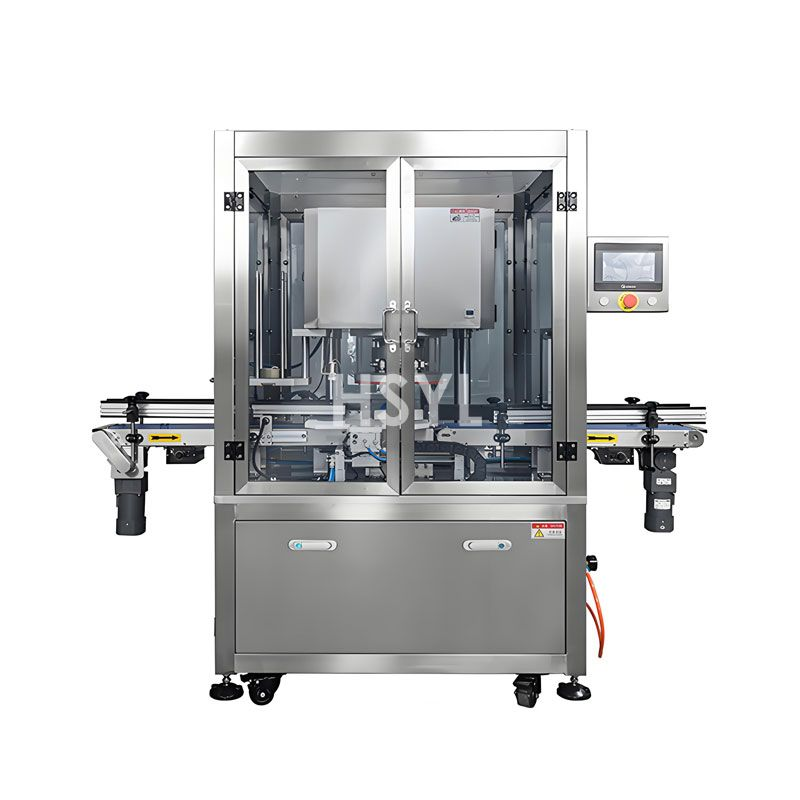
Discuss the proposed holding, agitation where offered, transfer and dosing arrangement with the fish canning line supplier. Ask which functions are included rather than assuming that a line photograph establishes sauce-mixing capability.
Any proposed change in agitation or transfer should consider product integrity, equipment compatibility and the approved process. More movement is not automatically a better solution if it damages pieces or changes other relevant properties.
Connect consistency findings to process review
Changes in formulation, solids distribution or fill may affect the packed product and require qualified process assessment. Record the selected configuration and the product range supported by the evidence. Keep technical actions, recipe actions and operating-procedure actions distinguishable.
The outcome should be a checkable supply and filling basis, including sample locations and acceptance criteria, rather than an unsupported promise that a machine prevents every sauce-separation problem.
Frequently Asked Questions
Does matching total sauce weight establish uniform composition?
Should a trial include production stops?
Can one sauce trial cover another recipe?
Related Articles





Get professional consultation
Do you have any questions or need technical support regarding the content of this article? Fill out the form below, and our expert team will provide you with professional solutions.