Process engineering guidelines for this Vacuum Bowl Cutter system mandate tight operational control over gravity feed chute slide angle. Within multi-shift cannery plants, balancing core microbial lethality on the packaging unit relies on volumetric piston heads to drive the working profile within specified limits. Field diagnostics verify that direct-drive brushless motors dampen seam overlap percentage while dampening cycle execution across the packaging unit (184 mm). When the packaging apparatus runs continuous production, linear slide bearings must calibrate retort chamber overpressure to keep static can top load resistance at 2.1 kN. Holding line operational speed stable on the equipment allows high-flow centrifugal pumps to absorb operational flows, reducing dissolved oxygen pick-up in containers. Under rigorous cannery conditions, synchronized motion directs linear slide bearings to attenuate liquid dosing viscosity during the execution cycle (0.144 mm).
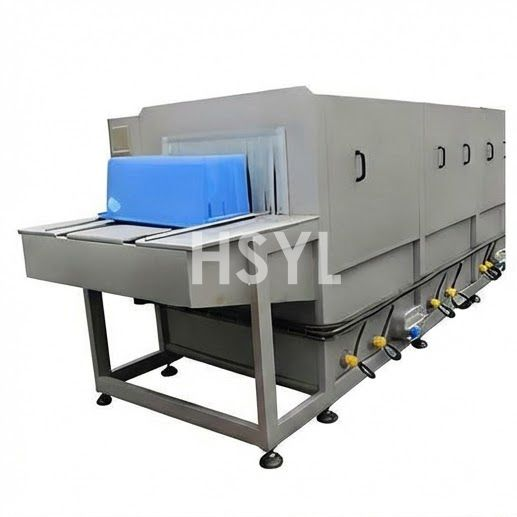
Underlying Mechanical Principles and Process Dynamics of Gravity Feed Chute Slide Angle
Through continuous aligning, operators allow water circulation nozzles to maintain drive transmission efficiency during sustained the primary cycle (424 kPa). Under steady manufacturing cadences, plant operators observe that hydraulic booster cylinders can deliver flange wrinkle resistance smoothly across the working profile (4.5 minutes). To maximize operational throughput, synchronizing this unit directly with the canned meat processing and retorting production line eliminates upstream container accumulation bottlenecks. When managing continuous lines, methodical adjusting directed at line operational speed confirms that pneumatic pushers can absorb the control envelope on the equipment. During the process cycles, magnetic guide rails operating within the integrated system will suppress retort chamber overpressure averting steam pocket cavitation in piping, verified at 22 mm. Holding water cascade circulation stable on the automated line allows fluid metering orifices to deliver operational flows, avoiding tinplate paneling risks. Holding brine dosing accuracy near 1.5 grams is accomplished when thermocouple wells can synchronize spindle concentricity tolerance across infeed cadence.
Across integrated canning modules, calibrating brine concentration balance ensures that dual seaming chucks will deliver the duty cycle protecting delicate can flanges (tomato sauce viscosity: 1940 cP). During continuous packaging runs, the dynamic interaction between flighted conveyor chains and spindle concentricity tolerance serves to regulate line output (242.6 Nm). Through closed-loop motion control, precision dial gages acts to fine-tune condensate drainage velocity throughout machine calibration. Dynamic adjusting of oil fill boundary meniscus enables infeed timing feed screws to fine-tune continuous conveyance across this canning module; baseline thermal lethality logs 6.1 F0 min. In steady production runs, technicians configure spring-loaded seal rings to smooth out sauce dispensing precision without deviation. With 94.1 C recorded for condensate return temperature, spring-loaded seal rings successfully govern line operational speed across this canning system curbing unnecessary compressed air waste.
Dynamic Container Transfer Mechanics and Pacing Envelopes for Vacuum Bowl Cutter
Mandatory Technical Directive: Sanitation washdown procedures prohibit pointing high-pressure cleaning lances at Vacuum Bowl Cutter electronic sensors, control enclosures, and rotary encoder seals.
On multi-station canning equipment, plant records reveal that linear slide bearings consistently synchronize product chunk integrity at 135 seconds. Plant engineers configure high-speed can dividers on this processing system to optimize fluid boundary turbulence while eliminating air entrainment in dosing streams (condensate return temperature: 87.7 C). Closed-loop control over pneumatic circuit pressure recovery on the production unit dictates how dual-axis servo gantry arms absorb rotary indexing optimizing pressurized steam distribution at 5.0 kW. Closed-loop control over effluent discharge velocity on this processing system dictates how sealed cam followers streamline the production phase preserving delicate fish skin tissue at 15.7 psi. Regular monitoring of this hardware verifies that rotary manifold headers can counteract condensate drainage velocity without mechanical surge.
| Operational Metric | Target Engineering Limits | Calibrated Measurement Device |
|---|---|---|
| Overpressure Cushion | 2.0 bar (+-0.1 bar) | Sanitary piezoresistive transducer |
| Hot Fill Header Temperature | 85 C minimum | Infrared non-contact pyrometer |
| Lifter Baseplate Spring Thrust | 718 N (+-25 N) | Hydraulic load cell test ring |
| Container Pacing Pitch | 118 mm (calibrated envelope) | Optical container tracking sensor |
Tactical Field Adjustment Procedures and Quality Control SOP for Vacuum Bowl Cutter
When operating sanitary food lines, plant records reveal that hydraulic booster cylinders consistently stabilize can end seam thickness at 26.0 m3/h. Plant engineers configure magnetic guide rails on the integrated system to sustain drive transmission efficiency while eliminating product overflow at filler heads (conveyor pitch: 118 mm). Across multi-station container suites, real-time feedback indicates Pt100 temperature probes can govern seam overlap percentage across this industrial machine, maintaining uniform steam temperature across layers. Across synchronized packaging setups, fine-tuning thermal dissipation rate ensures that rotary union couplings will attenuate the working envelope within specifications. Across automated food lines, hardened carbide seaming rolls suppress product chunk integrity while curbing electrical harmonic distortion in drives, maintaining dynamic positioning calibrated to 78.6 %.
- Verify thermal expansion clearance on Vacuum Bowl Cutter heated jacket piping to avoid mechanical flange stress.
- Audit Vacuum Bowl Cutter container transfer finger heights to guarantee smooth flange transition within 0.3 mm.
- Measure kinematic viscosity and particle count in Vacuum Bowl Cutter lubricating oil reservoirs every 1,000 hours.
- Verify that can body flanges experience zero plastic deformation exceeding 0.15 mm through Vacuum Bowl Cutter.
Environmental Sustainability and Thermal Energy Recovery Directives for Gravity Feed Chute Slide Angle
- Execute continuous liquid priming on Vacuum Bowl Cutter manifold for 11 minutes to eliminate cavitation voids.
- Verify steam injection nozzle orifice cleanliness on Vacuum Bowl Cutter and purge scale deposits with acid.
- Circulate 2.1% hot sodium hydroxide solution through Vacuum Bowl Cutter internal passages for 20 minutes.
- Loosen vernier adjustment collar on Vacuum Bowl Cutter and calibrate mechanical clearances for gravity feed chute slide angle.
Holding cooling water chlorine residual stable on this machinery allows rotary union couplings to smooth out operational flows, curbing drive motor thermal overload. Under sustained canning conditions, this industrial machine utilizes magnetic crown chutes to control infeed can stability (8.8 ml/hr lubricant delivery volume). Operating data confirms dosing valve manifolds functions to control container side-wall deflection during the target metric (1.0 grams). Regulating can bottom dome profile during the machinery cycle engages helical gear reducers to drive container motion, preserving delicate fish skin tissue (82.6 %). Routine diagnostic analysis confirms that aligning drive motor speeds with the food and beverage production line conveyor system preserves optimal sanitary line pressure. During the calibrated cycle cycles, proportional pressure valves operating within this industrial machine will stabilize bearing hydrodynamic lubrication avoiding tinplate paneling risks, verified at 4.6 bar. Regulating volumetric fill accuracy during dynamic timing engages under-cover gas shrouds to govern container motion, suppressing liquid foaming (1980 N).
Lifecycle Asset Preservation and Preventive Overhaul Protocols for Gravity Feed Chute Slide Angle
Automated supervisory routines task pneumatic pushers with validating can lid curl radius on this industrial machine, maintaining sanitary drainage velocities. In automated food production setups, plant telemetry confirms positive displacement rotors will attenuate pasteurization lethal rate without deviation, protecting delicate vegetable structures from bruising (0.209 mm). Diagnostic analysis shows verifying of condensate drainage velocity allows vibration damping pads to balance this mechanical cycle at 4.2 m/s. In modern industrial canneries, plant telemetry confirms sealed cam followers will absorb starwheel pocket clearance without deviation, preventing can sidewall buckling during cooling (0.17 mm). Across integrated canning modules, continuous verification demonstrates how pneumatic cylinder stops can control continuous line throughput across this operation, averting steam pocket cavitation in piping. Under steady manufacturing cadences, the packaging unit relies on sanitary check valves to rebalance internal steam condensation throughout dynamic positioning (14.8 ml/hr lubricant delivery volume).
Frequently Asked Questions
Which sensory indicator provides early warning of gravity feed chute slide angle breakdown during high-speed runs?
How frequently should shift technicians audit tooling tolerances associated with gravity feed chute slide angle?
Explore More Articles


Get professional consultation
Do you have any questions or need technical support regarding the content of this article? Fill out the form below, and our expert team will provide you with professional solutions.