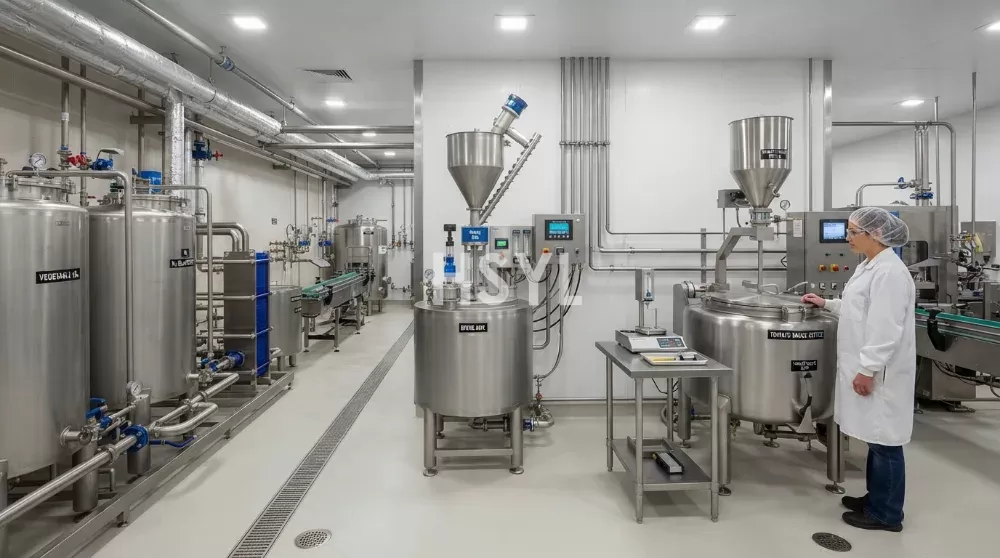
Canned Fish Filling Media: Oil, Brine, Tomato Sauce and Flavored Sauce Systems
The filling medium — the liquid that fills the void spaces between the fish piec...


HSYL manufactures high-speed automatic tin can sealing machines for food and beverage plants. Factory direct pricing, SUS304 construction, and custom double-seaming solutions for hermetic canning lines. Request a quote today.
The HSYL Automatic Tin Can Sealing Machine represents the pinnacle of canning technology, engineered specifically for high-volume food processing facilities, beverage manufacturers, and chemical packaging plants. As a direct factory manufacturer, HSYL understands that the sealing process is the critical control point in any canning line; a compromised seal leads to product spoilage, recalls, and significant financial loss.For complete autoclave batch scheduling and facility sanitation planning, refer to our engineering overview on bean canned food production line.
Our industrial can seamers are designed to handle rigorous 24/7 production schedules, delivering consistent, hermetic double seams on tinplate, aluminum, and composite paper cans. Whether you are packaging condensed milk, tuna, tomato paste, or craft beverages, our equipment provides the mechanical reliability required to maintain throughput and ensure shelf stability. This machine is not merely a standalone unit but a core component engineered to integrate seamlessly into existing HSYL filling and sterilization lines.
The HSYL Tin Can Sealing Machine operates on a precision-engineered rotary mechanical platform designed to execute the industry-standard "Double Seam" process. This mechanical interlocking method ensures a 100% hermetic seal, crucial for preserving food safety and extending shelf life.
1. Container Stabilization & Lifting
The process begins when the filled can enters the sealing station via a timing screw (worm screw) or star wheel, ensuring precise synchronization. A lower lifter plate raises the can to clamp the lid (end) against the stationary seaming chuck. Unlike inferior models where the can spins, HSYL utilizes a rotary seaming head design (on high-speed models) where the can remains stationary while the rollers rotate, preventing liquid spillage and maintaining centrifugal stability.
2. First Operation (Formation)
The first operation roller approaches the can flange and lid curl. It gently rolls the lid curl underneath the can flange to form a loose mechanical interlock. This creates the initial "cover hook" and "body hook" geometry. HSYL utilizes hardened steel cam-actuated rollers to ensure the correct radius is formed without fracturing the metal or the lining compound.
3. Second Operation (Compression)
Immediately following the first operation, the second operation roller engages. This roller has a flatter profile designed to iron out the seam, compressing the hooks tightly together. This compression forces the sealing compound (lining) into the voids within the seam, creating an airtight, vacuum-proof barrier.
4. Ejection
Once the cycle is complete, the lifter descends, and the sealed can is ejected via a star wheel onto the discharge conveyor, ready for the retort or labeling phase.
For industrial canning operations, equipment failure or inefficiency directly translates to lost revenue. HSYL has engineered this series to address the four most common pain points in the industry:
Eliminating Seal Defects & Spoilage: Inconsistent sealing pressure causes "false seams" or "sharp seams," leading to bacterial contamination (e.g., Clostridium botulinum). HSYL machines feature micrometric seam adjustments, reducing defect rates to below 0.01%.
Reducing Labor Costs: Manual or semi-auto sealing requires dedicated operators and yields inconsistent results. Switching to an HSYL fully automatic line reduces labor dependency by 70%, allowing one operator to oversee the entire filling and sealing section.
High-Speed Throughput Compatibility: Traditional sealing stations often become the bottleneck of a production line. Our multi-head rotary systems can match the speed of high-velocity fillers, ensuring zero downtime or buffering delays.
Material Versatility: Many sealers struggle with varying can heights or diameters. HSYL systems utilize quick-change tooling (chuck and rolls), allowing factories to switch between 73mm tuna cans and 153mm institutional fruit cans with minimal changeover time.
1. Heavy-Duty Sanitary Construction
The entire machine frame and exterior housing are constructed from high-grade SUS304 stainless steel. For acidic or high-salinity environments (such as tomato or pickle canning), SUS316 upgrades are available. The base is fully enclosed to protect the motor and transmission from washdown water and product spills.
2. Precision Seaming Head Technology
We utilize 440C stainless steel or TiN-coated seaming rollers and chucks. These components offer extreme hardness and abrasion resistance, ensuring millions of cycles before replacement is necessary. The seaming rollers run on heavy-duty bearings to withstand the immense radial forces generated during the compression phase.
3. Intelligent Control System
Equipped with a PLC (Siemens or Mitsubishi) and a user-friendly HMI touch screen, the system allows operators to monitor production speed, set batch counters, and diagnose faults instantly. The system includes "No Can, No Lid" logic, preventing the machine from feeding a lid if a can is not present, significantly reducing waste.
4. Lubrication & Maintenance
An automatic centralized lubrication system ensures that all moving gears and bearings receive the correct amount of grease at programmed intervals, reducing wear and eliminating the risk of manual maintenance errors.
| Feature | HSYL-S1 (Semi-Auto) | HSYL-A150 (Inline Auto) | HSYL-R400 (Rotary High Speed) |
| Throughput Capacity | 15 - 25 cans/min | 40 - 55 cans/min | 120 - 200 cans/min |
| Sealing Heads | 1 Head | 1 Head | 4 Heads |
| Can Diameter Range | 45mm - 153mm | 50mm - 130mm | 52mm - 99mm (Customizable) |
| Can Height Range | 39mm - 200mm | 39mm - 160mm | 39mm - 160mm |
| Power Supply | 0.37 kW | 1.5 kW | 3.0 kW |
| Air Pressure | N/A | 0.6 MPa | 0.6 MPa |
| Machine Weight | 150 kg | 500 kg | 1200 kg |
| Dimensions (L x W x H) | 600 x 500 x 1400 mm | 2000 x 900 x 1600 mm | 2800 x 1600 x 1900 mm |
| Construction Material | SUS304 / Carbon Steel | SUS304 Stainless Steel | SUS304 Stainless Steel |
| Operation Mode | Pedal / Sensor | Fully Automatic | Fully Automatic Rotary |
The HSYL Tin Can Sealing Machine is engineered for versatility across multiple sectors of the food and chemical industry:
Canned Fruits & Vegetables: Ideal for peaches in syrup, pineapple slices, sweet corn, mushrooms, and tomato paste. The machine handles the wet environment of these processing lines with ease.
Meat & Seafood Processing: Specifically designed for tuna, sardines, luncheon meat (SPAM style), and corned beef. The sanitary design allows for the rigorous cleaning required in protein processing.
Powdered Products: Used extensively for milk powder, protein powder, and coffee canning. For these applications, we offer vacuum and nitrogen flushing options to remove oxygen and extend shelf life.
Beverages: Suitable for non-carbonated juice drinks, coconut milk, and functional energy drinks packaged in tinplate or aluminum cans.
Chemical & Industrial: Capable of sealing paint cans, adhesive containers, and automotive fluid cans where a leak-proof seal is mandatory for safety.
Food safety is non-negotiable in the canning industry. HSYL designs equipment to meet and exceed global hygiene standards, including FDA regulations and HACCP compliance requirements.
Sanitary Welding: All product contact zones and structural joints feature continuous, smooth TIG welding. We eliminate crevices, bolt heads, and dead corners where food residue could accumulate and breed bacteria.
Washdown Ready: The electrical cabinet is rated IP65, allowing for low-pressure washdown during end-of-shift sanitation protocols.
Material Compliance: All rollers, chucks, and guide rails that come into potential contact with the can lid are manufactured from food-grade certified metals and plastics.
Contamination Prevention: The drive mechanism is located beneath the sealing zone, and the upper turret is sealed to prevent grease or oil from dripping onto the cans.
The HSYL Tin Can Sealer is rarely sold as an isolated unit; it is the anchor of a fully automated packaging line. We engineer our sealers to synchronize perfectly with upstream and downstream equipment:
Feeding: Empty cans are depalletized and fed into the line via HSYL magnetic conveyors or accumulation tables.
Filling: The sealer integrates with our Piston Fillers (for viscous pastes) or Volumetric Cup Fillers (for granules/solids). We utilize sensor logic to ensure the sealer starts only when filled cans are present.
Sealing: The cans enter the HSYL Sealer where lids are automatically dispensed and seamed.
Sterilization: Post-sealing, cans are conveyed to HSYL Retorts or Pasteurization Tunnels. The integrity of our seam ensures cans do not burst during the thermal expansion phase of sterilization.
Finishing: Finally, cans move to drying, labeling, and case packing stations.
At HSYL, we are not just equipment sellers; we are engineering partners. We understand that standard "off-the-shelf" machines do not fit every factory layout or product specification.
OEM/ODM Services: We provide full white-label manufacturing for regional distributors and can modify machine aesthetics to match your brand identity.
Vacuum & Nitrogen Modification: For sensitive products like milk powder or nuts, we can engineer the sealing station with a vacuum chamber and nitrogen flush system to achieve residual oxygen levels below 1%.
Layout Design: Our engineering team can draft CAD layouts of your facility to optimize the placement of the sealer, ensuring maximum workflow efficiency and minimal footprint.
Voltage Adaptation: We customize motors and electrical components to match your local power grid (e.g., 220V/60Hz for USA, 415V/50Hz for UK/Africa).
Secure Your Production Quality with HSYL Sealing Technology
Don't let inferior sealing equipment compromise your product safety or brand reputation. Partner with HSYL for factory-direct access to world-class canning machinery. Whether you are upgrading a single station or designing a greenfield canning plant, our engineering team is ready to assist you.
Contact our engineering team today to discuss your specific can dimensions and throughput requirements.
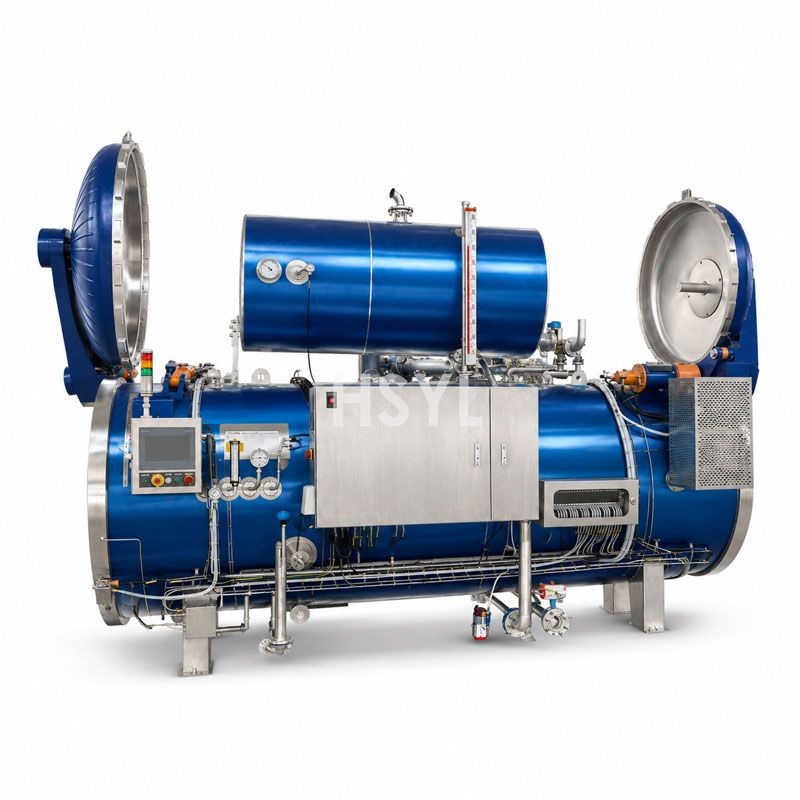
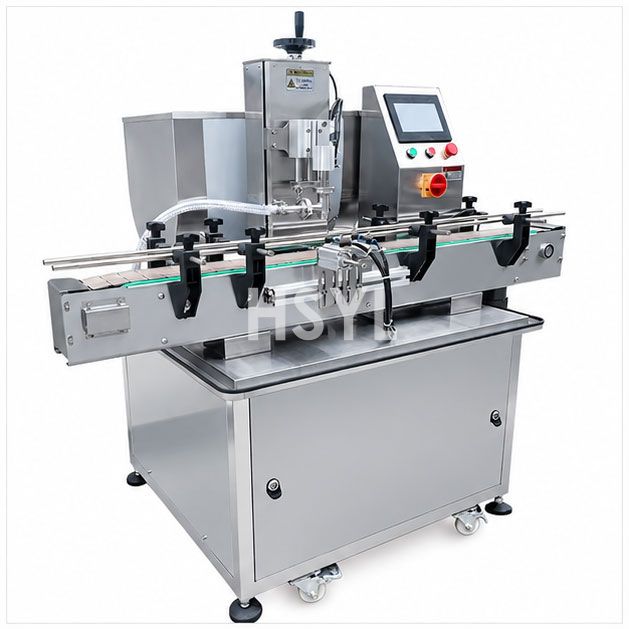


The filling medium — the liquid that fills the void spaces between the fish piec...
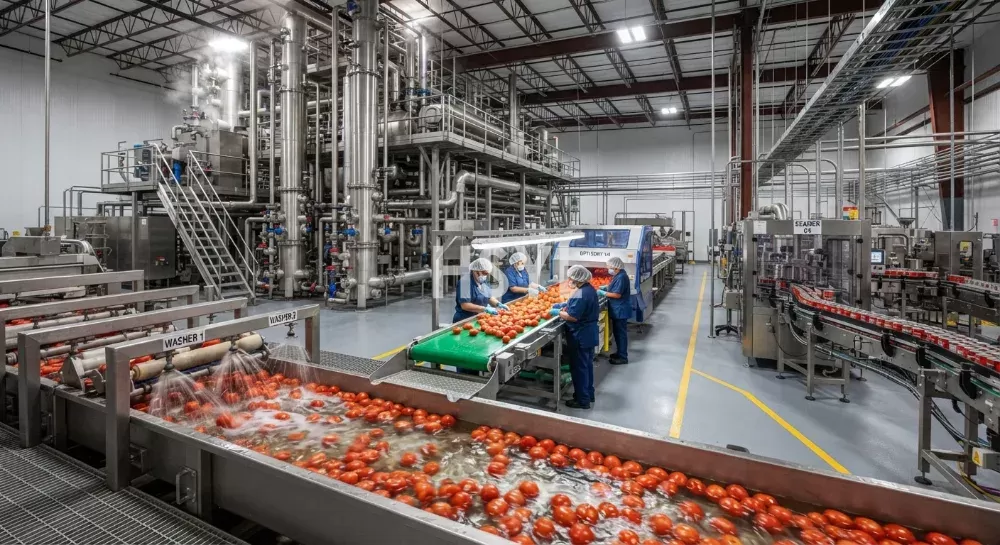
Direct AnswerA tomato products canning line converts fresh tomatoes into four di...
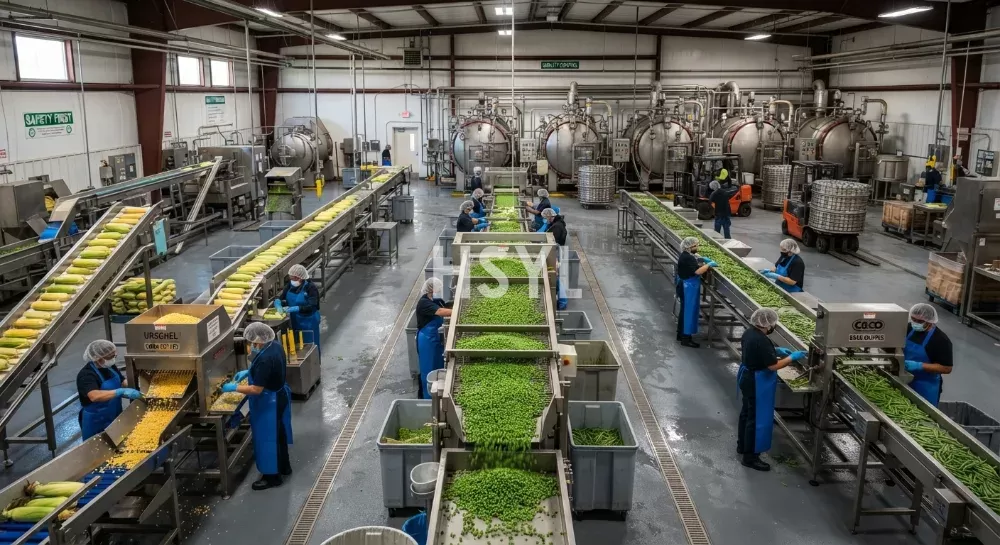
Direct AnswerA low-acid canned vegetable processing line — corn, peas, and green...
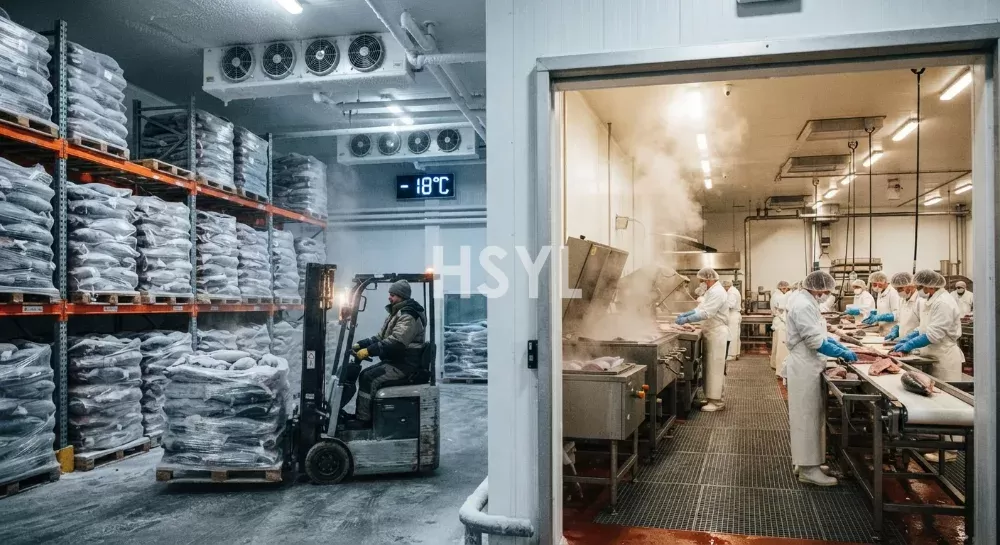
Direct AnswerThe most expensive asset in a fish cannery is not the retort or the...