Canning equipment drainage should connect machine outlets and operating events to the factory's approved drainage arrangement. A floor drain symbol does not establish that the installed route can receive every discharge or that wet-area handling has been coordinated.
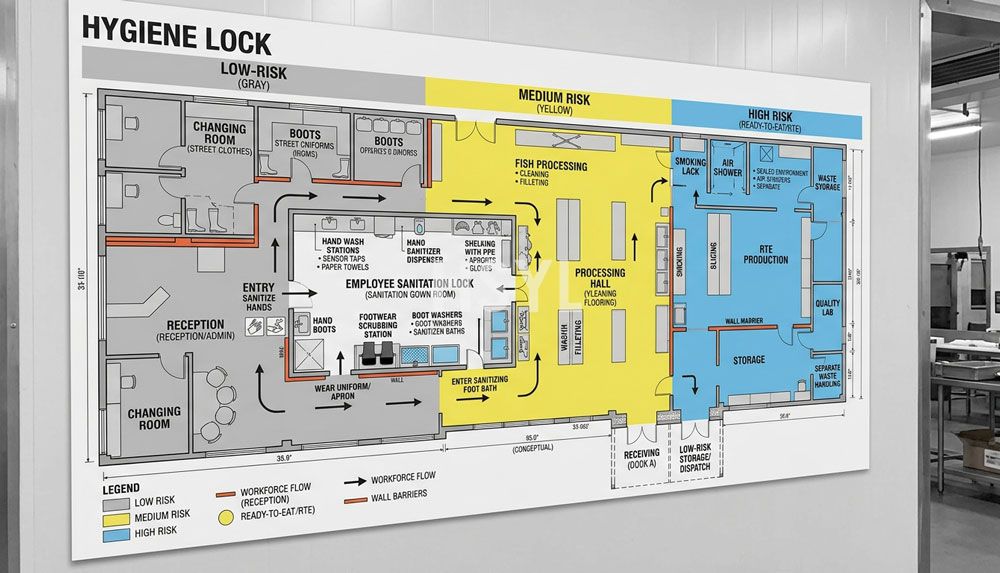
Use the food factory planning guide to locate equipment and movement routes. Then develop a discharge register with the suppliers and qualified site specialists.
Identify discharge points and events
List routine operation, startup, cleaning, emptying and other relevant events for each proposed unit. Obtain the actual outlet and discharge requirements from the supplier. Keep continuous, intermittent and exceptional events distinguishable.
- Equipment outlet. Location and connection requirements.
- Discharge event. Operating state and relevant characteristics.
- Receiving route. Approved connection and destination.
- Access. Inspection, cleaning and maintenance requirements.
- Ownership. Supplier and site responsibilities.
Coordinate wet areas with movement
Map where water may be present during approved operation and cleaning. Review the relationship to material movement, people, electrical installations and clean-container handling with competent site personnel. Do not resolve a drainage question solely by moving a symbol on a layout.
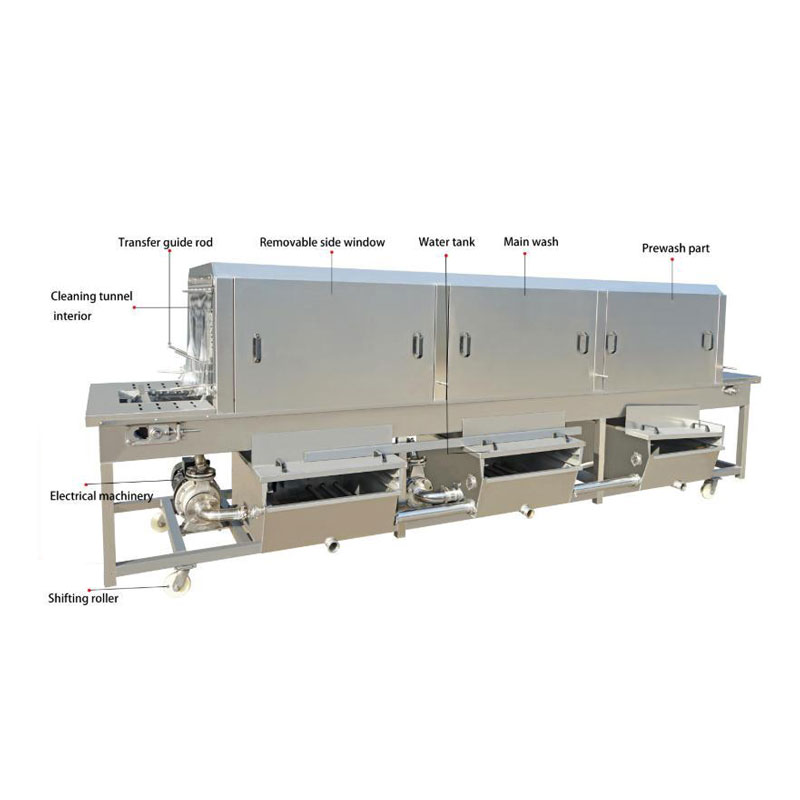
For an industrial crate washer, include the actual discharge and service arrangement. The equipment reference image does not establish the drainage details of the offered model.
Keep drainage and wastewater treatment separate
The wastewater assessment addresses the receiving and treatment questions. Drain routing, site capacity and discharge characteristics need to connect to that assessment, but they are not the same design task.
Avoid assuming that every stream can share one destination. Obtain the required technical and applicable discharge review for the actual factory.
Verify the installed interface
Before authorized trials, confirm outlet identity, connections, access and the approved receiving arrangement. Retain inspection findings and assign unresolved work. Use qualified personnel for any design or capacity assessment.
The handover file should identify the final installed route and responsibilities. Changes to equipment position, cleaning methods or discharge events should trigger review of the affected drainage interfaces instead of silently reusing the earlier layout.
Frequently Asked Questions
Can a nearby drain be assumed suitable for a new machine?
Should cleaning discharge be included in the layout review?
Does this guide specify floor gradients or drain sizes?
Related Articles




Get professional consultation
Do you have any questions or need technical support regarding the content of this article? Fill out the form below, and our expert team will provide you with professional solutions.