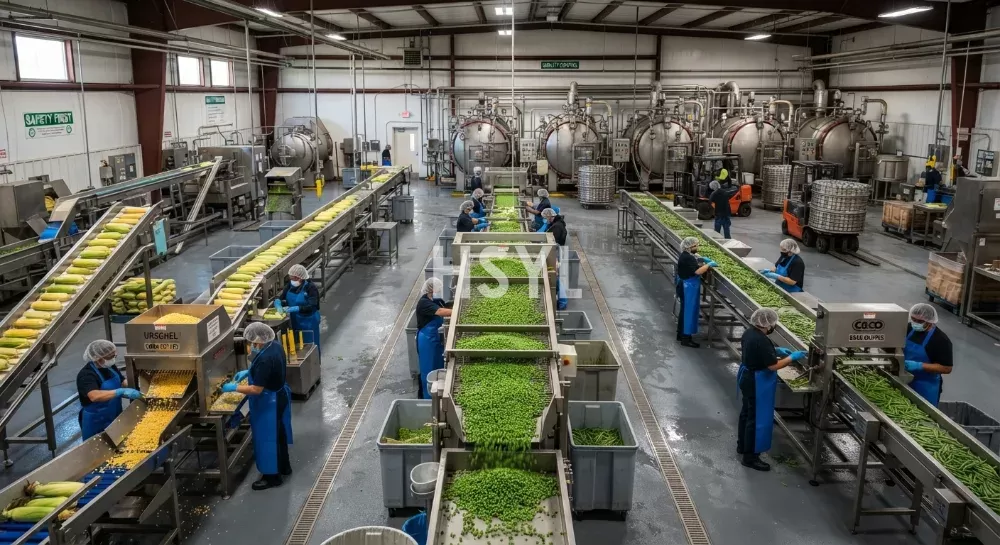
Low-Acid Canned Vegetables: Corn, Peas and Green Beans Processing Line
Direct AnswerA low-acid canned vegetable processing line — corn, peas, and green...

Automatic tuna canning equipment for coordinated can feeding, tuna filling, liquid dosing, seaming and downstream handling. Define the automated stations, remaining operator tasks and connections to existing equipment with HSYL before finalizing your line configuration.
An automatic tuna canning line should be specified station by station. The equipment proposal needs to show how cans and product move through filling, closing and downstream handling, together with the tasks that remain with operators.For complete autoclave batch scheduling and facility sanitation planning, refer to our engineering overview on automatic fish canning production line.
This approach is useful for both new canneries and plants upgrading selected operations. It allows the investment to focus on the actual production constraint, whether that is can feeding, filling consistency, seaming capacity or handling between machines.
Use the following scope checklist when discussing a configuration. Inclusion of each module must be confirmed in the quotation.
| Section | Function to specify | Details to confirm |
|---|---|---|
| Empty-can handling | Deliver cans to the filling section | Can formats, feeding method, inspection and replenishment |
| Tuna filling | Place the required product style into cans | Solid pack, chunks or flakes; product supply and fill checks |
| Liquid dosing | Add oil, brine or sauce | Recipe properties, dosing requirements and cleaning access |
| Lid feeding and seaming | Supply ends and close cans | Can-and-end compatibility, tooling and seam checks |
| Retort handling | Move cans into and out of the retort workflow | Basket loading, unloading, transfer and remaining manual tasks |
| Finished-can handling | Prepare cans for dispatch | Drying, coding, inspection, labeling and case-packing scope |
Preparation equipment should be selected around the incoming tuna form. A project starting with whole fish has different requirements from one receiving prepared, pre-cooked loins. See the tuna canning production line overview for preparation-route planning.
Automation does not establish a fixed staffing requirement by itself. Review product preparation, hopper replenishment, can and lid supply, sampling, seam inspection, retort handling, cleaning and maintenance.
Ask for an operating description that identifies the person responsible for each task and its expected frequency. Assess staffing against the agreed output and shift arrangement, including breaks and routine interventions.
The filler, seamer, conveyors and downstream equipment must work as a connected system. Confirm the normal operating rate, available accumulation space and the response when one station stops.
The control proposal should describe product-presence checks, fault indication, stopping and restart sequences, and connections to existing equipment. Identify which functions are included in the quoted configuration.
For a retrofit, provide the existing machine models, conveyor heights, can formats and available layout. This helps establish which equipment can remain and where additional transfer or control work is required.
Changing between tuna styles, filling media or can sizes may involve tooling, settings, cleaning and inspection. Record these requirements for each planned product rather than assuming that every change is completed through a touchscreen recipe.
Request a demonstration using representative formats. Assess the time from the last acceptable can of one product to the first acceptable can of the next, including adjustments and checks.
Define factory acceptance testing around the supplied equipment and representative materials. Relevant checks may include sustained output, fill consistency, seam results, transfer reliability and operation of the specified interlocks.
Document the test duration, sampling method, permitted interventions and treatment of rejected cans. Equipment testing should establish whether the supplied system meets its agreed requirements.
Thermal-process establishment and validation remain separate activities. The retort process must be established for the relevant product, container and processing system by a qualified processing authority.
Send HSYL your target output, incoming tuna form, finished product styles, can-and-end specifications and filling media. Include a layout, existing equipment details and the manual tasks you want to reduce.
Request an itemized proposal covering equipment, controls, tooling, installation, training, spare parts and customer responsibilities. This provides a practical basis for comparing automation levels and investment.
| Parameter | Specification |
|---|---|
| Capacity | 1,000 – 6,000 cans/hour (depending on can size) |
| Can Sizes Supported | Ø52–99mm × H35–120mm (e.g., 185g, 200g, 400g) |
| Tuna Input | Whole frozen or fresh tuna (5–20 kg/fish) |
| Power Supply | 380V / 50Hz, 3-phase (custom voltage available) |
| Water Consumption | ~1.5 m³/hour (with optional recirculation) |
| Control System | PLC + Touchscreen HMI (English/Chinese/Spanish) |
| Material | Full SUS304 stainless steel (frame, conveyors, tanks) |
| Sterilization Method | Batch retort (standard) or continuous hydrostatic retort (optional) |
| Footprint | ~30m (L) × 6m (W) – modular layout available |
| Certifications | CE, ISO 9001, HACCP-compliant design |
"Before this line, we lost 15% of tuna to inconsistent trimming and had frequent FDA holds due to sealing defects. Now, our yield is up 12%, and we’ve passed three consecutive EU audits with zero non-conformities."
— Mr. Sato, Plant Manager, Pacific Seafoods (Philippines)
"We went from 2,000 to 5,000 cans/hour with the same team. The automatic seamer alone reduced leak complaints by 98%."
— Amina Diallo, Operations Director, West Africa Canning Co. (Senegal)
Invest in Automation. Guarantee Safety. Capture the Global Tuna Market.


Direct AnswerA low-acid canned vegetable processing line — corn, peas, and green...
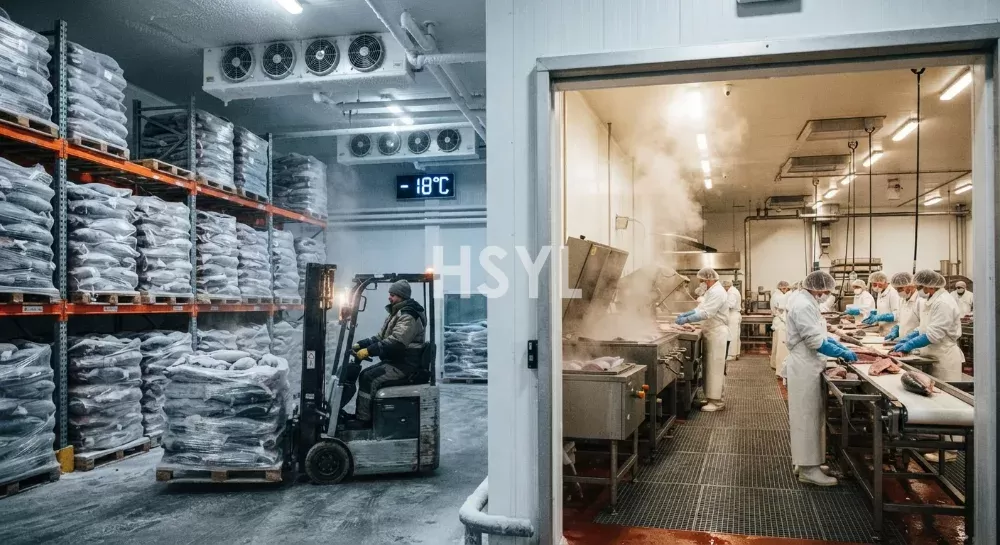
Direct AnswerThe most expensive asset in a fish cannery is not the retort or the...
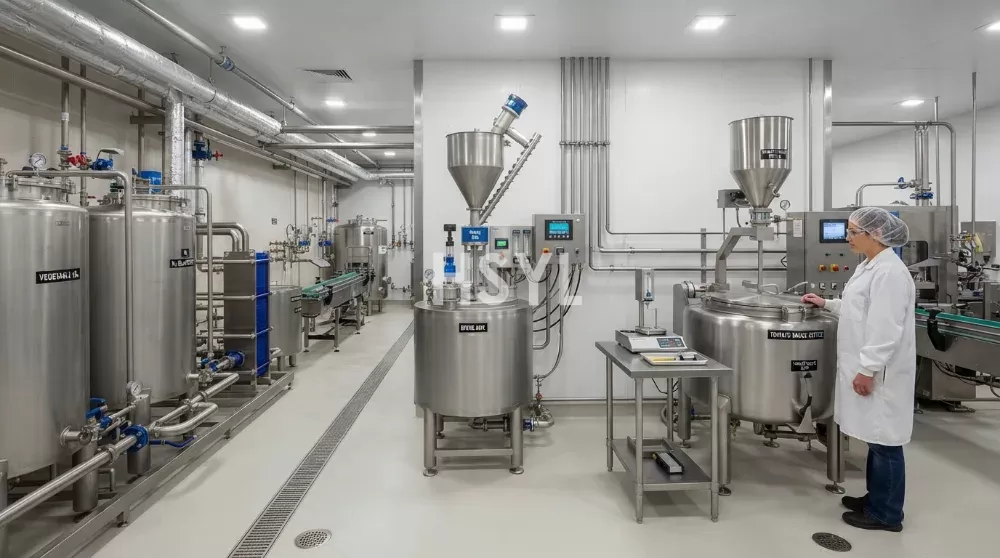
The filling medium — the liquid that fills the void spaces between the fish piec...
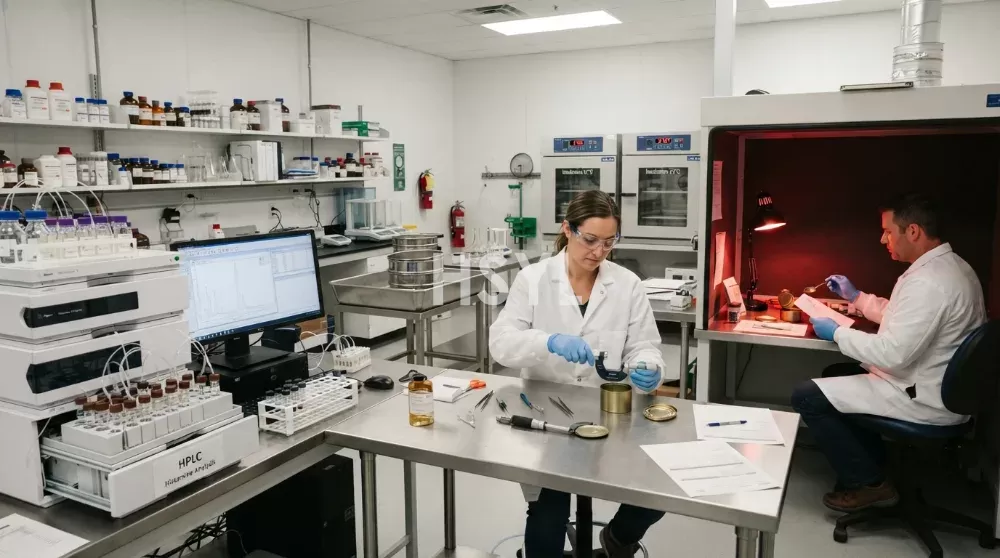
A sardine and mackerel canning line processes small pelagic fish — typically 10–...