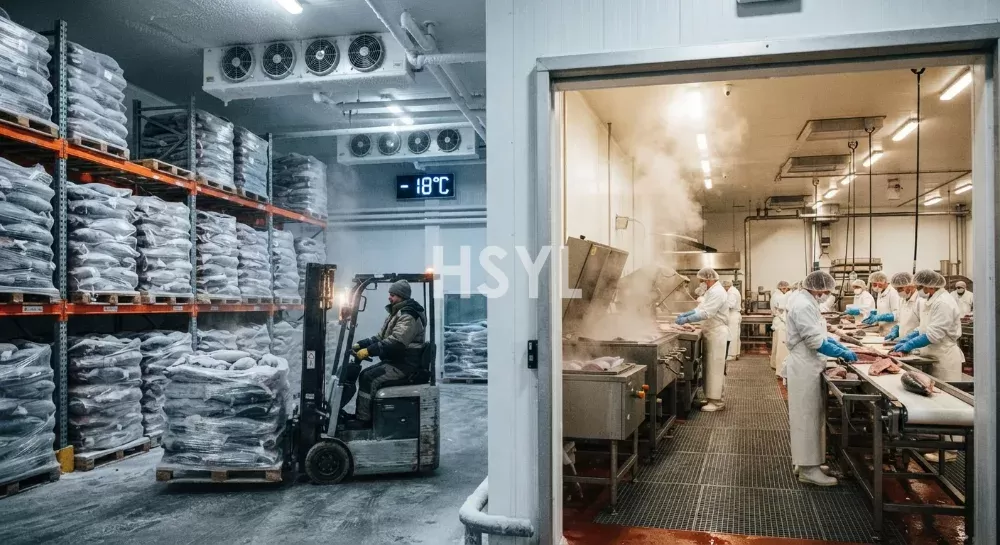
Seasonal Fish Canning: Cold Storage, Multi-Species Rotation and Year-Round Line Utilization
Direct AnswerThe most expensive asset in a fish cannery is not the retort or the...


Optimize yield rates and eliminate target-weight giveaway. Our industrial stainless steel meat slicer processes 1500kg/h of -4°C tempered proteins with <0.5mm tolerance. Contact us for CE-certified line integration.
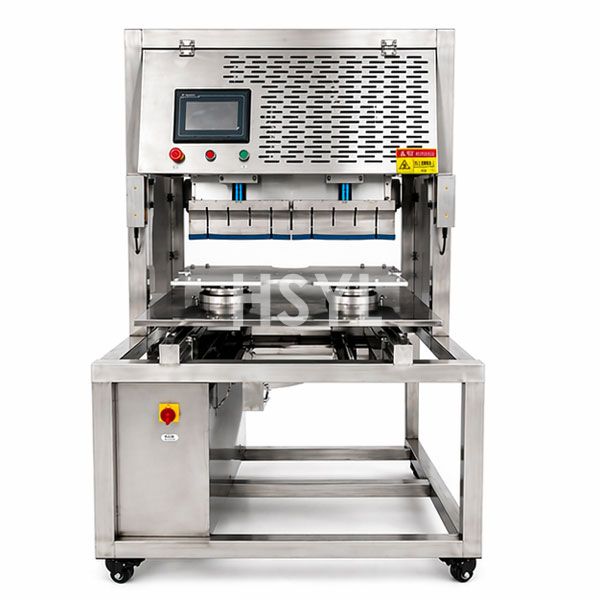
Target-weight giveaway and microscopic off-cut waste remain the primary sources of capital loss in high-volume deli and bacon processing facilities. The HSYL-SL400 industrial stainless steel meat slicer addresses these exact kinetic inefficiencies by decoupling torque delivery from friction-based transmission systems. Engineered specifically for continuous processing of sub-zero tempered meat blocks (optimally between -4°C and -2°C), this unit utilizes a closed-loop servo architecture to strictly maintain blade velocity under heavy thermodynamic loads.
By eliminating the micro-slippage inherent in legacy asynchronous belt drives, the equipment prevents cellular muscle tearing and lipid smearing, ensuring every slice meets stringent downstream packaging tolerances.
Procurement directors and facility engineers require exact mechanical parameters to calculate floor load, electrical draw, and integration compatibility. The following specifications represent the baseline operational metrics for the standard HSYL-SL400 model.
| Technical Parameter | Specification Data |
|---|---|
| Model Designation | HSYL-SL400 Servo-Driven Slicer |
| Maximum Volumetric Capacity | 1,000 - 1,500 kg/h (Density dependent) |
| Slice Thickness Range | 0.5mm - 30.0mm (Adjustable via HMI) |
| Rotary Blade Speed | 200 - 400 RPM (Variable closed-loop control) |
| Maximum Feeding Dimension | 700mm (L) x 250mm (W) x 200mm (H) |
| Total Installed Power | 5.5 KW |
| Standard Electrical Requirement | 380V / 50Hz / 3-Phase (Customizable) |
| Chassis & Contact Material | SUS304 Body / SUS316L Forged Blade |
| Equipment Net Weight | 850 kg |
| External Dimensions | 2200mm x 1100mm x 1500mm |
Deploying standard commercial cutters in an industrial setting inevitably leads to structural metal fatigue and rapid blade degradation. We engineered this stainless steel meat slicer by isolating the primary failure points observed in multi-shift processing environments.
Direct-Drive Servo Architecture
Traditional V-belt drives lose up to 12% of their kinetic energy to heat and stretching during heavy load cycles. We integrated independent servo motors for both the primary rotary blade and the linear feeding carriage. The encoder provides millisecond feedback to the PLC, instantly adjusting torque output to counteract incoming protein density variations, maintaining an absolute mathematical cutting rhythm.
Dynamic Pneumatic Feeding Grip
When the rotary blade impacts a dense, -4°C meat block, standard mechanical clamps often allow the protein to slip backward by a fraction of a millimeter, instantly destroying the slice thickness consistency. Our pneumatic actuating gripper maintains a constant 6 Bar forward pressure, locking the meat block onto the carriage tracking rails and eliminating product regression.
IP69K Sanitary Washdown Design
Pathogen harborage dictates production uptime. The HSYL-SL400 features a fully welded tubular frame with a minimum 3-degree surface slope, preventing any fluid pooling. The IP69K rating allows sanitation crews to utilize 1450 PSI, 80°C caustic chemical washdowns directly on the chassis without shielding the electrical enclosures.
Seamless Digital Line Integration
An industrial slicer should never operate as an isolated bottleneck. When integrated into our broader turnkey food processing line solutions, the slicer's PLC executes a continuous data handshake with downstream dynamic checkweighers and packaging machines. It automatically modulates its outfeed rate to perfectly match available packaging pockets, completely eliminating manual handling and product accumulation.
The physical cutting interface requires uncompromising metallurgical rigidity. Slicing dense proteins at high velocity generates massive lateral forces that cause standard commercial blades to deflect. We utilize a German-forged SUS316L rotary blade engineered to a Rockwell hardness (HRC) of 58-60.
However, hardness alone does not extend blade life; thermal management does. The PLC allows operators to input specific thermal recipes based on the lipid content and core temperature of the incoming batch. By matching the blade RPM directly to the Thermodynamic Friction Coefficient of the specific protein, the machine prevents localized fat smearing. The integrated pneumatic auto-sharpening module then deploys cubic boron nitride (CBN) grinding stones to restore the exact factory micro-bevel in under 60 seconds, extending the physical blade lifecycle by over 40% compared to manual sharpening protocols.
In standard 1500kg/h central kitchen layouts, the transition zone between the slicing room and the packaging chamber represents the highest risk for bacterial cross-contamination and ambient temperature loss. Relying on operators to manually transport sliced batches in plastic bins fractures the cold chain.
The structural footprint of this stainless steel meat slicer is specifically calculated for linear continuous flow. The 850kg machine mass absorbs primary harmonic vibrations, allowing the outfeed conveyor to connect directly to an automated multi-head weigher or a continuous thermoformer without transferring mechanical resonance to sensitive downstream load cells. This specific architecture frequently allows facility managers to reassign up to three manual material handlers per shift to higher-value quality control roles.
High-velocity rotary machinery presents extreme kinetic hazards. Regulatory compliance and operator protection form the baseline of our mechanical engineering process. The slicing chamber is secured by dual-channel magnetic safety interlocks. If an access panel is displaced by even one millimeter during a live cycle, the PLC triggers an electromagnetic braking circuit.
The 400 RPM blade mass is forced to an absolute halt in < 0.2 seconds. This failsafe mechanism strictly adheres to global CE machinery directives and OSHA machine guarding standards, shielding your operational facility from compliance violations and liability downtime. As an internationally recognized manufacturer, we provide comprehensive factory acceptance testing (FAT), site installation schematics, and ongoing global OEM parts support.
Initiate Your Line Upgrade
Do not allow legacy asynchronous transmission systems to cap your daily throughput and degrade your yield margins. Contact the HSYL engineering division to request a comprehensive capacity analysis, bespoke 2D line layout drawings, and precise electrical integration requirements for your specific production facility.


Direct AnswerThe most expensive asset in a fish cannery is not the retort or the...
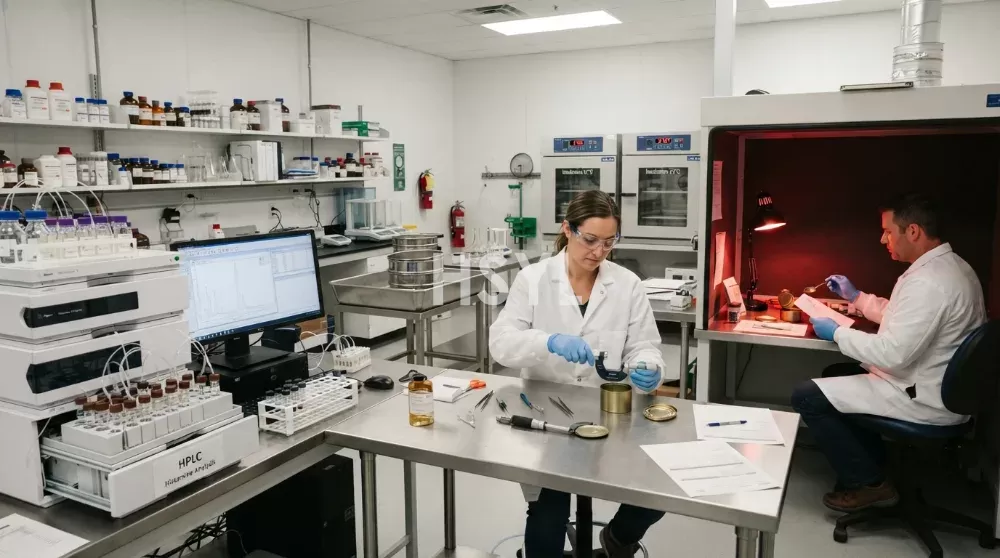
Complete sardine and mackerel canning line: heading and gutting automation, can ...
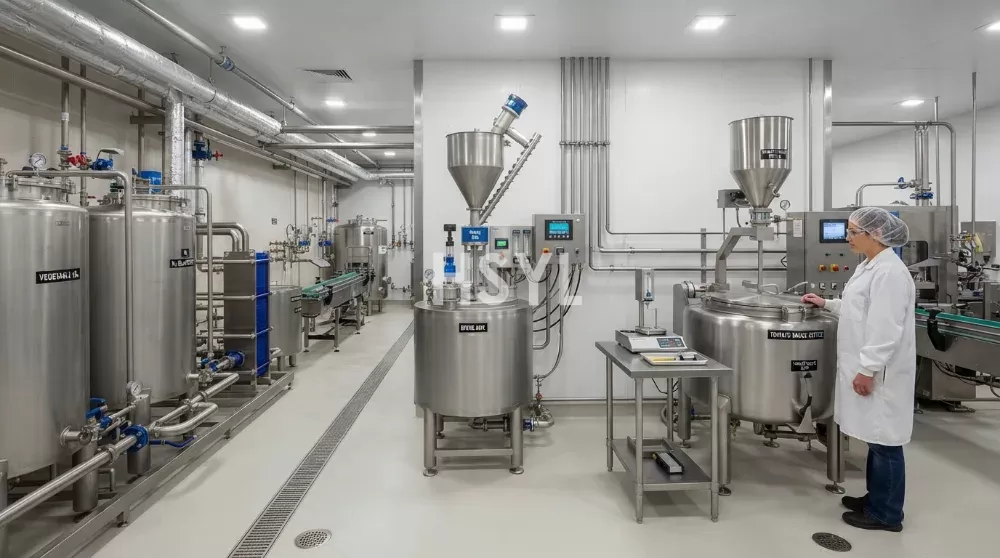
The filling medium — the liquid that fills the void spaces between the fish piec...
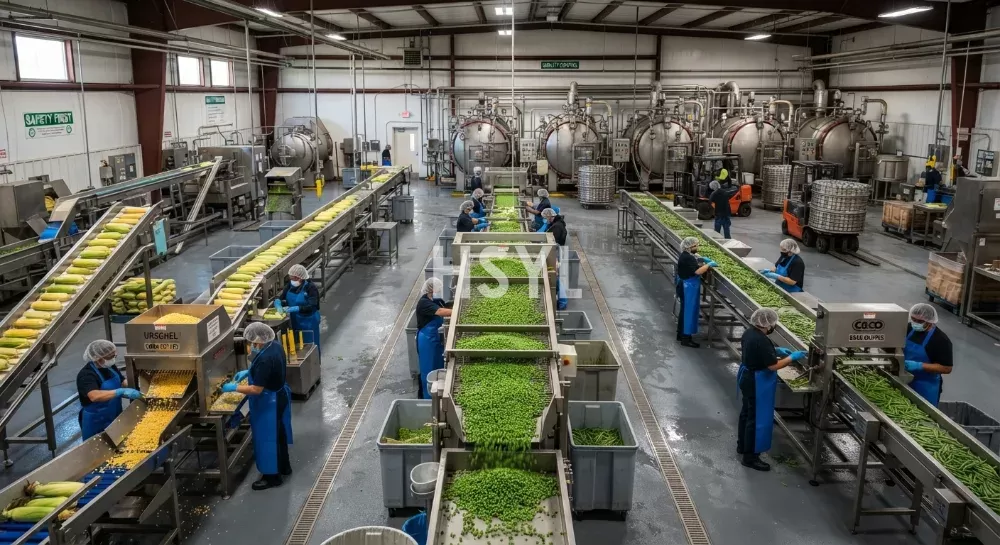
Low-acid canned vegetable processing line for corn, peas, and green beans. Press...