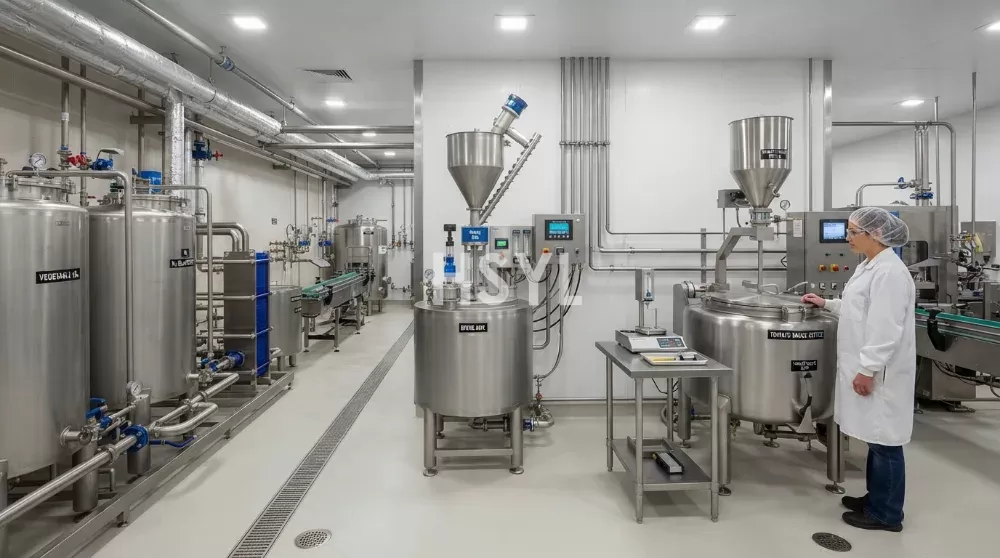
Canned Fish Filling Media: Oil, Brine, Tomato Sauce and Flavored Sauce Systems
The filling medium — the liquid that fills the void spaces between the fish piec...


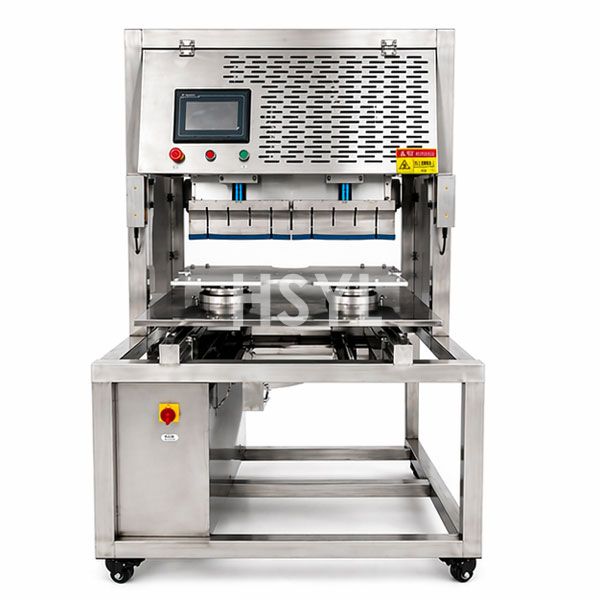
Industrial ultrasonic pizza portioning with product-specific cutting patterns. Evaluate crust separation, topping stability and finished output using your pizza at its actual cutting temperature.
Pizza is easy to cut when the product is simple. It becomes difficult when the cheese load is high, the crust has two textures, and the line has to keep moving. That is where a conventional wheel or straight mechanical knife starts to pull toppings, smear sauce across the cut face, or leave uneven portions that show up immediately at packing. This ultrasonic pizza cutting machine is built for those conditions. It portions round and tray-style pizzas with controlled blade vibration, servo indexing, and recipe-based cut geometry so the product leaves the cutting station in a condition that can still be packed and sold.
The machine is typically selected for fresh-baked, chilled, and par-baked pizza programs where clean separation matters more than raw blade force. It handles mozzarella-rich products, pepperoni pizzas, vegetable-topped pizzas, thick-crust SKUs, and high-value premium lines where topping displacement and cheese drag become expensive very quickly.
| Model | Line Format | Pizza Diameter | Capacity | Approx. Capacity | Installed Power | Air Requirement | Cut Accuracy | Dimensions | Material | Weight |
|---|---|---|---|---|---|---|---|---|---|---|
| UPZ-600 | Single-lane servo index | 180-320 mm | 300-600 pizzas/h | 180-420 kg/h | 4.2 kW | 0.5-0.7 MPa, 120 L/min | ±1.5 mm | 2200 x 1300 x 1820 mm | SUS304 frame, titanium blade, food-grade PU conveyor | 720 kg |
| UPZ-1200 | Dual-lane servo shuttle | 200-360 mm | 700-1,200 pizzas/h | 420-900 kg/h | 6.8 kW | 0.5-0.7 MPa, 180 L/min | ±1.5 mm | 3150 x 1580 x 1900 mm | SUS304 frame, titanium blade, food-grade PU conveyor | 1120 kg |
| UPZ-1800 | Inline multi-lane indexing cell | 220-400 mm | 1,300-1,800 pizzas/h | 780-1,350 kg/h | 9.4 kW | 0.5-0.7 MPa, 260 L/min | ±1.2 mm | 4280 x 1760 x 1960 mm | SUS304 frame, titanium blade, optional SUS316L contact parts | 1580 kg |
Actual output depends on pizza size, crust thickness, topping height, product temperature, and whether the cut pattern is 4, 6, 8, 10, or 12 slices.
In turnkey bakery projects, the cutter is commonly engineered into broader Bakery & Cereal Production Solutions and discharged to a Multifunctional Food Packaging Machine once slices have cleared the cutting zone. That arrangement helps protect slice geometry from the oven exit through final pack-out, especially on premium SKUs where toppings are visually judged at retail.
The cutting system uses a digital ultrasonic generator, piezoelectric transducer, booster, and titanium blade assembly. Electrical energy is converted into high-frequency mechanical vibration and transmitted to the blade tip, where friction at the cheese and topping interface is reduced during penetration. In pizza applications, that matters because the machine is not trying to crush through an elastic topping layer. It is separating it with less pull, less drag, and less product deformation.
Blade vibration alone is not enough. Pizza has to arrive at the cut point in the correct position, and the machine has to keep it stable through the stroke. For that reason, the indexing section uses encoder-controlled servo motion, photoelectric product detection, and a programmable centering routine. Once the pizza reaches the station, a hold-down mechanism stabilizes the product while the PLC executes the stored cut pattern. On round pizzas, the system runs a radial sequence for 4, 6, 8, 10, or 12 portions. On rectangular or tray products, the same control concept can be adapted to grid or strip cuts.
The HMI can store the cutting parameters supported by the supplied configuration, such as slice count, indexing positions, stroke settings and cycle timing. Changing pizza diameter, thickness or format may also require adjustments to guides, product supports or the hold-down arrangement.
Confirm which settings are recalled automatically and which require operator setup. Moving between round and rectangular products should be assessed against the available motion axes, blade coverage and working area.
Typical control architecture includes a PLC, touchscreen HMI, servo drives, frequency auto-tracking on the generator, emergency stop circuit, guard interlocks, and alarm logging. Optional upgrades include camera-based position confirmation, remote diagnostics, stainless electrical cabinet upgrades, and integration signals for upstream ovens, cooling conveyors, and downstream packaging equipment.
The cutting station should be selected around the condition of the pizza when it reaches the blade. Baking stage, product temperature, crust structure and topping consistency all affect the trial requirements.
| Product Condition | What to Assess |
|---|---|
| Freshly baked pizza after controlled cooling | Cheese adhesion, topping movement, crust support and the ability to transfer slices without distortion. |
| Chilled pizza | Complete separation through the base, cheese and toppings, including the effect of firmer crust edges. |
| Par-baked pizza | The actual temperature and baking stage at cutting, followed by assessment after any later baking or reheating. |
| Products intended for frozen distribution | Whether cutting occurs before or after freezing. Cutting already-frozen pizza requires a separate trial at the intended core temperature. |
For every application, inspect both the topping surface and the underside of the base. Agree on whether the required result is full-depth separation or a defined partial cut.
Check the product again after discharge and placement into the intended packaging. Confirm whether portions must remain together as a complete pizza or be separated for individual packing.
The line interface should define conveyor height, product spacing, centering, discharge orientation and control signals. Include any required portion-separation or transfer equipment in the quotation.
Measure finished output using the actual pizza, slice pattern and handling sequence. Evaluate consecutive products so that residue buildup, alignment variation and transfer performance are included in the assessment.
The machine is built for food-factory use rather than showroom presentation. Product-contact zones are arranged for practical cleaning, stainless surfaces are selected for washdown durability, and the drive structure is separated from the primary food zone as far as the application allows. HSYL can supply CE documentation, line-layout coordination, FAT support, and operating documentation for export projects. For plants working to HACCP, BRCGS, or sanitation regimes commonly expected in USDA-supervised supply chains, the machine can be configured to support those operating requirements.
Standard electrical supply is 380V, 50Hz, 3-phase, with customization available for 220V, 230V, 400V, 415V, or 480V and either 50Hz or 60Hz. Spare parts planning, preventive maintenance guidance, and remote troubleshooting support are available for international installations. For larger projects, HSYL can also coordinate commissioning and operator training at the customer site.
If you are comparing industrial pizza cutters, the most useful technical inputs are pizza diameter, crust type, topping load, temperature at cutting, target slice count, hourly output, and the equipment already installed before and after the cut station. With that information, HSYL can recommend the correct machine size, infeed method, blade package, and discharge arrangement.
Send your product data or production target to request a quotation, line-layout recommendation, or sample test video. That is usually the fastest way to confirm whether the machine will hold slice quality at production speed rather than only on an empty-spec sheet.


The filling medium — the liquid that fills the void spaces between the fish piec...
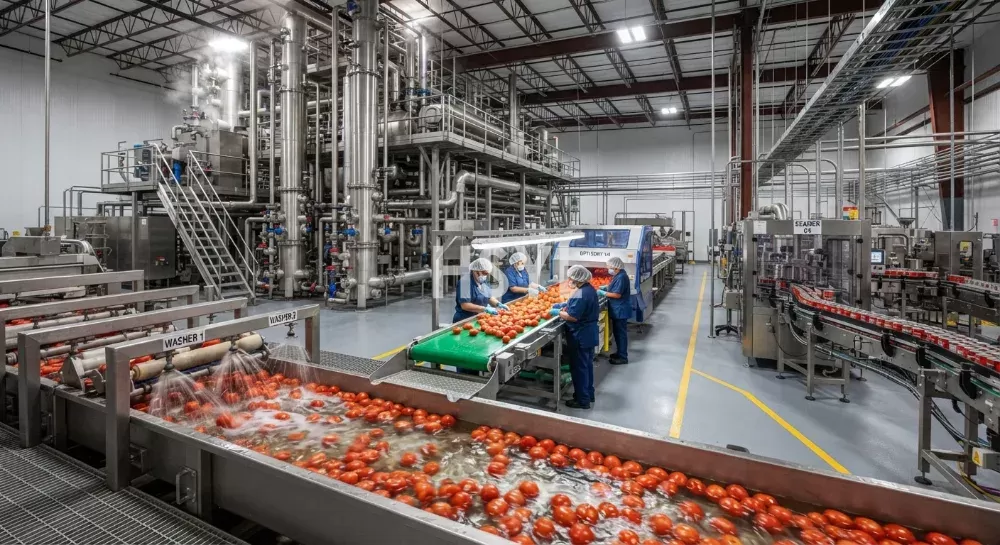
Direct AnswerA tomato products canning line converts fresh tomatoes into four di...
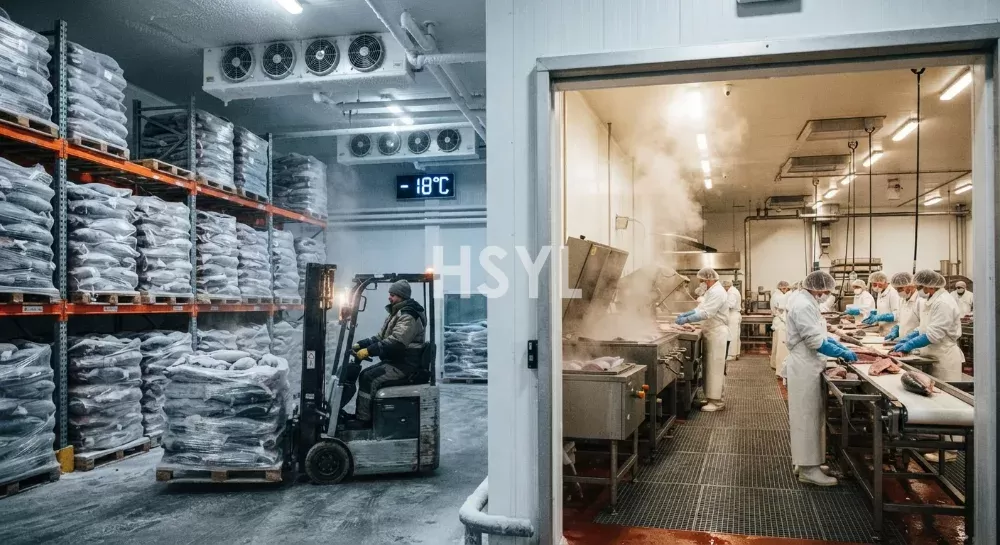
Direct AnswerThe most expensive asset in a fish cannery is not the retort or the...
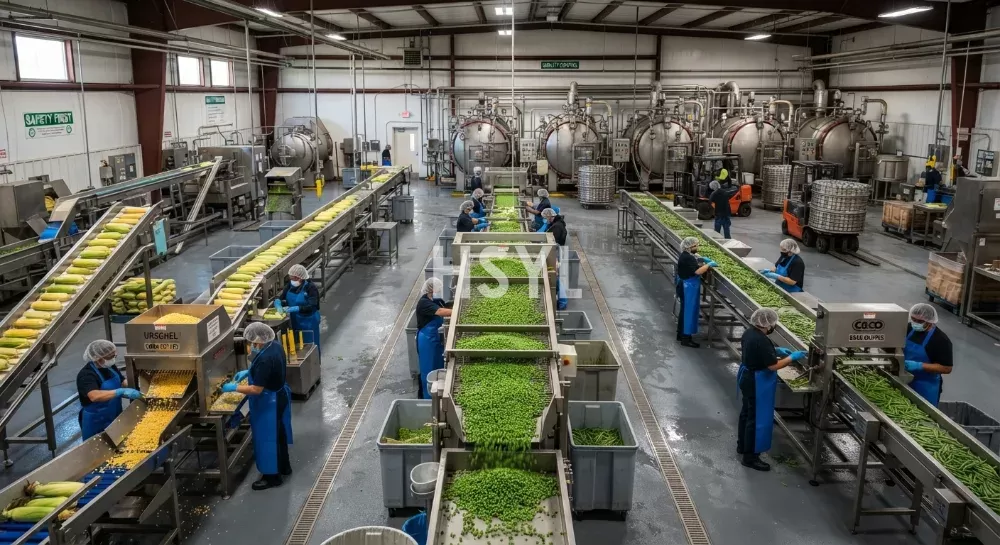
Direct AnswerA low-acid canned vegetable processing line — corn, peas, and green...