Deploying an ultrasonic cutting system elevates line throughput and portioning accuracy, but it simultaneously introduces a highly specialized maintenance constraint. Factory floors are harsh environments defined by high-pressure hoses, aggressive caustics, and rapid shift changeovers. While standard food processing equipment is built from heavy-gauge stainless steel designed to withstand this daily assault, acoustic tooling operates under different material requirements.
The core component of an ultrasonic slicer—the sonotrode—is precision-machined from titanium alloys, typically Ti-6Al-4V. This material is mandated for its acoustic transmissivity, not its resistance to localized physical impact or prolonged chemical soaking. Technical buyers and quality control managers frequently clash when integrating these systems because standard sanitation Standard Operating Procedures (SOPs) clash directly with acoustic engineering limitations. Establishing a highly rigid, specialized washdown protocol is mandatory to satisfy Hazard Analysis and Critical Control Point (HACCP) auditors without destroying expensive capital equipment.
The Anatomy of Acoustic Harborage Points
Before modifying any washdown workflow, engineering and quality teams must identify the specific sanitary weaknesses of an acoustic cutting head. The sonotrode itself is generally smooth and sheds product easily during operation due to its high-frequency vibration. The true microbiological risks exist at the mechanical interfaces. The junction where the titanium blade threads into the aluminum or titanium booster is a primary concern. If tightening torque specifications are ignored during assembly, microscopic gaps allow capillary action to draw moisture, fats, and simple sugars into the threaded connection.
Once biomass penetrates these threads, standard spray downs cannot reach the contamination. The enclosed, moist environment rapidly becomes a breeding ground for Listeria and Salmonella. Additionally, the nodal flange—the zero-motion ring where the vibrating tooling is bolted to the machine frame—often features tight radiuses and fastening bolts. These mechanical necessity geometries create classic harborage niches. Unlike a standard stainless steel blade that can be unpinned and dropped into a soak tank, wrestling a delicate acoustic stack out of its gantry requires specialized training, discouraging operators from performing thorough daily tear-downs.
Chemical Compatibility and Titanium Degradation
Industrial sanitation heavily relies on caustic soda (sodium hydroxide) to saponify fats and break down protein structures. While 304 and 316L stainless steel structural components resist these high-pH environments effectively, titanium alloys react differently under thermal and chemical stress. Prolonged exposure to concentrated alkaline foams, particularly if allowed to dry onto the blade surface, can induce surface pitting.
Pitting on a standard conveyor bracket is merely an aesthetic issue. Pitting on a 20kHz acoustic horn disrupts the resonant frequency. Any loss of mass or alteration of the surface geometry forces the ultrasonic generator to draw higher electrical currents to maintain the assigned amplitude. This inevitably leads to premature component fatigue and catastrophic thermal failure of the piezoelectric converter. Sanitation managers must calculate chemical dilution rates strictly according to the tooling manufacturer's guidelines, typically restricting contact times to a few minutes before dictating an immediate freshwater rinse.
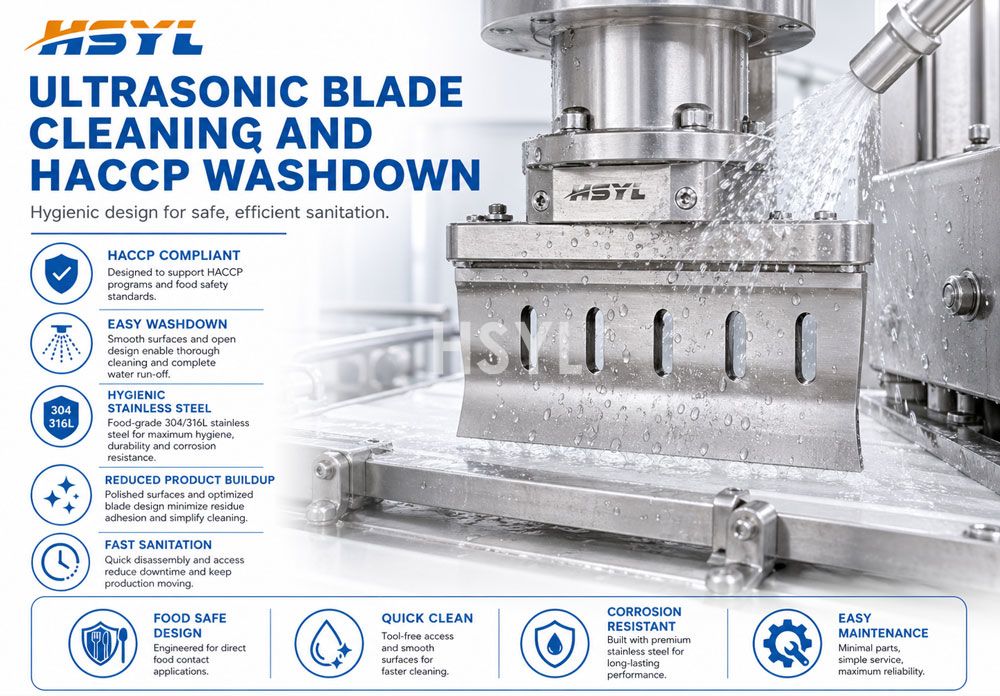
Structuring the Operator Washdown Workflow
To eliminate process variance and protect the equipment, plant managers must enforce a structured, step-by-step T.A.C.T. (Time, Action, Concentration, Temperature) protocol specific to the cutting station. This protocol diverges sharply from the methods used to clean the surrounding conveyor belts or upstream ovens.
Step 1: Dry Purge and Isolation
Initial sanitation begins with power isolation. The generator must be locked out, and all servo drives disabled. Operators must resist the instinct to utilize a high-pressure hose to clear bulk debris. Instead, workers should use specialized soft-bristle nylon brushes or compressed air (if environmental cross-contamination is managed) to dislodge heavy cake crumb, meat fibers, or dense fondants from the blade and mounting brackets. Utilizing sharp metal scrapers directly against the titanium edge is an absolute red line; scoring the blade alters its acoustic signature instantly.
Step 2: Low-Pressure Foaming
To address the lipid and protein films adhering to the metal, technicians apply an active foam detergent using a low-velocity drop hose. High-pressure lances (operating above 40 bar) should never be aimed directly at the cutting head. Excessive kinetic water pressure can force moisture past IP-rated cable glands, breaching the sealed enclosures housing the delicate piezoelectric converters and positional servo encoders. The foam must be applied gently, ensuring complete surface coating while avoiding aggressive liquid sheer forces against sensitive electrical junctions.
Step 3: Controlled Agitation and Sanitization
Mechanical agitation must be performed exclusively with non-abrasive pads. Heavy-duty scouring pads containing aluminum oxide will scratch the titanium, creating new microscopic traps for bacterial adhesion. After the prescribed chemical dwell time, a low-pressure, high-volume water rinse removes the suspended soils. Following the rinse, operators apply a validated broad-spectrum sanitizer. Because many sanitizers utilize peracetic acid or quaternary ammonium compounds, rinsing protocols must explicitly address chemical residue to prevent localized galvanic corrosion on the mixed-metal components of the gantry frame.
Integrating Automated Clean-In-Place (CIP)
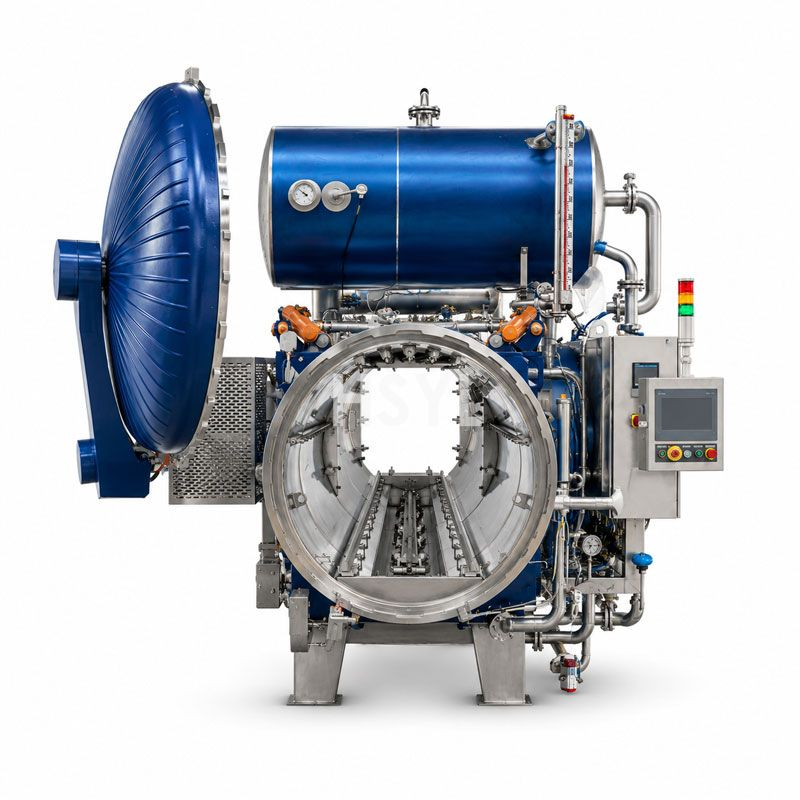
In facilities operating continuous twenty-four-hour schedules, relying on manual washdowns introduces unacceptable process deviation and bottlenecks. Engineering teams are increasingly specifying automated CIP cleaning machine integration directly into the cutting cell architecture to stabilize overall equipment effectiveness (OEE).
A properly engineered CIP sequence for an ultrasonic cutter involves a retractable manifold housing strategically aligned spray nozzles. During a scheduled changeover, the cutting head retracts to a designated cleanout position. A dedicated water bath may elevate to submerge the lower third of the sonotrodes. Some advanced systems utilize the ultrasonic vibration itself during this submersion. Powering the blades at a low amplitude while submerged in a detergent solution generates violent micro-cavitation in the fluid, scrubbing the titanium surface far more effectively than manual wiping.
This automated approach completely removes the operator from the risk equation. It guarantees exact chemical dosing, manages water temperatures precisely, and eliminates the physical handling of the blades. For plants enforcing strict environmental monitoring protocols, automated CIP sequences present the most defensible architecture during third-party HACCP audits.
Sanitary Equipment Design: Specifying for the Floor
When drafting procurement specifications, technical buyers must scrutinize the gantry and enclosure design surrounding the acoustic tooling. A superior sonotrode mounted to an inferior frame guarantees audit complications. The fundamental principles of sanitary design dictate that there should be no hollow tubing holding wiring, no flat horizontal surfaces where wastewater can pool, and no exposed mechanical threads in the splash zone.
Quality control engineers must demand IP69K-rated servo motors capable of withstanding 80-degree Celsius water at 100 bar, specifically for the drives controlling the vertical axis of the cutting head. The structural frame should feature open-channel, sloped geometry, ensuring rapid drainage after a washdown cycle. Additionally, cable routing must utilize standoffs rather than zip-tying directly to the frame, eliminating tight crevices where protein residues naturally accumulate.
Common Operational Hygiene Errors
Even with rigorous SOPs published on the factory floor, specific operational failures repeatedly compromise both equipment integrity and microbiological safety. One major error involves removing the acoustic stack for deep cleaning and placing it directly onto a hard stainless steel prep table. The severe mass of the booster and converter can easily chip the ultra-thin cutting edge of the sonotrode if handled carelessly.
Another frequent misjudgment is the failure to utilize a calibrated torque wrench during reassembly. When technicians return a cleaned blade to the machine, establishing proper acoustic coupling is an absolute necessity. Under-torquing the mating surfaces introduces energy loss and heat buildup at the joint. Over-torquing strips the threads and warps the mating face. In both scenarios, the ultrasonic generator will detect resistance, forcing the system to fault out and stall production completely.
Finally, engineering teams frequently overlook the washdown requirements of the secondary product handling systems. The belt tracking exactly underneath the blade must be sanitized simultaneously. Specifying a system that allows easy release and lifting of the industrial food conveyor belts ensures operators can reach the underside framing and the actual belt drive sprockets, which are notorious for hiding cross-contamination.
Actionable Washdown Validation Checklist
Plant managers and QA directors must baseline their current sanitation execution against empirical data limits to protect their capital investment and product integrity.
- Audit Spray Pressures: Install inline pressure gauges on the drop hoses assigned to the cutting station. Physically lock out the capability to exceed 30 bar in the immediate vicinity of the piezoelectric converters.
- Validate Chemical Dwell Times: Review your sanitation chemistry provider’s documentation specifically regarding titanium compatibility. Mandate strict stopwatch controls for caustic foam contact times.
- Implement Torque Control: Remove all standard wrenches from the cutting zone toolboxes. Supply only fixed-value, calibrated torque wrenches specifically dedicated to acoustic stack assembly.
- Execute ATP Swab Mapping: Conduct a highly granular ATP (Adenosine Triphosphate) swab test specifically targeting the booster-to-blade threaded junction after a standard CIP cycle to verify the absence of biological residue.
- Review Gantry Drainage: Inspect the structural framework holding the cutting head immediately after a washdown. Ensure zero standing water exists on servo housings, cable trays, or mounting flanges.
Treating acoustic cutting equipment with the same aggressive sanitation protocols used for standard mechanical lines leads directly to equipment destruction and unscheduled downtime. Establishing specialized, low-impact, chemically verified cleaning methodologies ensures the factory avoids microbiological deviations while maximizing the operational lifespan of the titanium tooling.
Related Topics
- Automated CIP Cleaning Machine Solutions
- Engineering Guide: Proper Washdown of Industrial Conveyor Belts
- FDA Compliance and Cutting Board Sanitation Standards
Consult HSYL Engineering
Maintaining HACCP compliance without compromising the acoustic integrity of your cutting equipment requires highly specialized sanitary design. If your facility is struggling with tooling degradation, failed swab tests, or inefficient manual washdown workflows, the engineering team at HSYL can intervene. Contact our specialists to discuss integrating automated CIP parameters, specifying IP69K-rated gantry architectures, or optimizing your current sanitation SOPs for advanced portioning systems.
Frequently Asked Questions
What is the recommended cleaning chemical for titanium ultrasonic blades?
Can we use high-pressure washers on the ultrasonic cutting head?
How often should the blade be removed for deep cleaning?
What is the risk of scratching the sonotrode during manual scrubbing?
Does the ultrasonic generator cabinet require specific washdown protection?
How do we test for residual biomass on the sonotrode surface?
Can ultrasonic vibrations be used to self-clean the blade in a water bath?
Related Articles



Get professional consultation
Do you have any questions or need technical support regarding the content of this article? Fill out the form below, and our expert team will provide you with professional solutions.