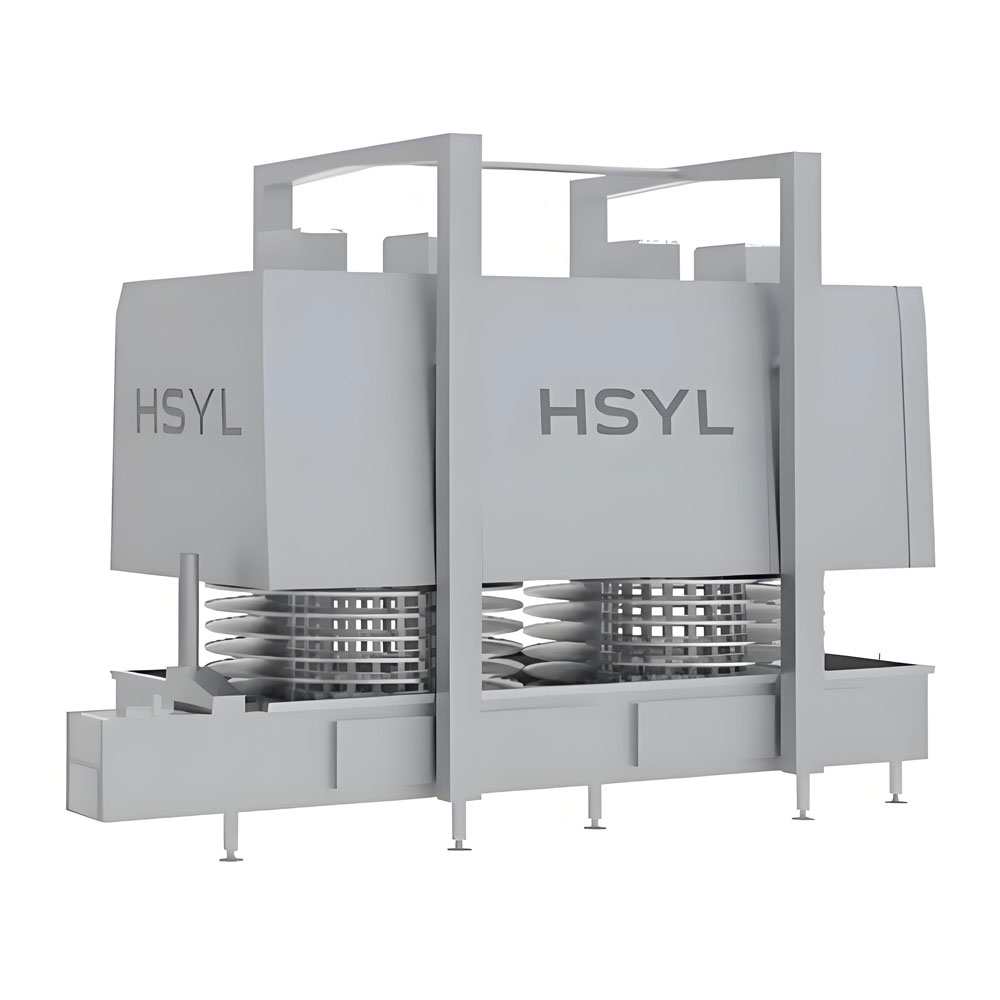
Spiral Oven Utilities: Site Inputs Before Installation
Coordinate spiral oven services from the heating configuration, exhaust and conn...


HSYL Cooking Range 700 Series covers 31 upright models across griddle, solid top, pasta cooker, jacketed boiling pan, tilting bratt pan, fryer, bain marie and worktable lines on a 700 mm depth platform, with gas, 220V and 380V electric options for compact commercial kitchens.
The Cooking Range 700 Series is HSYL's compact upright commercial cooking range line, built for kitchens where cabinet depth is the binding constraint. Every model in the series sits on a 700 mm net depth and 920 mm net height platform — 200 mm shallower than the Cooking Range 900 Series — which lets it fit behind a counter run in boutique restaurants, small cafés, school canteens and compact hotel kitchens where a 900 mm deep unit would eat into aisle clearance or seating area.
The series covers four cooking workstation families on that one platform: griddle and solid top (HG / HTP) for searing and sauce work, pasta cooker and jacketed boiling pan and tilting bratt pan (HP / HTG / HBG) for liquid and stockpot cooking, fryer (HF) for deep-frying, and bain marie and prep worktable (HB / HWT) for holding and prep. That gives buyers 31 models in total, all sharing the same 400 mm or 800 mm width tiers, all serviceable with the same component family, all sitting flush on a 700 mm counter run without step joints.
Heating source is configurable per model. Gas (-G) variants suit sites with established gas infrastructure; electric (-E) variants split between 220V/50Hz single-phase for lower-power stations (compact griddle, bain marie) and 380V/50Hz three-phase for higher-power stations (solid top with oven, pasta cooker, jacketed pan, bratt pan, fryer). The 700 Series is the natural starting point for buyers moving up from domestic or light-commercial equipment, and the natural step-down from the 900 Series when kitchen depth will not accept the larger platform.
The 700 Series is organized along three decision axes: workstation family, heating source, and width tier. The four workstation families share the same cabinet footprint but serve completely different cooking tasks.
| Code | Workstation | Primary Use |
|---|---|---|
| HG | Flat griddle | Flat-top searing, teppanyaki, breakfast griddle items, burger and steak searing |
| HTP | Solid top | Even-heat cast plate for sauce work, slow simmer, multi-zone pan placement |
| HP | Pasta cooker | Single or double 28 L cylinders for pasta blanching, noodle cooking, rapid boiling |
| HTG | Jacketed boiling pan | 80 L jacketed pan for soup, stock, sauce and congee production |
| HBG | Tilting bratt pan | 60 L tilting pan for braising, stewing, large-batch one-pot cooking |
| HF | Fryer | Single, double or three-tube configurations for deep-frying |
| HB | Bain marie | Single or double basin wet or dry holding for prepared dishes |
| HWT | Prep worktable | Worktop with cabinet base for ingredient prep and small-equipment storage |
| Code | Heating | Power Supply | Typical Use |
|---|---|---|---|
| -G | Gas | Gas connection only | Sites with gas infrastructure, high instantaneous heat demand, wok and stockpot cooking |
| -E (220V) | Electric | 220V / 50Hz single-phase | Lower-power stations — compact griddle (HG7040-E 2.8 kW), bain marie (HB7040-E 1.5 kW, HB7080-E 3.0 kW) |
| -E (380V) | Electric | 380V / 50Hz three-phase | Higher-power stations — solid top with oven, pasta cooker, jacketed pan, bratt pan, fryer |
| -VE | Electric with oven below | 380V / 50Hz three-phase | Griddle or solid top with integrated electric oven — HG7080VE, HTP7080VE |
| -VG | Gas with oven below | Gas only | Griddle or solid top with integrated gas oven — HG7080VG, HTP7080VG |
| Width | Model number contains | Typical configurations |
|---|---|---|
| 400 mm | 7040 | Single-burner griddle, single-cylinder pasta cooker, single-cylinder fryer, single-basin bain marie, compact worktable, three-tube fryer (HF7040-3G — special footprint) |
| 800 mm | 7080 | Double-burner griddle, double-cylinder pasta cooker, double-cylinder fryer, double-basin bain marie, full-size worktable, jacketed pan, tilting bratt pan, solid top |
The HF7040-3G three-tube fryer is the only model that breaks the standard footprint — its 400×820×1163 mm net size reflects the taller three-tube fryer tank and heavier gas load (28 kW). Plan its placement separately in the kitchen layout.
| Model | Configuration | Heating | Gas Power | Electric Power | Net Size (W×D×H) | N.W. |
|---|---|---|---|---|---|---|
| HG7040-G | Flat griddle, cabinet base | Gas | 5 kW | — | 400×700×920 mm | 51.6 kg |
| HG7080-G | Flat griddle, cabinet base | Gas | 10 kW | — | 800×700×920 mm | 100.5 kg |
| HG7080VG | Flat griddle, gas oven below | Gas | 15 kW | — | 800×700×920 mm | 137.4 kg |
| HG7040-E | Flat griddle, cabinet base | Electric | — | 2.8 kW (220V/50Hz) | 400×700×920 mm | 51.6 kg |
| HG7080-E | Flat griddle, cabinet base | Electric | — | 8.4 kW (220V/50Hz) | 800×700×920 mm | See note |
| HG7080VE | Flat griddle, electric oven below | Electric | — | 14.4 kW (380V/50Hz) | 800×700×920 mm | 137.4 kg |
| HTP7080-G | Solid top, cabinet base | Gas | 12 kW | — | 800×700×920 mm | 82.8 kg |
| HTP7080VG | Solid top, gas oven below | Gas | 17 kW | — | 800×700×920 mm | 115 kg |
| HTP7080-E | Solid top, cabinet base | Electric | — | 6.6 kW (380V/50Hz) | 800×700×920 mm | 84.5 kg |
| HTP7080VE | Solid top, electric oven below | Electric | — | 12.6 kW (380V/50Hz) | 800×700×920 mm | See note |
HG7080-E and HTP7080VE carry data anomalies in the source specification (HG7080-E N.W. inconsistent with gas equivalent; HTP7080VE G.W. less than N.W.). Both are flagged for product team confirmation before publication. Cooking performance specifications (power, dimensions, heating source) are confirmed.
| Model | Configuration | Capacity | Heating | Gas Power | Electric Power | Net Size (W×D×H) | N.W. |
|---|---|---|---|---|---|---|---|
| HP7040-G | Single-cylinder pasta cooker, cabinet base | 28 L | Gas | 12 kW | — | 400×700×920 mm | 46.8 kg |
| HP7080-G | Double-cylinder pasta cooker, cabinet base | 28 L × 2 | Gas | 24 kW | — | 800×700×920 mm | 80.6 kg |
| HP7040-E | Single-cylinder pasta cooker, cabinet base | 28 L | Electric | — | 9 kW (380V/50Hz) | 400×700×920 mm | 44.2 kg |
| HP7080-E | Double-cylinder pasta cooker, cabinet base | 28 L × 2 | Electric | — | 18 kW (380V/50Hz) | 800×700×920 mm | 73 kg |
| HTG80G | Jacketed boiling pan | 80 L | Gas | 10 kW | — | 800×700×920 mm | 75 kg |
| HTG80E | Jacketed boiling pan | 80 L | Electric | — | 9 kW (380V/50Hz) | 800×700×920 mm | 75 kg |
| HBG60G | Tilting bratt pan | 60 L | Gas | 18 kW | — | 800×700×920 mm | 110 kg |
| HBG60E | Tilting bratt pan | 60 L | Electric | — | 10.5 kW (380V/50Hz) | 800×700×920 mm | 110 kg |
HP pasta cookers use 28 L cylinders sized for pasta blanching and noodle cooking. HTG jacketed boiling pans use an 80 L jacketed vessel for soup, stock and sauce production. HBG tilting bratt pans use a 60 L tilting vessel for braising and stewing — the tilt mechanism allows safe pouring of large batches into service containers without ladle transfer.
| Model | Configuration | Capacity | Heating | Gas Power | Electric Power | Net Size (W×D×H) | N.W. |
|---|---|---|---|---|---|---|---|
| HF7040-G | Single-cylinder fryer, cabinet base | 23 L | Gas | 12 kW | — | 400×700×920 mm | 46 kg |
| HF7080-G | Double-cylinder fryer, cabinet base | 23 L × 2 | Gas | 24 kW | — | 800×700×920 mm | 83 kg |
| HF7040-3G | Three-tube fryer | 25 L | Gas | 28 kW | — | 400×820×1163 mm | 55.6 kg |
| HF7040-E | Single-cylinder fryer, cabinet base | 23 L | Electric | — | 9.0 kW (380V/50Hz) | 400×700×920 mm | 42.4 kg |
| HF7080-E | Double-cylinder fryer, cabinet base | 23 L × 2 | Electric | — | 18.0 kW (380V/50Hz) | 800×700×920 mm | 79 kg |
HF fryers use 23 L cylinders for single and double configurations, and a 25 L tank for the three-tube HF7040-3G. The three-tube model's taller footprint (1163 mm height vs 920 mm for the rest of the series) reflects its higher gas load and three-tube heat exchanger design — plan its placement separately when designing the fryer station.
| Model | Configuration | Heating | Gas Power | Electric Power | Net Size (W×D×H) | N.W. |
|---|---|---|---|---|---|---|
| HB7040-G | Single-basin bain marie, cabinet base | Gas | 4 kW | — | 400×700×920 mm | 35.2 kg |
| HB7080-G | Double-basin bain marie, cabinet base | Gas | 8 kW | — | 800×700×920 mm | 60.4 kg |
| HB7040-E | Single-basin bain marie, cabinet base | Electric | — | 1.5 kW (220V/50Hz) | 400×700×920 mm | 34.2 kg |
| HB7080-E | Double-basin bain marie, cabinet base | Electric | — | 3.0 kW (220V/50Hz) | 800×700×920 mm | 55.4 kg |
| HWT7040 | Prep worktable, cabinet base | — | — | — | 400×700×920 mm | 40 kg |
| HWT7080 | Prep worktable, cabinet base | — | — | — | 800×700×920 mm | 50 kg |
HB bain maries run on 220V/50Hz single-phase for electric models (1.5 kW and 3.0 kW), making them the lowest-power electric stations in the series and the easiest to retrofit into kitchens without 380V three-phase supply. HWT worktables are unpowered prep surfaces with cabinet base, used to fill gaps in the cooking line between powered stations.
The highest-value deployment is the compact restaurant and small central-kitchen scenario: the 700 mm depth platform lets buyers fit a complete four-station cooking line (griddle, pasta, fryer, holding) into a footprint that would only accept one or two 900 mm deep units, making it the right choice when kitchen floor area is the binding constraint.
The 700 Series is one piece of a compact commercial kitchen. These HSYL resources are typically evaluated alongside it:
Send your kitchen counter depth (mm), available power supply (gas connected? 220V single-phase? 380V three-phase?) and your menu type (compact restaurant, boutique hotel, school canteen, small central kitchen, café) — HSYL will return a 700 Series configuration recommendation covering workstation mix, width tier and heating source.
Running a multi-site restaurant or café chain? Ask our engineers for a fleet standardization brief covering the 700 Series platform, with unified service scheduling across griddle, fryer, pasta and holding stations.
Unsure whether your kitchen needs the 700 Series or the larger 900 Series? Tell us your counter depth clearance and peak-hour dish count — we will model both platforms against your kitchen footprint.


Coordinate spiral oven services from the heating configuration, exhaust and conn...
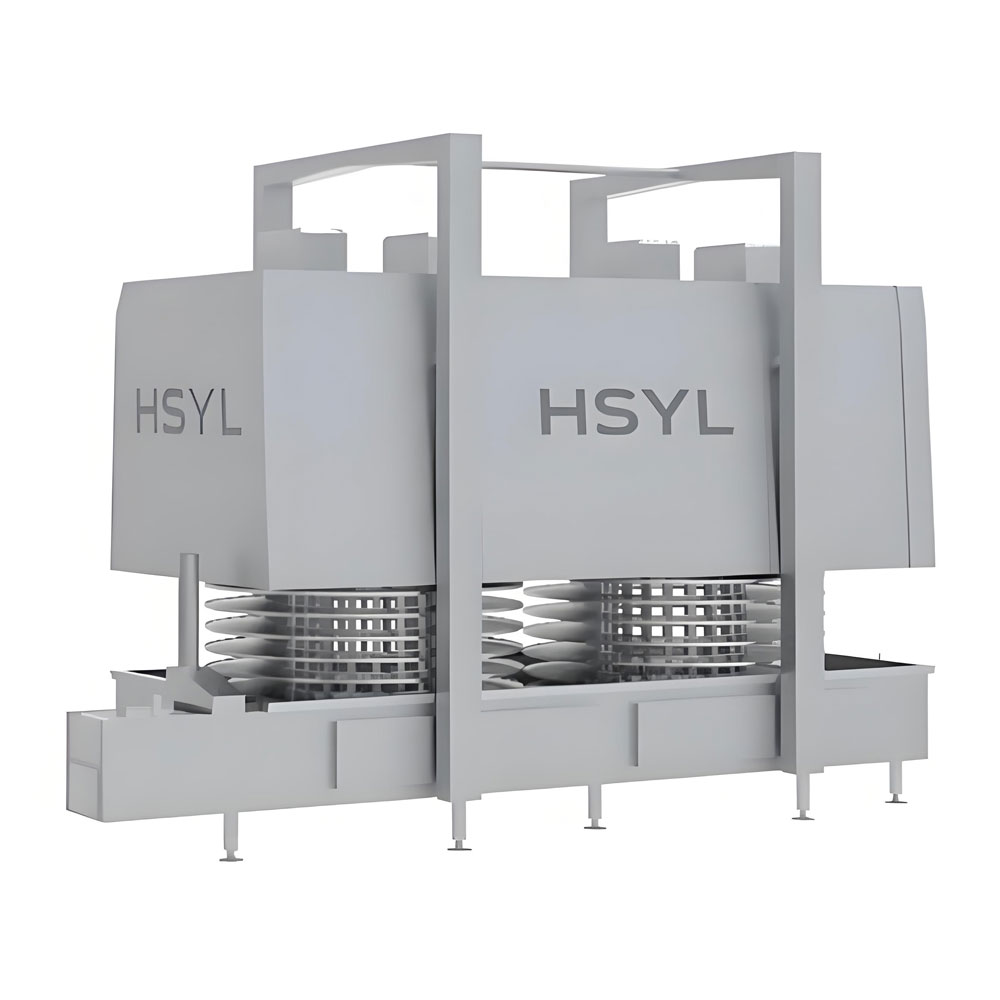
Map spiral oven cleaning across belt surfaces, returns, supports and product rou...
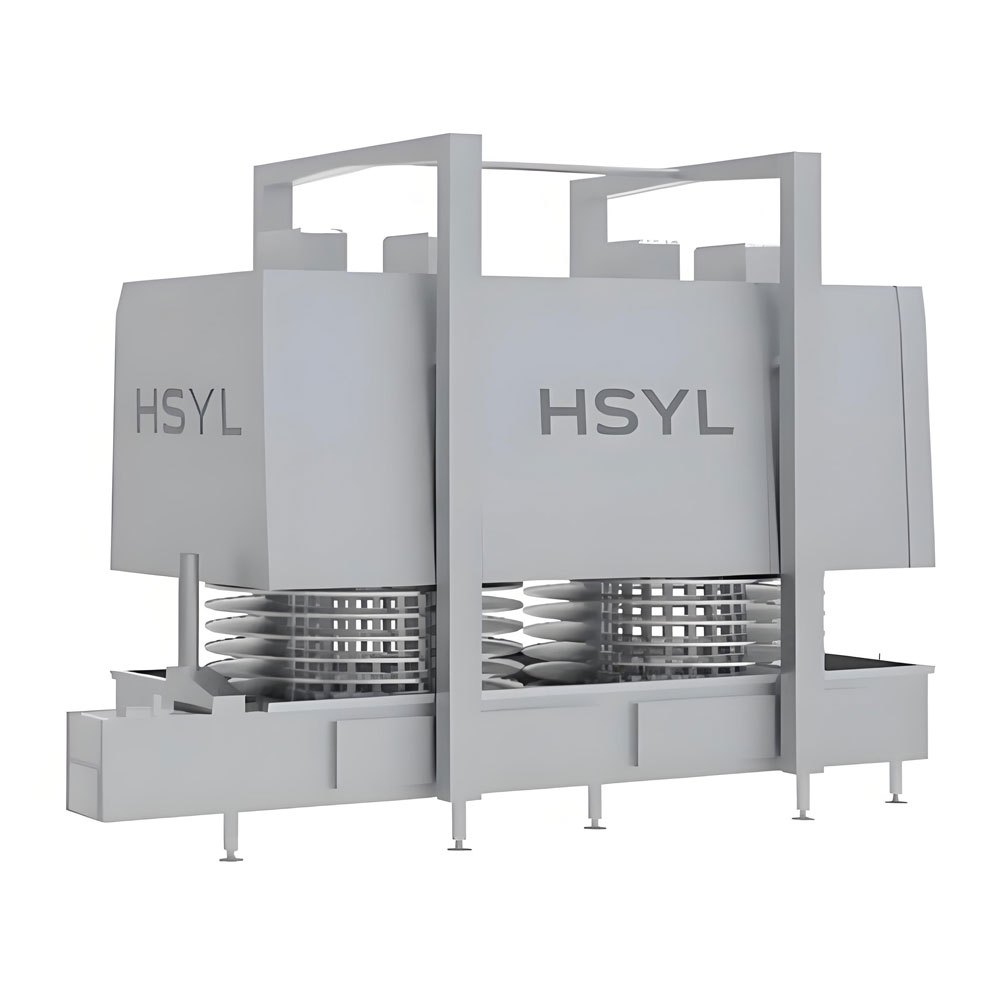
Compare spiral and tunnel oven proposals on the same product, quality target, fa...
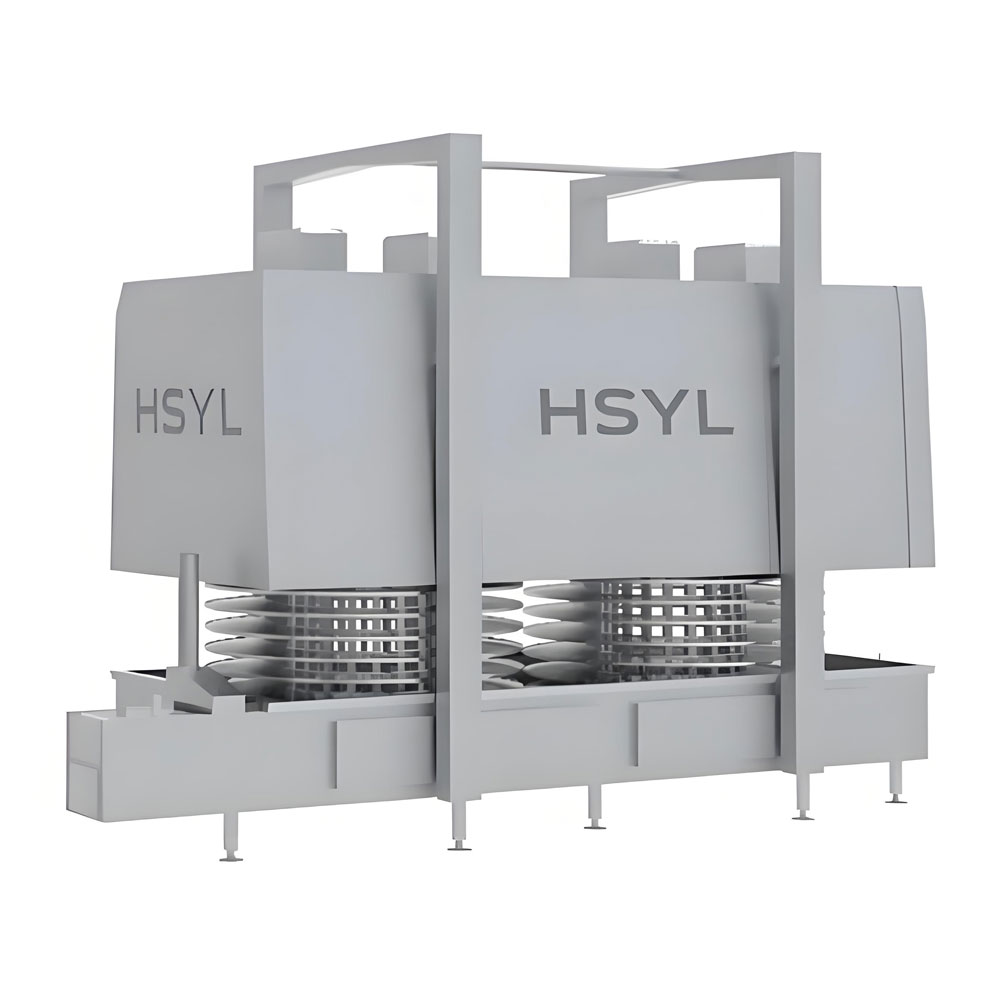
Assess spiral oven capacity through product spacing, belt loading, process condi...