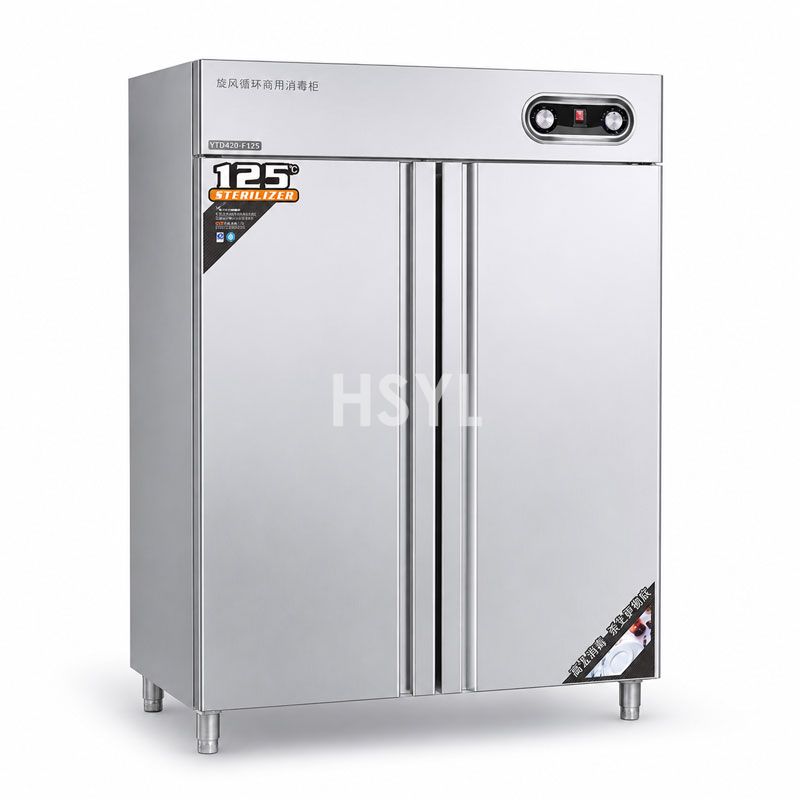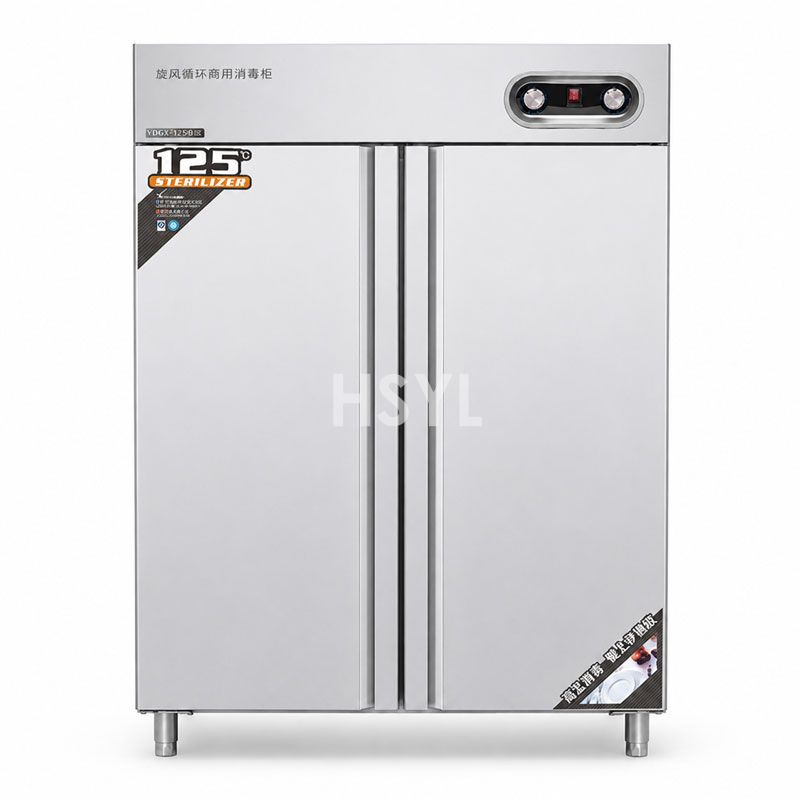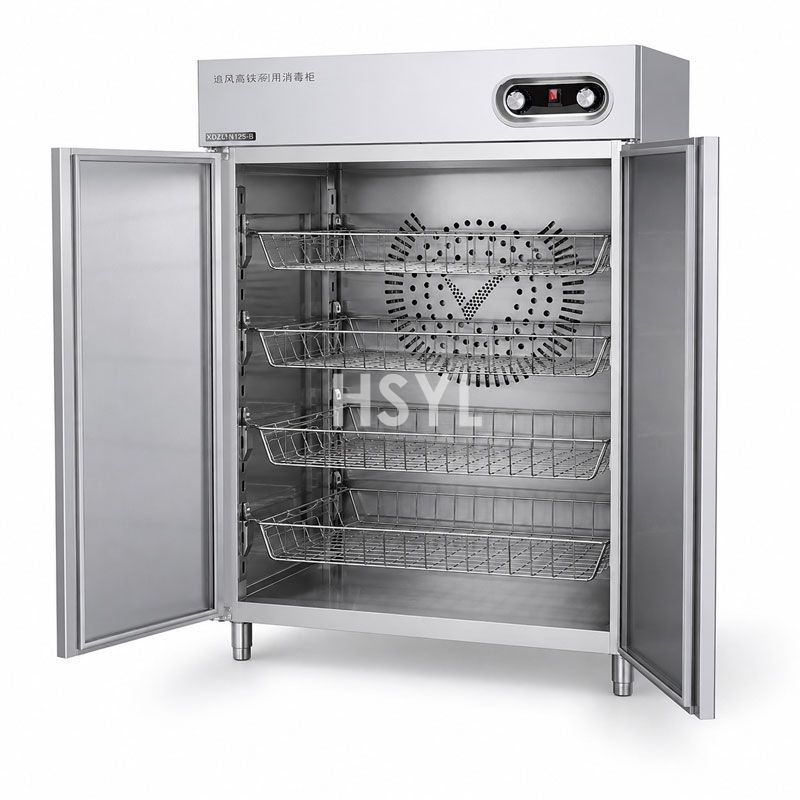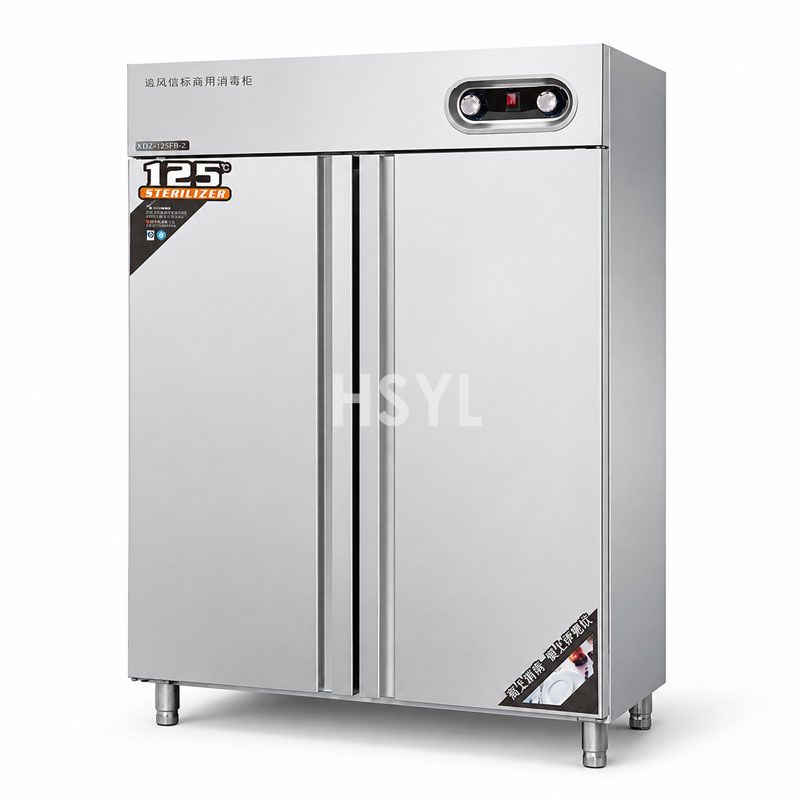
Flat-Door A Sterilizer Cabinet — 125°C Far Infrared Hot Air Circulation Commercial Sterilization Unit

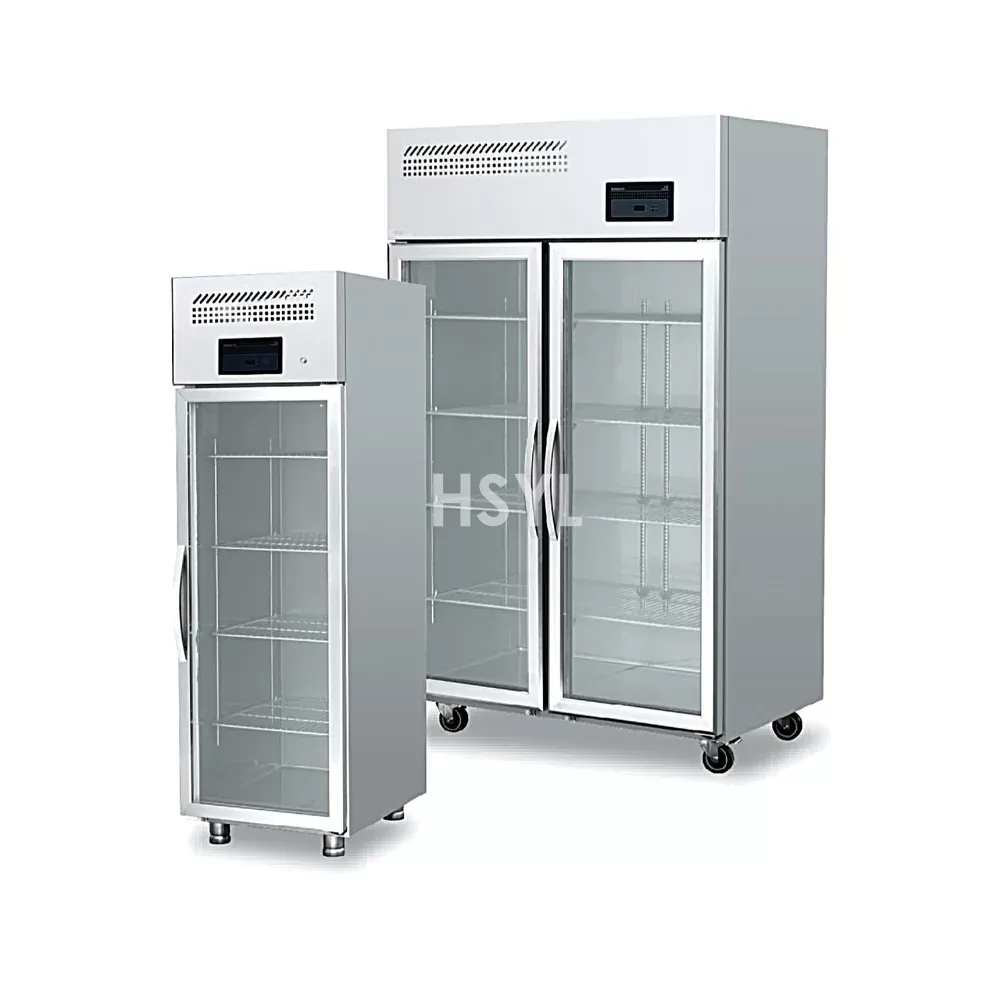
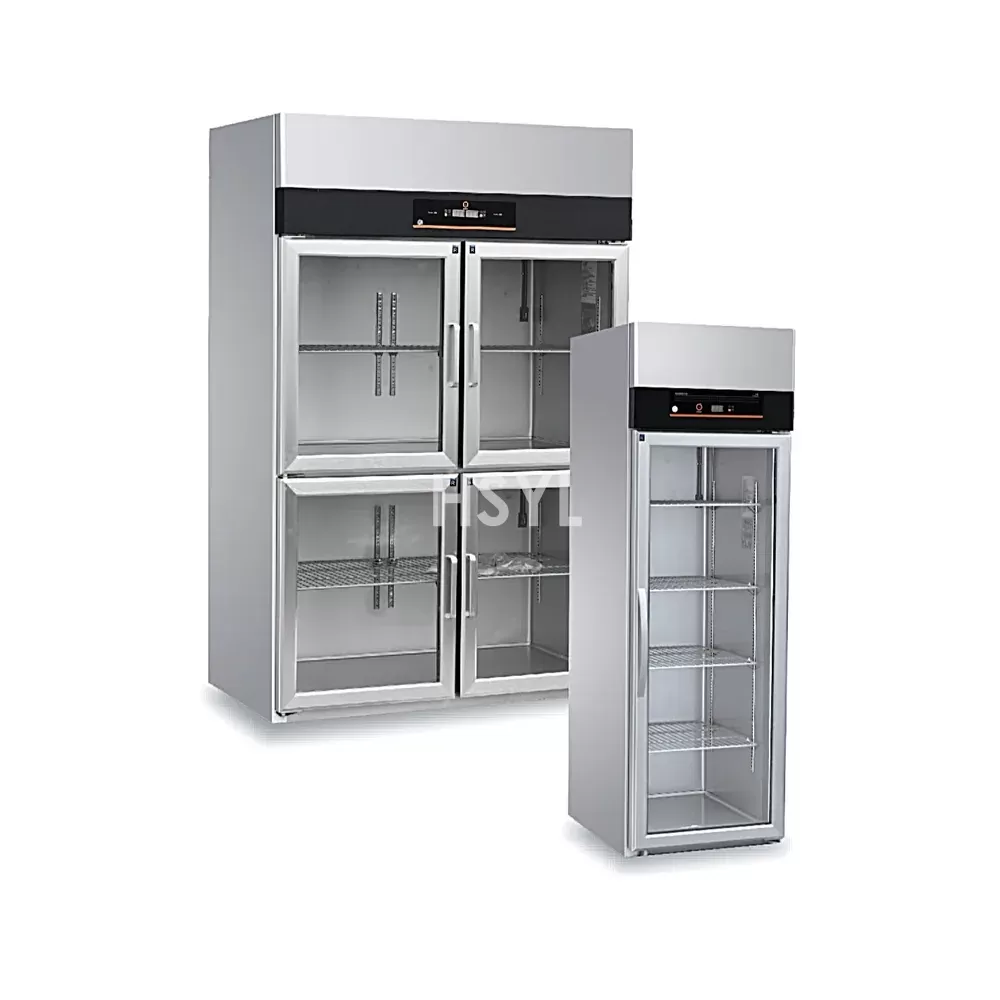
HSYL Flat-Door A Sterilizer Cabinet (348JA14 / 740JA28) — 4-layer and 8-layer commercial hot air sterilizers. 125°C far infrared, 360° circulation, 348-740L, SUS201 stainless steel. For hotels, canteens, food factories.

Detailed Equipment Introduction
Gain in-depth insights into Flat-Door A Sterilizer Cabinet — 125°C Far Infrared Hot Air Circulation Commercial Sterilization Unit equipment’s working principles, application scenarios, and technical highlights.

Chemical-Free Thermal Sterilization That Reaches Every Surface

Hotel banquet kitchens cycling hundreds of plates per service. University dining halls managing thousands of utensils across multiple meal periods daily. Food processing plants where cross-contamination between production batches carries regulatory and liability consequences. Catering operations transporting equipment between venues where sanitation credibility directly impacts client retention. These environments share a requirement that chemical sanitizers cannot reliably satisfy: the need for documented, repeatable, residue-free elimination of bacteria, viruses, parasites, yeasts, and other pathogens from every surface of every utensil, tool, and container entering the food contact chain.

The HSYL Flat-Door A Sterilizer Cabinet addresses this requirement through a fundamentally different approach compared to chemical immersion or ultraviolet exposure methods. The unit generates 125 degree Celsius far infrared heated air circulated continuously through a 360-degree stereoscopic airflow pattern that physically penetrates the interior chamber volume from all angles simultaneously. This circulating high-temperature airstream reaches every surface of loaded items including recessed areas, overlapping edges, textured handle grips, and the undersides of items resting on shelves below — locations where static-heat ovens develop dangerous cold spots and where UV light cannot achieve line-of-sight exposure.

The sterilization mechanism operates at the molecular level rather than through surface treatment alone. At 125 degrees Celsius sustained through the programmed cycle duration, the thermal energy disrupts the cellular membrane integrity of microorganisms present on item surfaces, then penetrates sufficiently to damage the deoxyribonucleic acid (DNA) helix structure within those cells. This DNA destruction is irreversible: once the genetic material sustaining bacterial reproduction is compromised, the organism cannot recover, replicate, or produce toxins regardless of subsequent environmental conditions. The process achieves immediate kill status for target pathogens including common foodborne illness agents without leaving chemical residues, without requiring post-rinse steps, and without generating hazardous waste streams requiring special disposal procedures.

The series comprises two capacity configurations sharing an identical 645 by 645 by 1960 millimeter cabinet footprint. The 348JA14 model provides 4 shelf layers with 348 liters of usable internal volume drawing 2.2 kilowatts, suited to smaller operations or installations where floor space allocation for sanitation equipment must remain minimal. The 740JA28 model doubles the layer count to 8 shelves with 740 liters of volume drawing 4.4 kilowatts, designed for high-throughput environments where maximizing sterilized-item inventory between wash cycles reduces bottleneck risk during peak service periods. Both models use identical far infrared heating tube technology, identical 360-degree circulation architecture, identical 3 centimeter insulation layer maintaining thermal efficiency during extended operation, and identical 12 centimeter caster base enabling repositioning within the kitchen workspace.

Technical Specifications

Parameter348JA14 (4-Layer)740JA28 (8-Layer)
Model348JA14740JA28
Cabinet Size (W x D x H)645 x 645 x 1960 mm
Shelf Size (per position)560 x 395 x 260 mm
Sterilization Layers4 Layers8 Layers
Capacity348 Liters740 Liters
Rated Power2.2 kW4.4 kW
Voltage220V (single-phase)
Temperature Range50 - 125 degrees Celsius
Sterilization Temperature125 degrees Celsius
Insulation Layer Thickness3 cm (overall foaming)
Caster Height12 cm
Construction MaterialSUS201 Stainless Steel (interior + exterior)
Heating SystemFar infrared electric heating tubes
Air Circulation360-degree stereoscopic high-temp hot air circulation
Net Weight63 kg110 kg
CustomizationAvailable per customer specification

Operation Process

  1. Load Items & Arrange Layers. Pre-wash all utensils, plates, bowls, cutting boards, containers, and tools to be sterilized using your primary washing system removing visible food residue and grease film. Allow items to drain briefly then arrange them on the shelf positions (4 layers for 348JA14, 8 layers for 740JA28) using the 560 by 395 millimeter shelf area efficiently while maintaining spacing between adjacent items allowing the 360-degree circulating hot air to reach all exposed surfaces. Avoid overcrowding individual shelf positions since dense stacking creates insulating air pockets that block thermal penetration to interior-facing surfaces of nested items.
  2. Close Door, Set Temperature & Start Cycle. Pull the flat door closed firmly engaging the latch mechanism which seals the chamber against heat loss. Select the target operating temperature on the control panel (typically 125 degrees Celsius for full sterilization cycles, lower temperatures available for warming-only or drying applications). Initiate the heating cycle. The far infrared tubes begin generating thermal energy immediately while the circulation fan activates establishing the stereoscopic airflow pattern distributing heated air throughout the chamber volume from multiple directional vectors. Cycle duration varies by load density and item mass typically ranging from 20 to 45 minutes for full sterilization at 125 degrees Celsius.
  3. Maintain Cycle & Verify Completion. Monitor the chamber through the tempered glass window (if equipped on selected configurations) or observe the control panel temperature indicator confirming the unit reaches and sustains the target temperature throughout the programmed duration. The 3 centimeter insulation layer minimizes external heat radiation keeping surrounding work surfaces at safe temperatures during operation. When the cycle timer elicits completion, the control system indicates readiness. Do not open the door immediately if rapid cooling of glassware or ceramic items risks thermal shock cracking; allow a brief natural cool-down period of 3 to 5 minutes before opening for these material types.
  4. Unload, Transfer & Reset. Open the flat door carefully allowing any residual hot air to vent away from hands and face. Remove sterilized items using clean handling tools or heat-resistant gloves depending on remaining surface temperature. Transfer items directly to designated sanitized-storage areas, serving lines, or clean-dish staging stations without intermediate placement on unsterilized surfaces which would reintroduce contamination defeating the purpose of the sterilization cycle. Close the empty cabinet door to maintain internal cleanliness and prepare for the next loading cycle. For continuous-operation facilities running back-to-back cycles, reload immediately and initiate the next cycle; for intermittent use, power down the unit and ensure adequate clearance around the cabinet for air circulation during cooldown.

Applications & Use Cases

Sterilizable Item Categories

CategoryItemsLoading Notes
TablewarePlates, bowls, cups, saucers, serving dishesStack vertically with spacers; maximize layer density
UtensilsCutlery sets, serving spoons, tongs, ladlesUse trays or baskets; avoid tangling blocking airflow
ContainersFood storage bins, prep containers, lidsPlace lids separately exposing interior surfaces
ToolsCutting boards, knives (handle-down), gratersLarge items on lower layers; verify fit within 260mm shelf depth
Service ItemsTrays, stands, napkin holders, condiment dispensersDismantle removable components for thorough surface exposure
Small EquipmentThermometers, small molds, portioning toolsBasket containment recommended preventing fall risk

Sterilization Mechanism & Pathogen Coverage

The 125 degree Celsius far infrared hot air circulation system achieves pathogen elimination through direct thermal disruption of cellular structures rather than chemical poisoning or radiation damage pathways. At sustained temperatures exceeding 125 Celsius, the lipid bilayer forming microbial cell membrane structures undergoes phase transition causing loss of structural integrity and leakage of intracellular contents. Simultaneously, the thermal energy denatures critical protein enzymes required for metabolic function, and most importantly for sterilization assurance, causes irreversible strand separation and base-pair disruption in the DNA molecule carrying genetic information necessary for organism replication. This triple-action mechanism ensures that even thermally tolerant bacterial endospores and hardy viral particles present on item surfaces sustain lethal damage during properly executed cycles. The 360-degree stereoscopic airflow pattern is essential to this outcome because it delivers the lethal thermal dose to shadowed areas, recessed geometries, and stacked-item interfaces where static-heat or line-of-sight methods fail to achieve required temperature-time exposure values.

Target Environment Profiles

  • Hotel Restaurants & Banquet Operations. High plate turnover volumes during service periods require continuous sterilization throughput. The 740JA28 with 8 layers accommodates complete place setting inventories between seating rotations. 125 Celsius cycle time fits within standard pre-shift preparation windows. Chemical-free output satisfies guest expectations regarding sanitation quality perception.
  • Institutional Canteens (schools, hospitals, factories, military). Large populations consuming meals simultaneously generate massive utensil volumes requiring systematic batch sterilization. The units integrate into existing dishwashing workflow as post-wash thermal confirmation step eliminating residual contamination risk. Documentation-friendly cycle parameters support health inspection audit trails.
  • Food Processing Plants & Commercial Kitchens. Regulatory frameworks including HACCP protocols mandate validated pathogen control at critical control points. The units provide thermal kill-step documentation capability with verifiable temperature, time, and cycle logging. 348-liter and 740-liter options scale to match facility throughput tier.
  • Catering Companies & Event Service Providers. Mobile or multi-site operations transport equipment between venues where each location presents different local health code requirements. Thermal sterilization provides universally acceptable compliance documentation regardless of destination jurisdiction. Integrated casters enable movement between vehicle, setup site, and breakdown area.
  • Bakeries, Cafes & Specialty Food Retailers. Smaller-scale operations with focused utensil inventories benefit from the 348JA14 compact 4-layer configuration fitting tight footprints while still delivering full 125 Celsius sterilization performance. Lower 2.2 kilowatt draw suits limited electrical infrastructure common in retail lease spaces.

Advantages of the Flat-Door Sterilizer Series

  1. 125 Degree Celsius Exceeds Standard Boiling Specifications. While many commercial sterilizers operate at or near 100 degrees Celsius (water's boiling point at sea level), the series achieves and sustains 125 degrees Celsius through far infrared heating technology. This 25-degree elevation above boiling provides substantial additional lethality margin against thermally tolerant organisms including certain bacterial spore forms and heat-resistant viral particles that survive marginal-temperature treatments. The higher setpoint also compensates for minor load-induced temperature depression when introducing room-temperature items into the chamber, ensuring actual item-surface temperatures reach effective kill thresholds even under suboptimal loading conditions.
  2. 360-Degree Stereoscopic Airflow Eliminates Cold Spots. Static-heat ovens and top-down-only convection systems inevitably produce temperature gradients within the chamber volume: upper positions run hotter than lower positions, center areas receive better exposure than corner regions, and items shielding underlying surfaces create persistent cold shadows. The 360-degree stereoscopic circulation architecture circulates heated air from multiple vector directions simultaneously ensuring every cubic centimeter of chamber volume receives equivalent thermal exposure over the cycle duration. For compliance-sensitive applications where inspector scrutiny may include placement of test indicators at worst-case positions within the load, uniform coverage eliminates the risk of localized failure triggering citation or rejection.
  3. Far Infrared Heating Technology. Conventional resistive heating elements heat air molecules which then transfer energy to target surfaces through convection only. Far infrared heating tubes emit electromagnetic radiation in the infrared spectrum that transfers thermal energy directly to solid surfaces upon contact independent of intervening air temperature. This dual-pathway heating (direct infrared absorption plus convective air heating) accelerates warm-up time, improves energy efficiency by reducing losses to ambient air, and produces more consistent surface temperatures on items regardless of their position relative to heating element locations within the chamber.
  4. Identical Footprint Across Double Capacity Range. Both the 348-liter 4-layer model and the 740-liter 8-layer model occupy exactly the same 645 by 645 millimeter floor footprint with identical 1960 millimeter total height. Facilities initially deploying the 348JA14 can upgrade to 740-liter capacity without reallocating floor space, modifying installation cutouts, or revising utility connection points beyond verifying electrical circuit adequacy for the additional 2.2 kilowatt draw increase. This footprint-consistent scaling simplifies long-term capacity planning and reduces retrofit costs compared to product lines requiring larger physical envelopes for higher-capacity variants.
  5. Chemical-Free Residue Output. Every item exiting a sterilization cycle carries zero chemical residue, zero odor transfer, and zero taste contamination risk. Unlike chlorine-based sanitizers leaving detectable aftertastes on porous materials, quaternary ammonium compounds requiring rinse steps that re-introduce waterborne contamination risk, or ozone systems generating oxidizing atmospheres degrading certain plastics and rubbers over repeated exposure, the pure-thermal process modifies nothing about the item surface chemistry except temperature history. For premium tableware materials including fine china, crystal glassware, specialty polymers, and natural wood-handled tools, chemical-free processing preserves material integrity across thousands of cycles that aggressive sanitizers would degrade.

Complete Your Sanitation & Hygiene Station

  • Commercial Washing & Cleaning Machines — Primary upstream step before sterilization: HSYL washing machines providing thorough pre-cleaning removal of food residue and organic matter from utensils, reducing soil load entering the sterilization chamber and improving cycle efficiency and final hygiene outcomes.
  • Commercial Kitchen Solutions — Complete workflow planning guidance integrating the sterilizer into comprehensive kitchen hygiene zones covering layout optimization for wash-rinse-sanitize-dry sequences, utility coordination for 2.2 to 4.4 kilowatt loads, and personnel flow patterns minimizing cross-contamination risk between soiled and sanitized item handling paths.
  • Equipment Downtime Prevention Guide — Maintenance schedules, early warning indicators, and troubleshooting procedures specific to heating element longevity, circulation fan service life, seal integrity, and electrical connection reliability for units operating at sustained 125 degree Celsius duty cycles.
  • Food Factory Layout & Cost Guide — Infrastructure planning reference for facilities deploying thermal sterilization equipment: ventilation requirements for heat dissipation, electrical circuit sizing for 2.2 to 4.4 kilowatt continuous loads, drainage coordination, and spatial allocation within overall hygiene zone design.
  • Cooking Range 700 Series — Adjacent hot-zone cooking equipment reference completing the kitchen workstation cluster: after cooking on ranges, utensils proceed to washing stations then through sterilization before returning to active service in a closed-loop hygiene management system.

Request Flat-Door Sterilizer Cabinet Specification & Pricing

The 348JA14 (4-layer, 348 liter) and 740JA28 (8-layer, 740 liter) Flat-Door A Sterilizer Cabinets deliver 125 degree Celsius far infrared hot air circulation sterilization capability in a space-efficient vertical cabinet format suitable for hotels, institutional canteens, food processing facilities, and commercial kitchens requiring documented chemical-free pathogen elimination for utensils, tableware, tools, and food-contact containers. With identical footprints across double the capacity range, 220V single-phase compatibility, full stainless steel construction, and integrated caster mobility, the series adapts to diverse installation environments from compact retail kitchens to high-throughput central production facilities.

Contact HSYL today for detailed technical specifications, current pricing, customization options for specialized dimensional or feature requirements, and application-specific recommendations selecting between the 4-layer and 8-layer configurations based on your daily utensil volume, peak service throughput targets, and available floor space allocation within your existing kitchen layout.
Frequently Asked Questions

What makes the flat-door sterilizer different from standard commercial dish sanitizers?
The HSYL Flat-Door A Sterilizer Cabinet differs from standard commercial dish sanitizers across four fundamental operational characteristics. First, it achieves 125 degrees Celsius sterilization temperature which substantially exceeds the approximately 70 to 80 degree Celsius typical of chemical immersion sanitizers and the 100 degree Celsius boiling-point limit of basic hot-water rinse systems, providing significantly greater pathogen lethality margin particularly against heat-resistant bacterial forms. Second, it uses far infrared heating tube technology combined with 360-degree stereoscopic hot air circulation rather than relying on static heat or chemical bath immersion, meaning thermal energy reaches every surface of every loaded item including shadowed areas and recessed geometries where other methods fail to achieve effective temperature exposure. Third, it operates purely through thermal mechanisms producing zero chemical residue, zero odor transfer, and zero taste contamination on processed items whereas chemical sanitizers leave detectable traces on porous materials and require post-treatment rinsing that re-introduces waterborne contamination risk. Fourth, its flat-door vertical cabinet design with up to 8 configurable shelf layers and integrated caster mobility provides dedicated large-volume sterilization capacity as a permanent workstation rather than functioning as an accessory attachment to dishwashing machinery, supporting documented cycle logging and independent compliance auditing that auxiliary sanitizer attachments cannot provide.
Is 125 degrees Celsius actually necessary or is 100 degrees Celsius sufficient for utensil sterilization?
125 degrees Celsius provides meaningful practical advantages over 100 degrees Celsius boiling-point temperature for commercial food-service sterilization applications although both temperatures achieve pathogen reduction under ideal conditions. The 25 degree elevation serves three concrete functions in real-world operating environments. First, it creates safety margin against temperature depression caused by introducing room-temperature items into the chamber: loading a full rack of 20 degree Celsius plates into a 125 degree Celsius preheated chamber causes temporary local temperature drop near item surfaces, but the elevated setpoint ensures actual item-surface temperatures still exceed the minimum lethal threshold throughout the exposure period whereas a 100 degree Celsius setpoint might dip below effective levels during the initial equilibration phase. Second, it accelerates kill kinetics meaning shorter cycles achieve equivalent or better pathogen reduction than longer cycles at lower temperatures, improving throughput during busy service periods. Third, it addresses thermally tolerant organisms including certain bacterial endospores and non-enveloped viral particles that demonstrate meaningful survival rates at 100 degrees Celsius but experience rapid inactivation above 115 degrees Celsius. For facilities prioritizing maximum assurance over minimum compliance, the 125 degree Celsius specification represents defensible engineering margin.
How does the 360-degree air circulation compare to regular oven-style sterilizers?
Regular oven-style sterilizers rely primarily on either static heat rising naturally from bottom-mounted elements or simple top-down forced convection fans blowing heated air downward through the chamber. Both approaches inherently produce temperature stratification within the chamber volume: upper positions run hotter than lower positions, center areas receive more direct exposure than corner regions, and items placed on lower shelves shield the surfaces of items beneath them creating persistent cold shadows that never reach effective sterilization temperature. The 360-degree stereoscopic air circulation architecture circulates heated air through multiple inlet vectors positioned around the chamber perimeter simultaneously, creating turbulent mixing patterns that equalize temperature throughout the entire internal volume rather than establishing predictable hot and cold zones. This means items loaded on the bottom shelf receive essentially equivalent thermal exposure to items on the top shelf, items positioned near side walls receive equivalent exposure to items centered in the chamber, and items with complex geometries featuring recessed handles, textured surfaces, or overlapping edges receive thermal delivery to shadowed surfaces that static-heat or unidirectional convection systems simply cannot reach. For compliance inspections placing biological indicator strips at worst-case positions within the load, uniform coverage eliminates the risk of localized failure.
What is the difference between the 348JA14 (4-layer) and 740JA28 (8-layer) models?
The primary difference between these two models is internal layer configuration and resulting volumetric capacity within an identical external cabinet envelope. The 348JA14 provides 4 shelf layers yielding 348 liters of usable internal volume drawing 2.2 kilowatts of power, while the 740JA28 doubles the shelf count to 8 layers yielding 740 liters of usable internal volume drawing 4.4 kilowatts of power. Critically, both models share exactly the same external dimensions of 645 by 645 by 1960 millimeters meaning they occupy identical floor space and require identical overhead clearance. The capacity doubling comes from closer shelf spacing and increased layer density within the same cabinet height rather than from enlarging the cabinet itself. Both models use identical far infrared heating tube technology, identical 360-degree circulation system, identical 125 degree Celsius maximum temperature, identical 3 centimeter insulation layer, identical SUS201 stainless steel construction throughout, identical 12 centimeter caster height, and identical 220V single-phase electrical requirement. Selection between them depends primarily on daily utensil volume since the 740JA28 holds more than twice the item count per cycle, and secondarily on electrical circuit availability since the 740JA28 draws twice the current of the 348JA14 requiring verification that the installation site outlet or circuit can safely supply 4.4 kilowatts continuous load.
Can this sterilizer replace chemical sanitizers completely in my operation?
Yes, the unit can serve as the sole sanitization method for utensils, tableware, and food-contact tools in operations choosing to eliminate chemical sanitizers from their hygiene workflow. Thermal sterilization at 125 degrees Celsius meets or exceeds the pathogen reduction performance of approved chemical sanitizers for food-contact surface applications according to international food safety standards including those referenced by HACCP framework guidelines. Several operational factors should inform the decision to fully replace chemicals with thermal-only sanitization. First, throughput timing: chemical sanitization typically completes in 30 to 60 seconds of immersion plus optional rinse time, whereas thermal cycles require 20 to 45 minutes at full temperature meaning the sterilization step takes longer and must be factored into overall dishroom turnaround scheduling. Second, material compatibility: virtually all commercial food-service materials tolerate 125 degree Celsius thermal exposure repeatedly, but certain low-quality plastic items, adhesives on inexpensive utensils, or materials with painted or coated finishes may degrade under repeated thermal cycling whereas these same items might survive occasional chemical sanitizer contact. Third, energy versus chemical cost tradeoff: the unit consumes 2.2 to 4.4 kilowatts of electricity per cycle whereas chemical sanitizers consume negligible electricity but incur ongoing consumable chemical purchase cost, storage space allocation, and hazardous material handling training requirements. Most facilities adopting full thermal replacement report favorable outcomes when the capacity matches or exceeds their peak cycle volume needs and when staff training emphasizes proper loading technique maximizing air circulation around all item surfaces.
What items can and cannot be placed inside the flat-door sterilizer cabinet?
The sterilizes effectively any solid, non-flammable, food-contact-safe material capable of withstanding 125 degree Celsius sustained temperature exposure without deformation, melting, delamination, or combustion risk. Approved item categories include all metal tableware (stainless steel, silver-plated, aluminum), ceramic and porcelain dinnerware, tempered glassware, heat-resistant plastic containers rated for dishwasher temperatures, silicone utensils and baking tools, wooden cutting boards and serving items (surface drying expected, no structural damage), and composite materials explicitly labeled as high-temperature safe. Items that must NOT enter the chamber include any item containing electronic components (digital thermometers with batteries, battery-powered timers), pressurized containers (aerosol cans, compressed gas cartridges), flammable materials (oil-soaked cloths, alcohol-containing preparations), low-melting-point plastics not rated for high-temperature exposure (certain thin disposable containers, foam products), items with adhesive labels or tapes that will melt and deposit residue on heating elements or interior surfaces, and extremely delicate items such as hand-painted ceramics where pigments may discolor or craze at 125 degrees Celsius. When uncertain about a specific item, perform a test cycle at reduced temperature first observing for any sign of material change before committing the item to full 125 degree Celsius production cycles.
How much maintenance does the flat-door sterilizer require?
The unit requires routine maintenance at three intervals appropriate to its operating profile as a sustained high-temperature appliance. Daily maintenance involves wiping the interior chamber surfaces with a damp cloth after the final cycle of each operating day to remove any condensed moisture, food particle traces, or mineral deposits accumulating from steam released by heated item surfaces. Weekly maintenance includes inspecting the door seal gasket for compression set or debris buildup that could compromise thermal sealing efficiency, checking that caster wheels rotate freely and locks engage positively, and verifying the exterior tempered glass panel remains clean and free of cracks. Monthly maintenance encompasses testing the circulation fan for unusual noise or vibration indicating bearing wear, inspecting far infrared heating tubes for visible discoloration or coating degradation, and reviewing control panel calibration accuracy using an independent thermometer probe placed inside the chamber during a test cycle. Quarterly or semi-annual professional service includes electrical connection retorquing, deep cleaning of air intake and exhaust ports removing accumulated dust that could impede airflow, and replacement of door seals showing age-related compression fatigue. Overall maintenance burden is modest compared to chemical sanitizer systems requiring daily solution mixing, concentration testing, pH monitoring, disposal procedure compliance, and container rotation tracking.
Does this sterilizer need professional installation or can I set it up myself?
The unit requires minimal professional intervention for standard installation scenarios. Physical setup involves positioning the unit on a level floor surface capable of supporting 80 kilograms (348JA14 model) or 130 kilograms (740JA28 model) including maximum loaded weight, engaging the caster wheel locks to prevent movement during operation, and plugging the power cord into a compatible 220V outlet. No plumber is required because the unit uses dry heat only with no water connections. No floor anchoring is mandatory though some facilities choose to secure the cabinet against tipping in high-traffic areas. No permit filing triggers in most jurisdictions since the unit classifies as portable appliances similar to commercial microwaves or toaster ovens. Professional involvement becomes advisable in two situations: first, if the installation site lacks an existing 220V outlet of adequate amperage rating (the smaller model draws approximately 10 amperes, the larger model draws approximately 20 amperes at 220 volts) requiring an electrician to install a new circuit or upgrade an existing one; second, if the facility intends to integrate the unit with automated conveyor systems, interlocked access controls, or centralized monitoring networks requiring integration programming beyond the standalone control panel capabilities. For straightforward plug-and-operate deployment in existing kitchens with adequate electrical infrastructure, self-installation by competent staff following the included operation manual is fully appropriate.
Certifications
Internationally recognized certifications guarantee equipment reliability and compliance.
CE Certification

CE Certification

ISO 9001

ISO 9001

FDA Certification

FDA

Halal Certification

Halal Certified

Environmental Certification

Environmental Certification

Patented Technology

Patented Technology

Are you ready to customize your next production line?

Get professional customized solutions

Fill in your requirements, and our expert team will tailor the optimal food equipment solution for you.

Format: +[country code][number] (e.g. +8615098926008)

Your information will be kept strictly confidential, and we guarantee a response to your inquiry within 24 hours.