A canning line capacity plan should connect customer demand with the time available to produce accepted packs. A supplier's maximum running rate is one input; it does not show whether the planned product mix fits the factory's operating window.
Start with orders expressed in identifiable products and container formats. The useful planning question is whether the complete route can deliver those packs within the agreed period, including the work between runs.
Convert demand into a product mix
List the products, pack formats and accepted quantities required in the planning period. Separate confirmed demand from forecasts. Record any delivery sequence that limits how freely production can group similar products.
Do not combine every can into one average unit if formats or products use different handling and process arrangements. Keep the differences visible until the team has evidence that a common planning basis is appropriate.
Build the available production window
Account for staffing, cleaning, planned maintenance, product changes and other scheduled work. Explain the counting boundary. If a task sits outside planned production time in one calculation, do not place it inside that boundary in a competing proposal merely to improve the comparison.
| Planning input | Evidence behind it |
|---|---|
| Accepted-pack demand | Product and container references with the demand period |
| Running basis | Representative rate evidence for that actual product and configuration |
| Non-running work | Defined changeover, cleaning and planned service tasks |
| Batch operations | Loading, processing, unloading and handling sequence |
| Staffing | Assigned work, coverage and operating responsibilities |
Use the TCO and OEE definition guide when the plan uses formal performance measures. Preserve the distinction between demonstrated conditions and assumptions still awaiting evidence.
Place the batch operations on the schedule
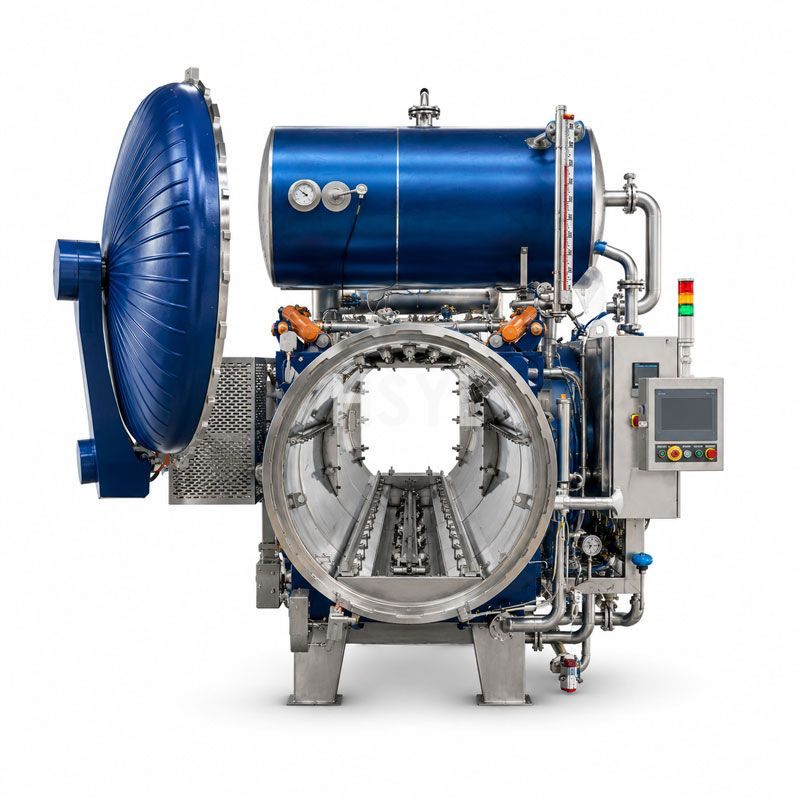
A filler can supply containers continuously while the downstream route works in batches. Draw those events on the same time basis. Include the actual basket-handling arrangement and the approved product-process requirements rather than assuming that vessel capacity alone determines output.
Review the retort system with its loading interfaces. The plan should identify where product waits and how its identity and status remain controlled under the factory's procedures.
Test the plan before committing to a larger machine
Examine the assumptions that most affect the decision: demand mix, available hours, changeover work and the constrained operation. If evidence is missing, identify the observation or trial that would resolve it. An unexplained allowance does not turn an uncertain rate into a reliable commitment.
Use the line bottleneck guide for an operating plant, or the turnkey project scope guide for a new project. A reviewable capacity plan states the products, time boundary, evidence and unresolved constraints behind the selected canning line configuration.
Frequently Asked Questions
Should I plan from cans per minute or cans per day?
Can I group products only to minimize changeovers?
Does extra retort capacity always resolve a shortfall?
Related Articles



Get professional consultation
Do you have any questions or need technical support regarding the content of this article? Fill out the form below, and our expert team will provide you with professional solutions.