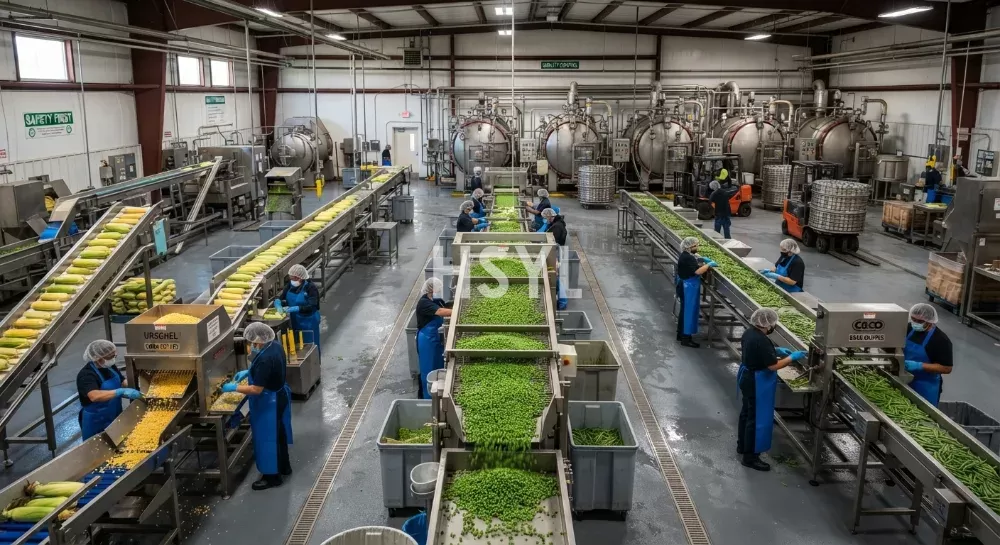
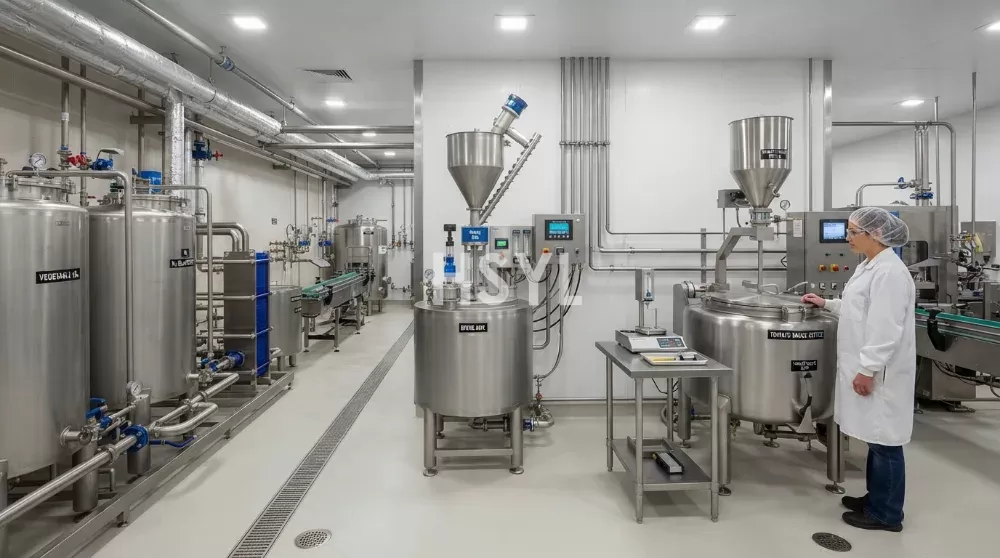
Low-Acid Canned Vegetables: Corn, Peas and Green Beans Processing Line
Low-acid canned vegetable processing line for corn, peas, and green beans. Press...
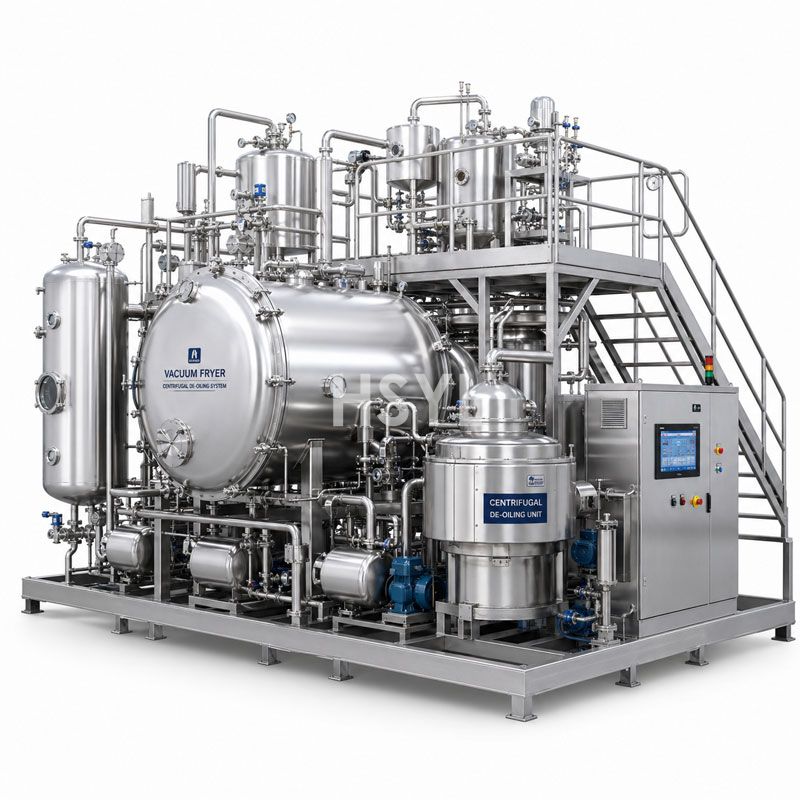
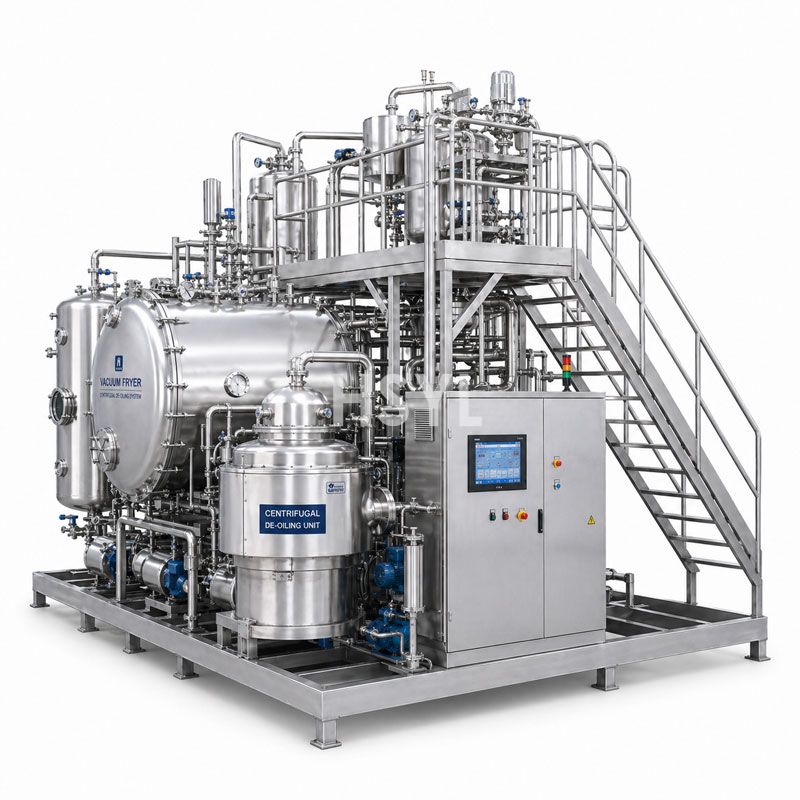
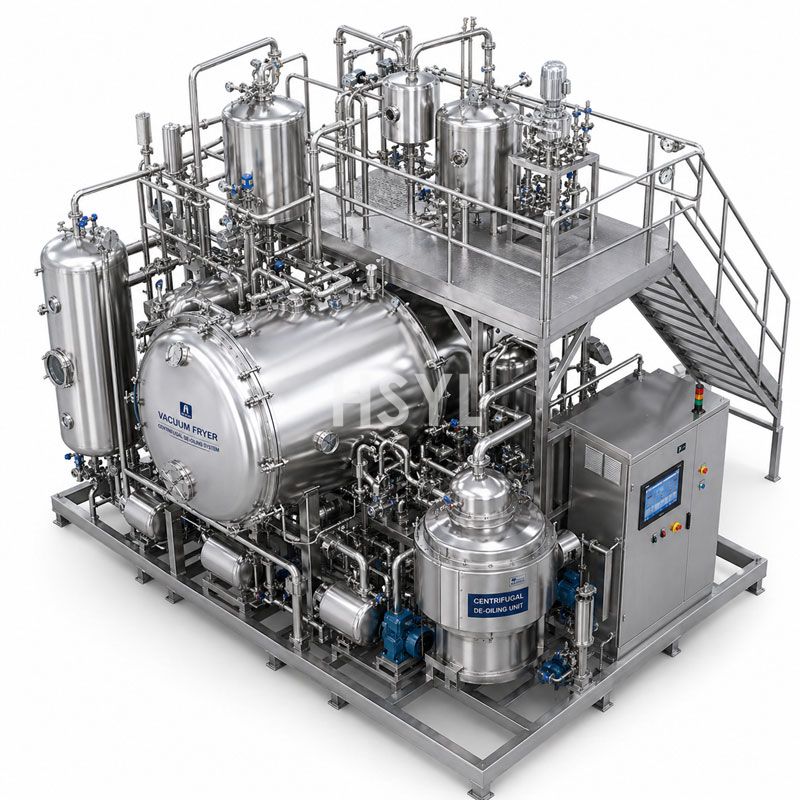
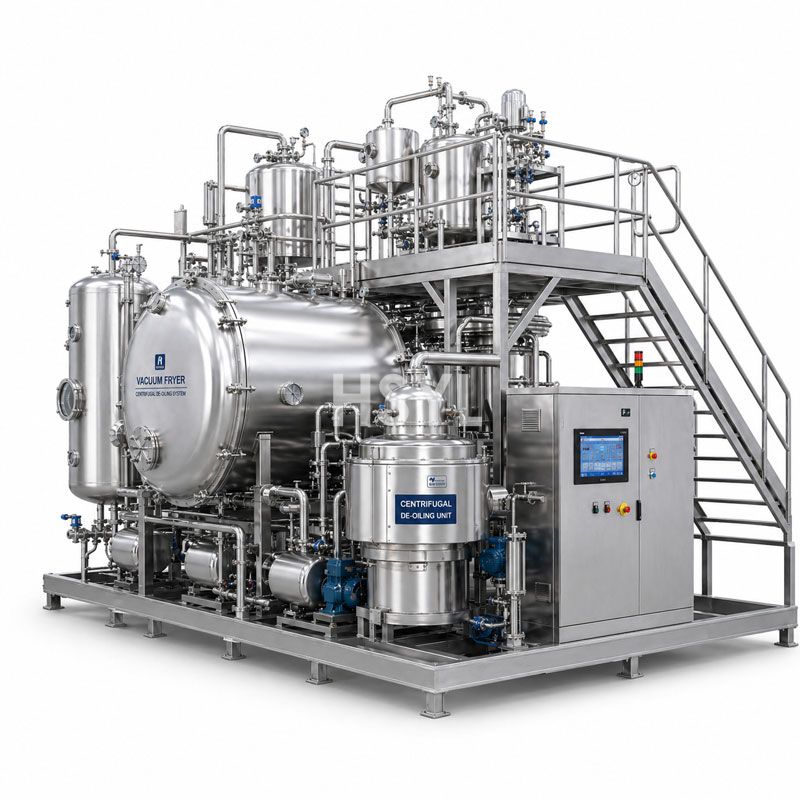
Eliminate external spinning lines. Our centrifugal de-oiling vacuum fryer integrates high G-force extraction directly into the vacuum chamber to minimize oil absorption.
When engineering an elite snacking production line, plant managers are ultimately forced to evaluate exactly how hot oil is extracted from the finished product. In historical factory setups, operators manually hoisted wet, oily snacks out of a fryer and dumped them into a separate atmospheric centrifugal spinner. This delayed open-air transfer inevitably resulted in heavy oil absorption as the product cooled, along with severe oxidation. By permanently integrating high-torque centrifugal de-oiling equipment directly inside the sealed vacuum chamber, this specialized machinery fundamentally redesigns the deep-frying sequence, guaranteeing that intense G-force oil extraction occurs long before atmospheric pressure is ever reintroduced.
Positioning a high-speed rotational device inside a severe negative-pressure hot zone (-0.098 MPa at 100°C) presents a monumental engineering hurdle. If 200 kilograms of raw roots or fruits are loaded unevenly into the basket, the resulting eccentric rotation can induce massive vibrational resonance, threatening the structural integrity of the vacuum vessel. To eradicate this hazard, our engineering teams construct the inner basket using strict dynamic rotor balancing protocols.
The main drive shaft is machined from oversized solid SUS316L billet and supported by aggressive industrial thrust bearings mounted externally. This allows the heavy-duty variable frequency inverter (VFD) to spool the load up to maximum RPM smoothly, shedding the oil payload without transmitting chaotic, destructive kinetic energy into the factory floor.
| System Frame Architecture | Centrifuge Payload (kg/batch) | Drive Shaft Seal Standard | Dynamic Rotor Balancing | Centrifugal Motor Topology | Maximum Operating G-Force | Complete System Power (KW) | Footprint Layout (mm) |
|---|---|---|---|---|---|---|---|
| VF-CD150 | 150 kg | Multi-Stage Mechanical Seal | ISO 1940-1 Class G6.3 | Servo-Driven VFD Inverter | Fully Adjustable via HMI | 22 KW | 3100 * 2400 * 2650 |
| VF-CD300 | 300 kg | Multi-Stage Mechanical Seal | ISO 1940-1 Class G6.3 | Servo-Driven VFD Inverter | Fully Adjustable via HMI | 35 KW | 4200 * 2800 * 3100 |
Food safety compliance demands that no cross-contamination occurs between the mechanical drive components and the food contact zones. The penetration point where the spinning shaft enters the vacuum chamber utilizes an advanced, redundant mechanical seal cooled by a secondary isolated fluid loop. This absolute barrier ensures that high-pressure lubricating grease never breaches the frying compartment, while simultaneously preventing hot oil vapor from infiltrating the external motor bearings.
Furthermore, cleaning a complex centrifuge basket daily can paralyze production schedules. The chamber is heavily modified to interface with an external CIP Cleaning Machine. High-impact rotary spray balls drench the entire basket and shaft assembly with caustic and neutralizing fluids autonomously, eliminating the need for operators to scrub the internal geometry manually.
Achieving profitable throughput hinges entirely on how swiftly raw product enters the chamber and how efficiently finished product exits. In modern high-capacity operations, we strictly advise connecting this unit into a broader control network. As explored in advanced strategies for food production line automation and conveyor optimization, utilizing smart pneumatic hoists and synchronized bulk feeders ensures the centrifuge basket is loaded to its exact volumetric capacity every single cycle, maximizing the Overall Equipment Effectiveness (OEE).
We supply robust industrial assets engineered specifically for high-stress continuous manufacturing environments.
Are you establishing a premier low-fat snack brand? Forward your specific capacity demands to our corporate engineering desk. We will immediately draft a comprehensive machinery quotation focusing on your anticipated oil-saving ROI and facility footprint criteria.


Low-acid canned vegetable processing line for corn, peas, and green beans. Press...
Complete sardine and mackerel canning line: heading and gutting automation, can ...
The filling medium — the liquid that fills the void spaces between the fish piec...
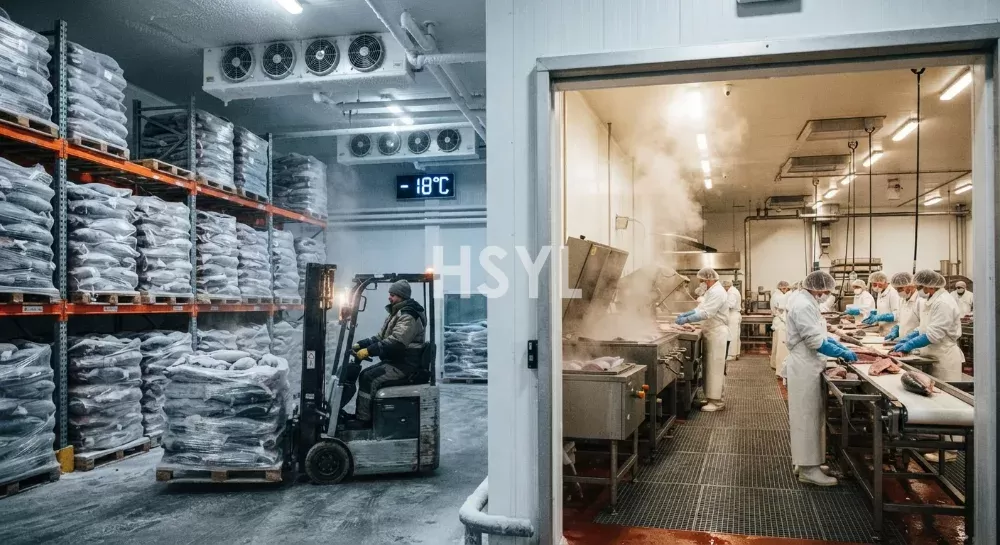
Direct AnswerThe most expensive asset in a fish cannery is not the retort or the...