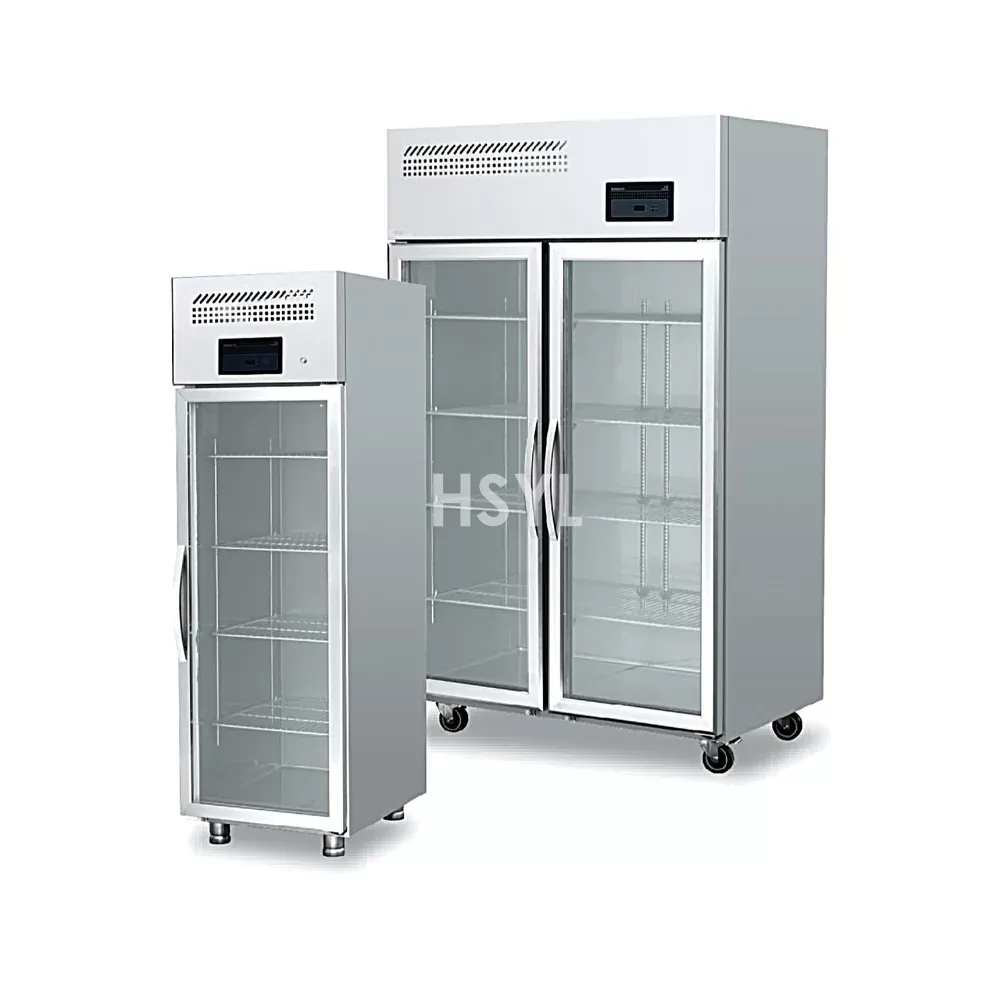
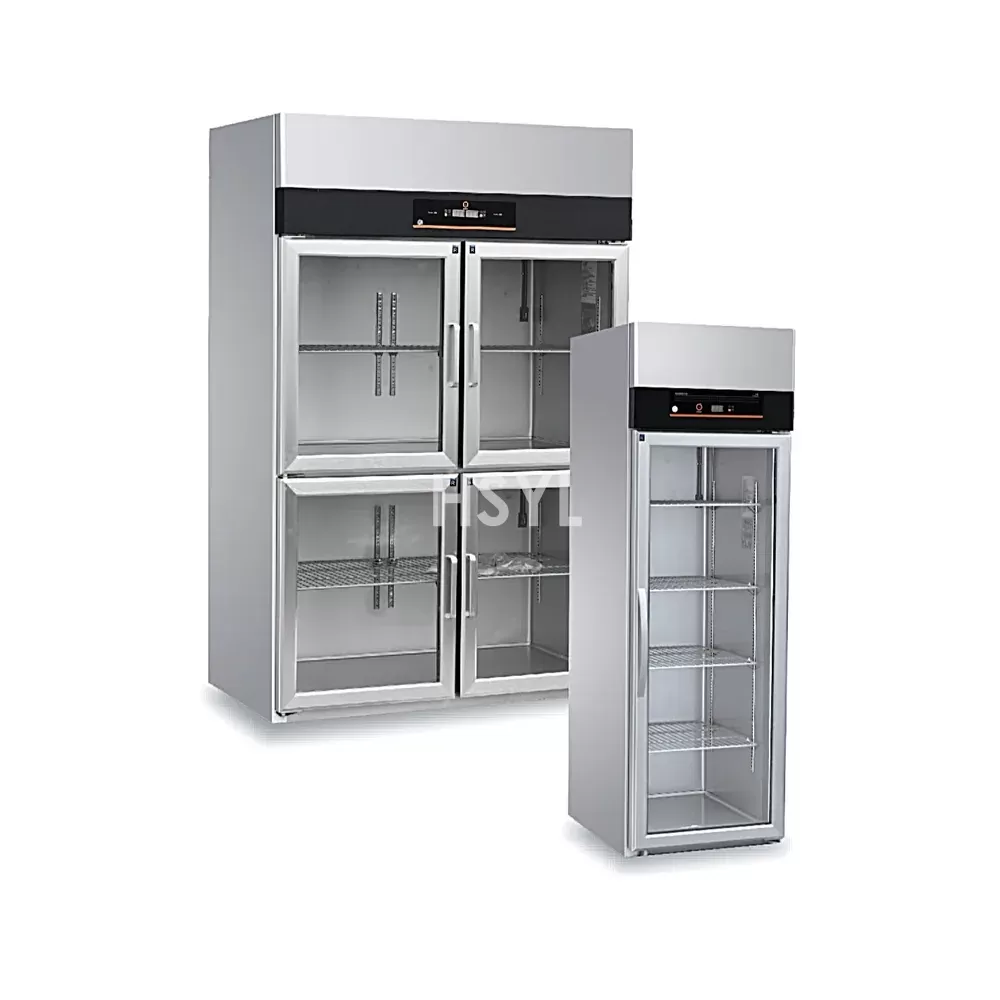
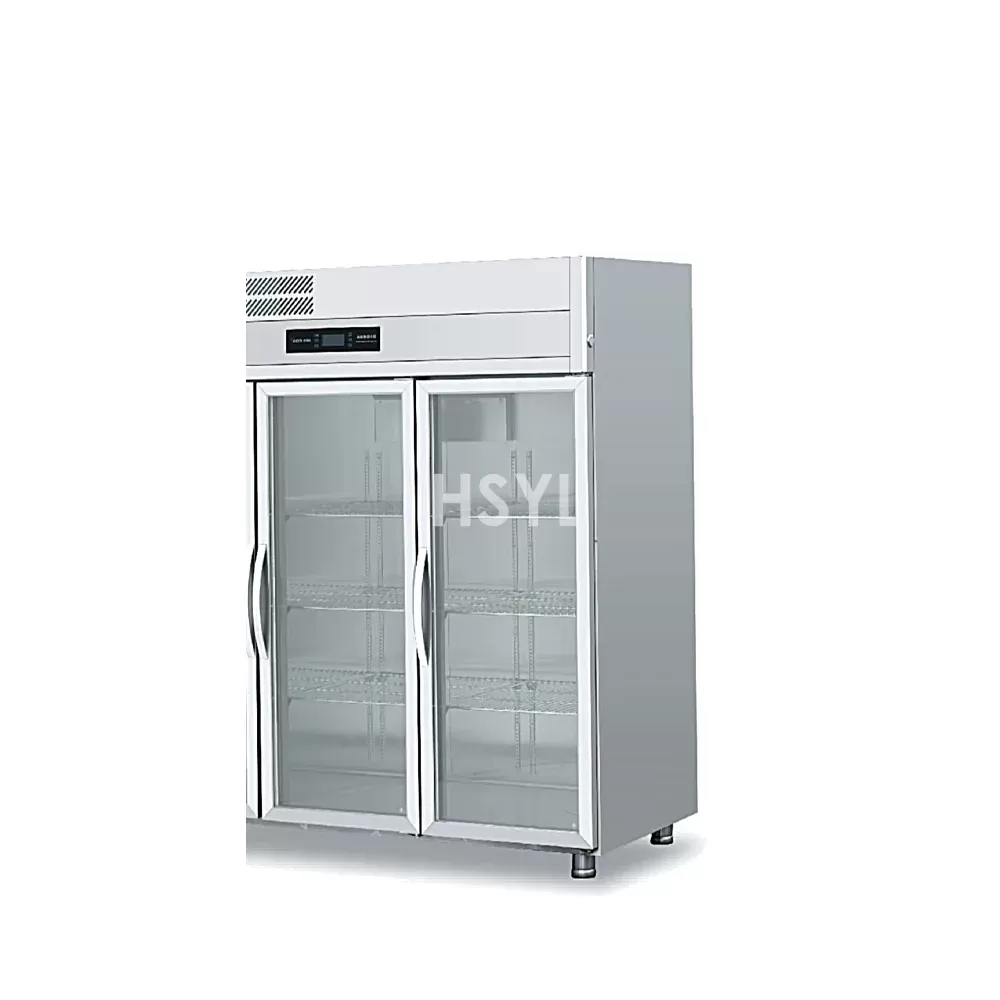
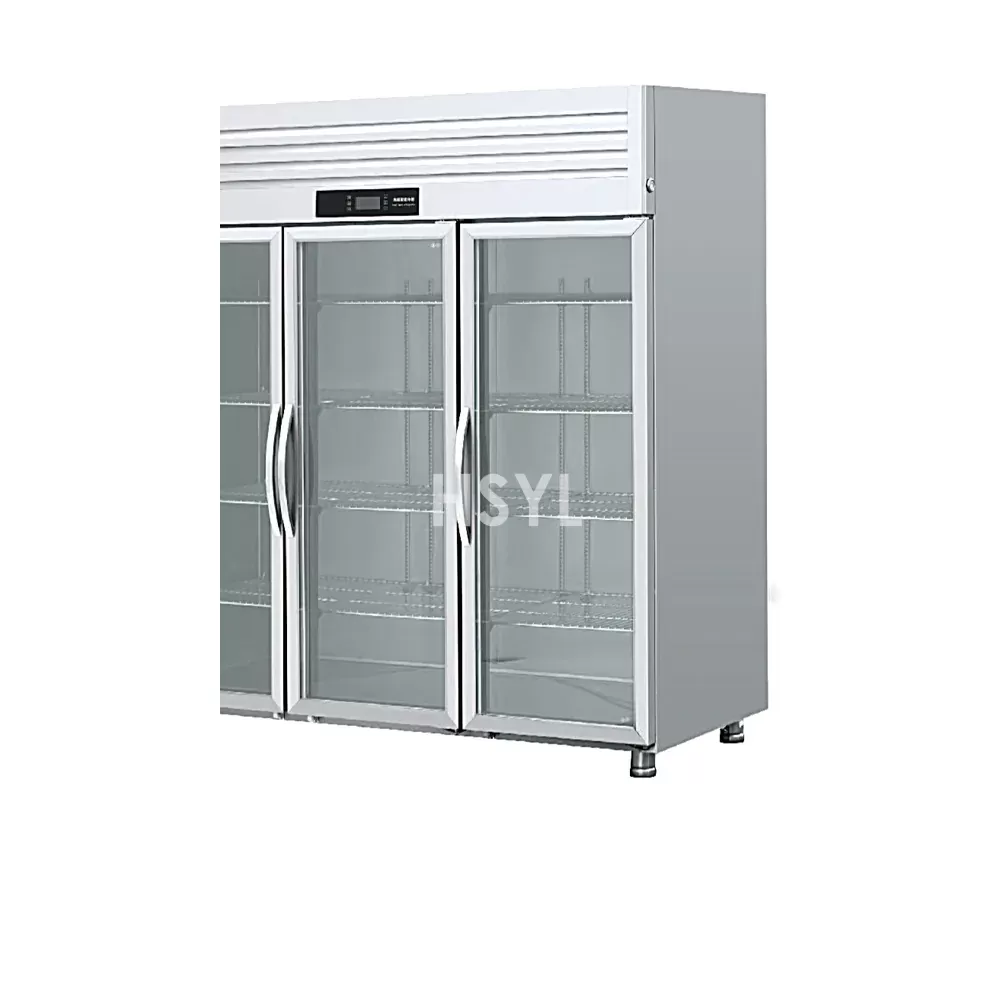
Solution Overview
Selecting a commercial refrigerator supplier is not the same as selecting a general kitchen equipment company. Refrigeration is the only equipment category in a commercial kitchen that runs 24 hours a day, carries the entire food-safety burden of cold-chain integrity, and has an annual energy cost that often exceeds its purchase price within 3–5 years. A supplier that delivers the right cabinet at the right price but cannot support it with spare parts, service response, and temperature-monitoring calibration is not a refrigeration supplier — it is a box seller.
This page is a buyer's guide to commercial refrigerator suppliers: how to distinguish a refrigeration manufacturer from a general equipment reseller, what engineering capability to look for, how to verify certifications and compliance, how to assess after-sales infrastructure, and what questions to ask before signing. It covers suppliers of upright reach-in cabinets, undercounter units, pass-through refrigerators, walk-in cold rooms and freezer rooms, blast chillers, display refrigeration, and temperature-monitoring systems.
This guide is for restaurant operators, hotel F&B directors, central kitchen planners, supermarket and cold-chain logistics managers, procurement managers, and kitchen consultants evaluating commercial refrigeration suppliers. For the refrigeration equipment and solutions themselves, see the commercial fridge freezer solution. For a broader guide covering all types of kitchen equipment companies, see the commercial kitchen companies page. For specific equipment specifications, browse the commercial kitchen equipment catalog and the freezing systems catalog.
Types of Commercial Refrigerator Suppliers
Not every company that sells a commercial refrigerator is a refrigeration supplier in the engineering sense. Understanding the supplier type determines what level of support, customization, and accountability the buyer can expect:
- Refrigeration manufacturers: design, engineer, and produce their own refrigeration equipment. They control the refrigeration system design — compressor selection, refrigerant choice, evaporator and condenser sizing, insulation specification, and control logic. They can customize cabinet dimensions, shelving configuration, temperature bands, and refrigerant type to the buyer's actual kitchen conditions. They stock spare parts at the factory and can provide engineering support for installation, commissioning, and troubleshooting. A manufacturer answers the question "what happens if we change the refrigerant from R404A to R290 for EU compliance?" with engineering data, not a revised price from a third-party factory.
- Refrigeration specialists and integrators: may manufacture some equipment categories and source others, but their core competency is refrigeration engineering across the full cold-chain system — from walk-in panel construction to temperature-monitoring integration to HACCP compliance documentation. They take single-point responsibility for the cold-storage system even when components come from multiple sources. They are the right choice for projects where the refrigeration system spans multiple equipment types (walk-in, reach-in, undercounter, blast chiller) and must be delivered as one working system.
- General kitchen equipment distributors: resell refrigeration equipment alongside cooking, warewashing, and preparation equipment. They add value through one-supplier convenience and local delivery. Their refrigeration support is typically limited to warranty processing through the manufacturer — they do not employ refrigeration engineers, do not stock refrigeration-specific spare parts, and cannot provide refrigeration-system design or commissioning. They are appropriate for standard replacement units but not for new-build cold-storage system projects.
The most expensive mistake in refrigeration procurement: selecting a general kitchen equipment distributor for a project that requires refrigeration-system engineering — a walk-in cold room with remote condensing unit, temperature monitoring across six cabinets, and HACCP compliance documentation. The distributor can quote the equipment; they cannot engineer, install, commission, or support the system.
Evaluation Criteria for Refrigeration Suppliers
Refrigeration supplier evaluation requires five criteria specific to the refrigeration category. Generic kitchen-equipment evaluation criteria do not adequately test refrigeration capability:
- Refrigeration engineering capability: does the supplier employ refrigeration engineers who can calculate cooling load based on kitchen ambient temperature, door-cycling frequency, product load, and container format — or does the supplier select a cabinet from a catalogue by litre capacity? The test question: "We are installing this fridge in a kitchen that runs at 36°C ambient next to a cooking range. What compressor and condenser specification change is required compared to the standard catalogue model, and how does this affect energy consumption?" A refrigeration supplier answers with engineering data. A price-list reseller answers with a blank expression.
- Refrigerant capability and compliance: the supplier must demonstrate knowledge of refrigerant regulations in the destination market — R290 (propane) charge limits under EN 378 in Europe, R404A phase-down timelines under the Kigali Amendment, R449A as a lower-GWP replacement option, and the implications for compressor specification and system design. A supplier that cannot discuss refrigerant regulations for the destination country is exporting boxes, not engineering refrigeration systems.
- Manufacturing and quality control: does the supplier manufacture their own cabinets, or are they buying from a third-party factory and applying their brand? Manufacturing control means the supplier can verify insulation foam density, door-gasket material specification, evaporator-coil fin spacing for the intended environment, and condenser-coil coating for corrosion resistance. A branded reseller cannot verify any of these because they do not control production.
- Spare-parts and after-sales infrastructure: where are spare parts stocked — in-country, regional warehouse, or factory only? What is the guaranteed service response time? Are compressors, door gaskets, evaporator fans, controller boards, and temperature probes stocked as service parts, or does every failure require a factory shipment? A refrigerator that is down for two weeks waiting for a door gasket from the factory is a food-safety incident, not a warranty claim.
- Temperature-monitoring and HACCP capability: commercial refrigeration is a food-safety system, not just a cooling appliance. The supplier must be able to provide calibrated temperature probes, digital logging with configurable intervals, high/low alarm thresholds with remote notification, and documentation that satisfies the local health authority. A supplier that ships a fridge with a mechanical thermostat and no temperature-monitoring solution is not a supplier for any operation that requires HACCP compliance.
Supplier Procurement Checklist
Use this checklist to evaluate and shortlist commercial refrigerator suppliers before issuing an RFP:
- Verify manufacturing status: request factory address, production-line photographs, and an in-house engineering-team overview. A supplier that cannot provide these is a trading company, not a manufacturer.
- Request refrigeration-specific reference projects: not just kitchen projects — refrigeration projects. A supplier that has delivered fifty standard restaurant fit-outs with off-the-shelf reach-in cabinets may be entirely unqualified for a cold-chain logistics centre with walk-in freezers, blast chillers, and multi-point temperature monitoring.
- Verify certifications with certificate numbers: CE certificate number, ISO 9001 certificate number and scope, any NSF or ETL certification with listing number. A certification listed without a certificate number is not verifiable. For the destination market: confirm that the specific model being quoted holds the required certification — a company with CE certification for one model does not mean all models are CE-certified.
- Request a refrigerant compliance statement: the supplier must confirm in writing which refrigerants are available for the quoted models, that those refrigerants are compliant with current and near-future regulations in the destination country, and what the migration path is if a refrigerant phase-down affects the equipment during its service life.
- Request the spare-parts inventory list and stocking location: compressors, door gaskets, evaporator fans, controller boards, temperature probes, defrost heaters, and door hinges — with quantities stocked, stocking location, and lead time for out-of-stock items.
- Request the service-level agreement (SLA) template: guaranteed response time during warranty, escalation path, and what constitutes a critical failure (loss of refrigeration) vs a non-critical failure (cosmetic damage, interior light failure).
- Visit a reference installation: an operating cold-storage system delivered by the supplier that has been running for at least 12 months. Talk to the kitchen staff about door-gasket durability, temperature stability during service, condenser noise, and whether anyone answers the phone when the alarm goes off at 3 AM.
For the equipment selection side, see the central kitchen equipment selection guide which includes refrigeration selection logic.
Questions to Ask Before Signing
These questions are specific to refrigeration suppliers. A supplier that cannot answer all of them with specific, verifiable responses should not be on the shortlist for a refrigeration project:
- What is the climate class of the model you are quoting, and does it match the actual ambient temperature and humidity at our installation location?
- Show me the temperature-recovery curve for this model after a 30-second door opening at the rated ambient temperature.
- What is the annual energy consumption of this model under the conditions of our kitchen — not the laboratory test condition on the energy label?
- In the event of a compressor failure under warranty, what is the guaranteed time from failure report to compressor replacement — including freight time for the replacement part?
- Are door gaskets field-replaceable without tools, and do you stock gaskets as a service part for this specific model?
- What is the defrost method on the freezer model, and what is the maximum product-temperature rise during the defrost cycle?
- For walk-in cold rooms: what is the panel insulation material, thickness, and fire rating? What is the floor-load capacity of the panel system?
- Can you provide the commissioning checklist that will be completed before handover — with pass/fail criteria for temperature pull-down, door-open recovery, defrost cycle, and alarm function?
Common Selection Mistakes
- Selecting by purchase price alone: a commercial refrigerator's lifetime cost is dominated by energy consumption and maintenance, not purchase price. A fridge that costs 15% less to buy but consumes 30% more electricity and requires two compressor replacements over its service life costs substantially more in total. Request the annual energy-consumption estimate for your actual operating conditions.
- Ignoring climate class: a refrigerator rated for Climate Class 4 (30°C ambient, 55% RH) will not hold temperature in a kitchen running at 38°C next to a cooking range. Climate class must match the actual installation environment, not the average kitchen temperature on the building specification.
- Assuming all certifications apply to all models: a supplier's CE certificate covers specific models, not the entire catalogue. Request the certification document for the exact model being quoted. This is especially critical for R290 (propane) equipment where charge limits and safety standards differ by jurisdiction.
- Not defining commissioning criteria in the contract: "commissioning" without defined pass/fail criteria means the fridge is plugged in and the light comes on. Commissioning with defined criteria means temperature pull-down is verified, door-open recovery is measured, defrost cycle is tested, alarm function is confirmed, and temperature probes are calibrated against a reference thermometer. The buyer who does not specify commissioning criteria has no leverage when the fridge underperforms.
- Overlooking spare-parts lead time: a door gasket or controller board with a 4-week lead time from the factory means the fridge is out of service for a month. Acceptable spare-parts lead time for critical components is measured in days, not weeks. Verify before ordering.
How HSYL Fits as a Refrigeration Supplier
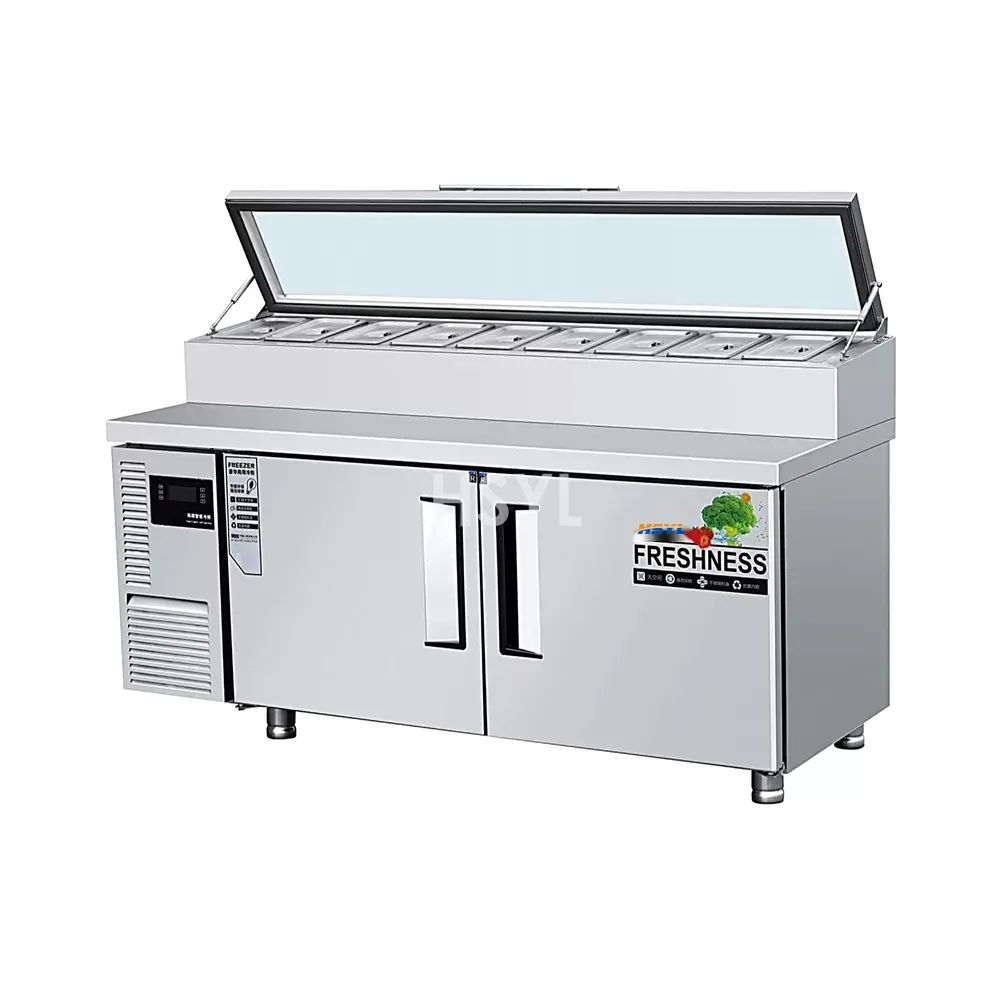
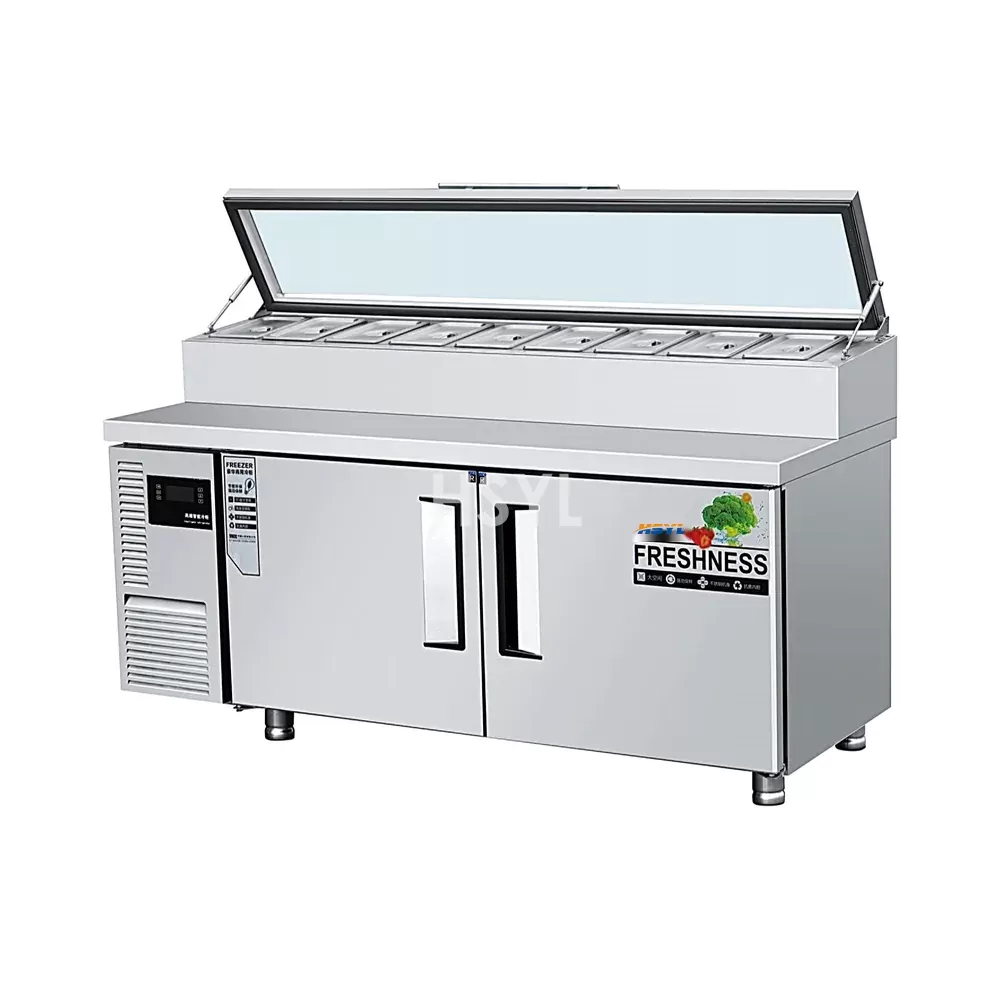
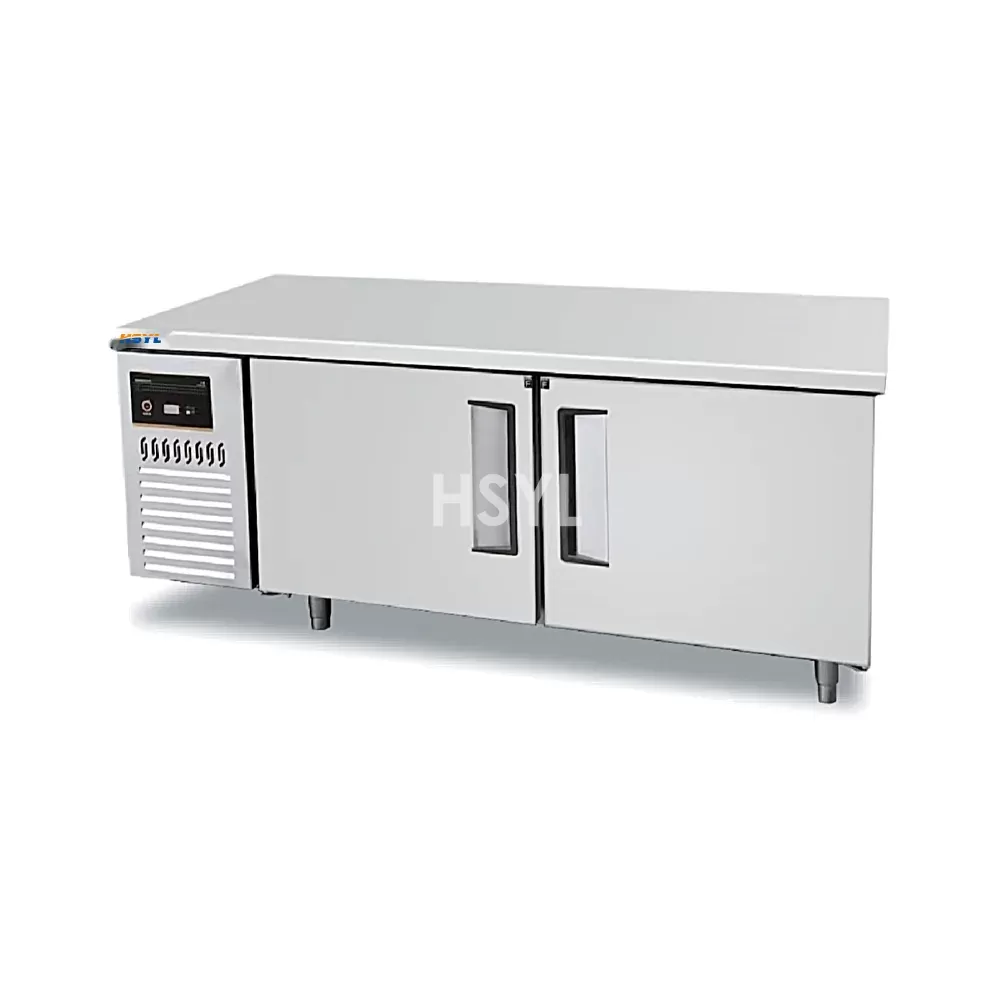
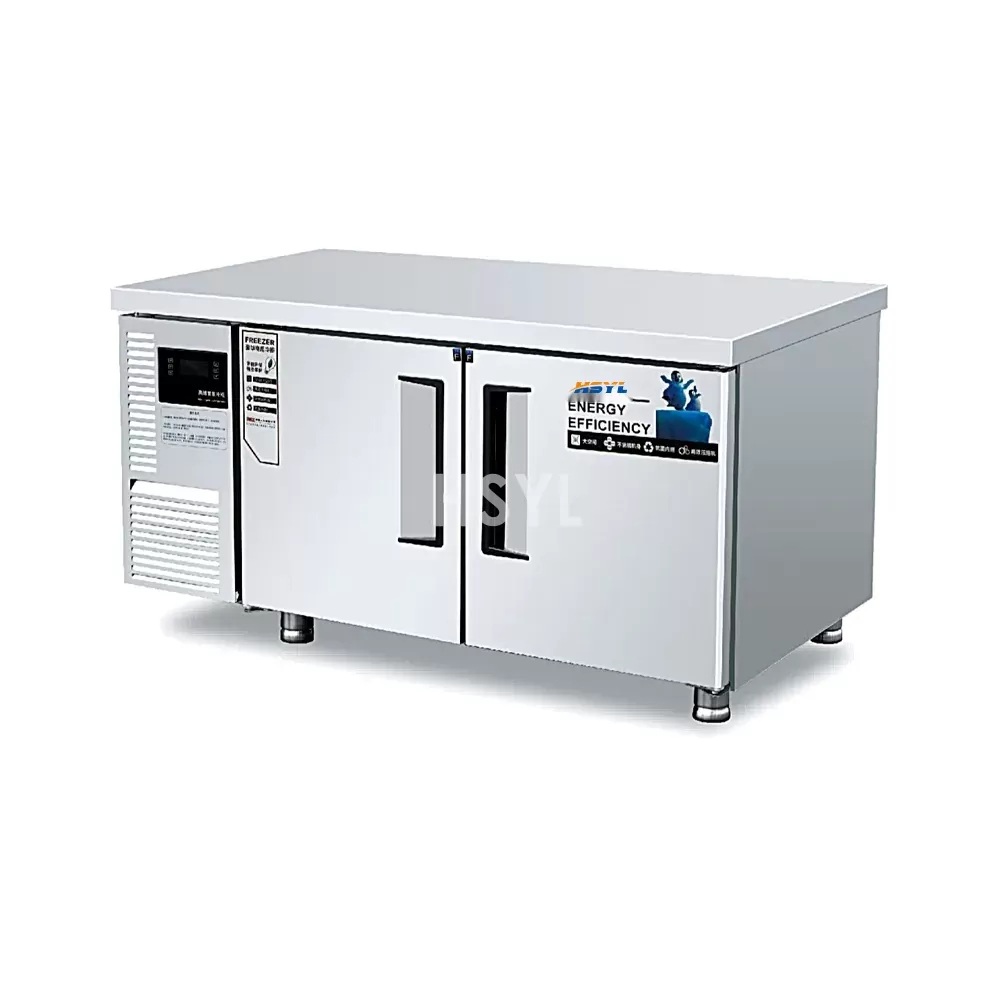
HSYL supplies commercial refrigeration equipment as part of its broader kitchen equipment integration model — providing upright reach-in cabinets, undercounter units, pass-through refrigerators, walk-in cold rooms, blast chillers, and temperature-monitoring systems. Refrigeration equipment is specified, sourced, and integrated as part of the full kitchen solution, with single-point accountability for the cold-storage system's performance within the overall kitchen. For company details, see the about HSYL page. For the cold-storage equipment solution, see the commercial fridge freezer solution.
Information Needed to Start a Supplier Evaluation
To begin evaluating commercial refrigerator suppliers, assemble:
- Refrigeration equipment types and quantities required: reach-in, undercounter, pass-through, walk-in, blast chiller, display;
- Temperature requirements: refrigerator (0–4°C), freezer (−18 to −22°C), or both;
- Kitchen ambient temperature range at installation locations;
- Dominant container format: GN pans, sheet trays, bulk bins, or mixed;
- Temperature-monitoring and HACCP logging requirements;
- Destination country and applicable regulations — refrigerant, energy labelling, electrical, food safety;
- Spare-parts and service expectations — in-country stocking required or factory shipment acceptable;
- Project timeline and budget envelope.