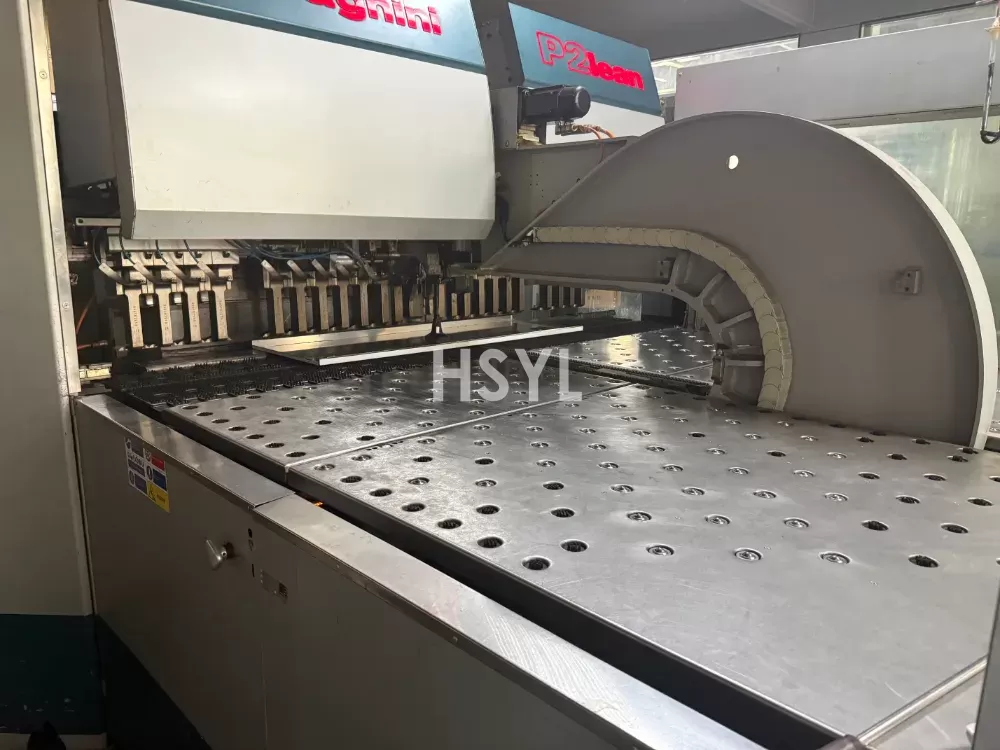
Equipment Know-How
How Automated Bending Equipment Improves Commercial Kitchen Equipment Manufacturing
Learn how automated bending equipment improves precision, consistency, productio...
Read more →End-to-end design, manufacturing, and delivery—empowering you to achieve efficient, compliant, and highly profitable production in any global market.
The commercial ovens solution covers the selection, configuration, integration, and project engineering of commercial ovens as the cooking-stage core of a foodservice or food processing operation. It addresses the full thermal-processing stage — from product loading, through controlled heat application, to discharge into cooling, freezing, slicing, or packaging — rather than treating an oven as a standalone appliance.
The solution is built around four operational questions that determine every later decision: what product must be processed, what throughput is required per hour or per shift, how the oven connects to upstream and downstream equipment, and what utilities, ventilation, and hygiene constraints apply at the destination site. A correctly scoped solution therefore combines oven type selection, line integration, utility planning, hygienic design, and project implementation in a single engineering package.
This page is a solution brief for project owners, kitchen consultants, and plant engineers evaluating commercial oven projects across restaurants, bakeries, central kitchens, ready-meal plants, and snack or drying plants. For confirmed single-unit specifications, see the full-view electric oven; for continuous cooking applications, see the spiral oven. The solution can also be embedded into broader central kitchen equipment solutions or full food processing line solutions.
The commercial ovens solution applies to a wide range of raw materials and final products. The boundary of the solution must be defined at the start of every project:
A solution scoped for an artisan bakery cannot be transferred unchanged to a ready-meal plant, even if both use the word “oven.” Each project must define its raw-to-finished boundary before oven selection.
The processing flow below lists steps that may appear in a commercial oven solution. Only the steps that are actually relevant to the target product should be retained; unrelated steps must be removed during project scoping rather than left as placeholders.
The flow must not mix incompatible food processes. For example, a flow that includes retort sterilization cannot be presented as equivalent to baking; a flow that includes drying cannot be merged with high-moisture steaming without explicit humidity control. For a deeper technical reference on heat behavior and equipment checks in electric ovens, see the electric oven temperature control and equipment checks guide.
The table below lists equipment that may appear in a commercial oven solution. Standard items are typical for most projects; optional items apply only to specific products or automation levels.
| Process Stage | Recommended Equipment | Main Function | Capacity Basis | Standard / Optional | Key Customization Input |
|---|---|---|---|---|---|
| Preparation | Mixer, depositor, or forming machine | Standardize product before oven | kg/h or pieces/h | Standard for bakery and ready-meal lines | Product geometry, batch size |
| Proofing | Proofing cabinet or chamber | Condition dough before baking | Trays per cycle | Optional, bakery only | Temperature, humidity, residence time |
| Loading | Tray loader, trolley, or belt feeder | Feed product into oven | Trays or pieces per minute | Optional — manual at low capacity | Automation level, product dimensions |
| Baking / cooking | Convection, combi, deck, spiral, or tunnel oven | Apply controlled heat | kg/h, trays/h, or pieces/h | Standard | Heat source, zones, steam, belt type |
| Steam or humidity control | Steam generator or humidifier | Control crust, drying, or surface moisture | kg steam/h | Optional — depends on product | Humidity range, injection capacity |
| Cooling | Cooling tunnel or ambient cooling belt | Reduce product temperature before packing | kg/h or pieces/h | Standard for continuous lines | Residence time, ambient conditions |
| Freezing | Spiral or tunnel freezer | Stabilize frozen products | kg/h | Optional — frozen products only | Target core temperature |
| Slicing or portioning | Slicer or portioning machine | Convert baked product to finished format | pieces/min | Optional — depends on product | Cut pattern, product temperature |
| Packaging | Flow-wrap, tray sealer, or carton packer | Protect and label finished product | packs/min | Standard for processing plants | Package type, shelf life |
| Cleaning | CIP or rinse-down system | Sanitize contact surfaces between runs | Cycle time | Optional — depends on product risk | Allergen control, soil load |
Equipment listed as optional must not be presented as standard in a commercial proposal. For related commercial cooking equipment that may share utilities or layout with the oven stage, see the cooking and frying equipment catalog.
Capacity must be defined per project because nominal machine capacity rarely equals usable line output. A commercial oven solution should explain the following capacity variables explicitly:
Where project data is not yet available, capacity must be expressed as {{CAPACITY}} placeholders or as influencing-factor ranges. Nominal capacity figures must not be quoted as guaranteed production output. Automation options span manual loading, semi-automatic trolley handling, and fully automatic belt or robotic loading with multi-zone control.
A commercial oven solution must define material flow and access, not only equipment position. The layout should specify:
Layout drawings should be reviewed against actual site measurements before equipment is ordered. A layout that fits a CAD drawing may not fit a real building once column covers, door swings, exhaust routing, and floor slopes are accounted for.
Only confirmed utility values should be quoted in a final proposal. Where values are not yet confirmed, the solution must list the items that require calculation rather than fabricating numbers:
Utility demand depends on oven type, throughput, and product. A convection oven has different utility demand from a steam-injected combi or a continuous tunnel oven. The solution must present utility calculations tied to the actual configuration, not generic estimates copied from another project.
Hygienic design must be integrated into the solution, not added at the end. Relevant design factors include:
“Designed to comply with” a standard is not equivalent to certified compliance and must not be presented as such. For related kitchen-equipment selection logic that intersects oven hygiene, see the commercial kitchen equipment catalog.
Quality control points should be defined for the actual product. Common points in a commercial oven solution include:
A commercial oven solution affects labor in three areas:
Solutions should be evaluated on total labor cost per shift, not on machine price alone. A low-cost oven that requires additional cleaning labor or frequent component replacement can be more expensive over its operating life than a higher-specification unit. For related restaurant-kitchen labor and selection logic, see the cooking range 700 vs 900 series comparison.
Customization in a commercial oven solution is driven by product, throughput, and site constraints, not by feature lists. Common customization variables include:
Each customization variable may affect utility demand, footprint, delivery time, and certification path. Customization decisions should be documented in a project engineering file so that the impact on utilities, layout, and lead time is transparent.
A commercial oven solution is typically delivered through the following stages. Specific durations must not be promised without confirmed project data.
Where a stage is not applicable to a project, it should be removed from the implementation plan rather than left as a placeholder.
To prepare a technical proposal for a commercial oven solution, please provide:
Selecting the right commercial oven type is the single most consequential decision in the solution. Each oven type has a distinct operating principle, product envelope, throughput range, utility demand, and integration pattern. The table below summarizes the primary selection factors.
| Oven Type | Operating Principle | Typical Products | Throughput Range | Key Selection Driver | Typical Integration |
|---|---|---|---|---|---|
| Convection oven | Forced hot-air circulation | Pastries, cookies, bread, small roasts | Batch: 5–40 trays/cycle | Product variety within a single shift | Trolley or manual loading; ambient cooling |
| Combi oven | Convection + steam + combination modes | Roasted meats, vegetables, regenerated meals, delicate pastry | Batch: 6–40 trays/cycle | Multi-function requirement in limited floor space | Trolley loading; rapid cooling or blast chiller downstream |
| Deck oven | Radiant heat from deck plates, optionally with steam injection | Artisan bread, pizza, baguettes, ciabatta | Batch: 2–6 decks, 2–12 trays per deck | Product requires radiant heat and stone/ceramic deck surface | Manual peel loading; ambient cooling |
| Spiral oven | Continuous belt system with single or double spiral configuration | Breaded poultry, meat patties, snacks, baked goods | Continuous: {{SPIRAL_CAPACITY}} kg/h (belt-width-dependent) | High-volume continuous cooking with controlled residence time | Inline upstream and downstream conveyors; integrated cooling or freezing |
| Tunnel oven | Continuous belt through multi-zone baking chamber | Cookies, crackers, pizza bases, bread rolls, biscuits | Continuous: {{TUNNEL_CAPACITY}} kg/h (belt-width-and-length-dependent) | High-volume baking with independent zone temperature and humidity control | Inline forming, baking, cooling; often the line core |
| Rack oven / rotary oven | Rotating rack within a heated chamber with even air distribution | Bread, pastries, muffins, croissants | Batch: 1 rack, 18–36 trays/cycle | Medium-volume bakery with even bake requirement across rack positions | Trolley loading; ambient or forced cooling |
Selection must be validated against actual product trials, not catalog specifications alone. An oven that performs well with one product formulation may fail with a different moisture content, fat level, or piece weight. Buyers should request product trials or reference installations before finalizing oven type selection. For deeper guidance on equipment evaluation for central kitchens, see the central kitchen equipment selection guide; for automation sequencing decisions that may affect which oven stage is automated first, see the central kitchen automation upgrade guide.
International certifications including GMP, FDA, CE, and HACCP ensure your products succeed worldwide.
Average payback period of 18 months, 25% lower energy consumption, and 300% higher production capacity.
End-to-end support—from feasibility studies to after-sales maintenance—so you can focus on your core business.
Why choose us? Three core pillars ensure maximum return on your investment.
Fully customized design from the ground up, strictly compliant with the highest global standards (GMP, FDA, CE), ensuring a perfect fit for your unique requirements—ideal for high-standard markets such as Europe and the Middle East.
One-stop service covering feasibility studies, equipment manufacturing, system integration, installation, commissioning, and operator training—simplifying even the most complex projects. Especially suited for fast-growing markets in Southeast Asia.
Our systems feature rapid changeover capabilities and energy-efficient design, enabling you to adapt effortlessly to market shifts while minimizing operational costs and maximizing ROI.
From individual equipment to complete production lines, our products cover every aspect of food processing, ensuring that your turnkey projects have the most reliable technological foundation.
Global certifications including CE, FDA, and GMP
Tailored solutions based on your specific needs
From installation and commissioning to after-sales support
Green manufacturing to reduce operational costs
Covering 12 core industries, each solution has been validated through practical experience and tailored to your specific needs

Professional meat processing equipment solutions. Automated lines for sausage, h...
View
Industrial fruit and vegetable processing Solutions. Turnkey solutions for washi...
View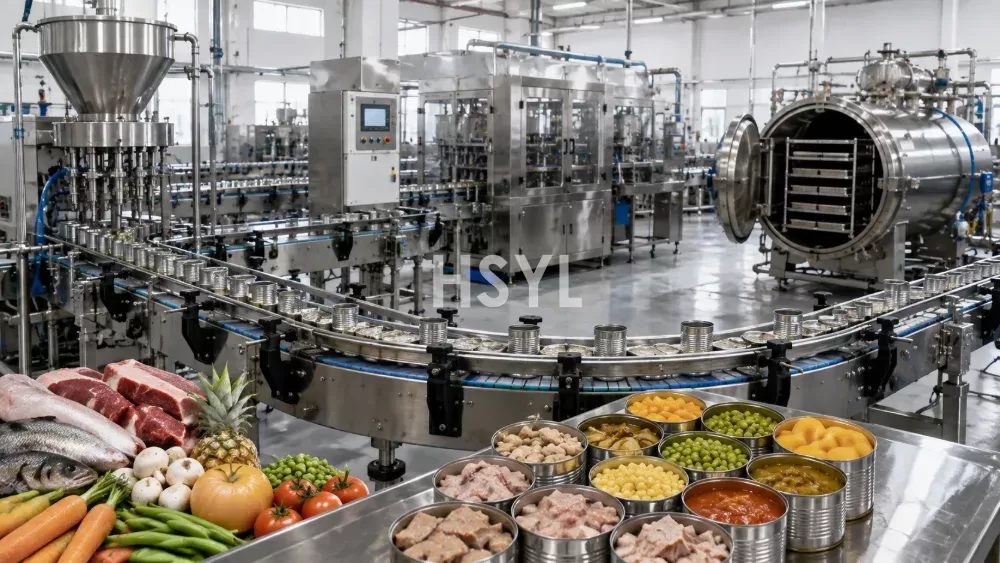
Canned food production line manufacturer for fish, meat, fruit and vegetable can...
ViewBacked by real-world case studies, showcasing our successful experience across industries and regions.
Latest technological trends and professional insights
Learn how automated bending equipment improves precision, consistency, productio...
Read more →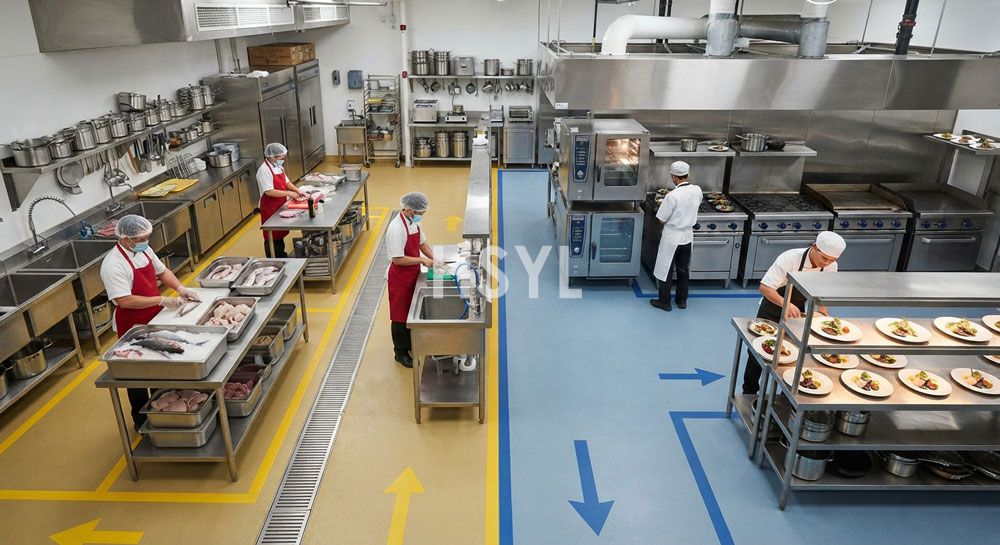
Why commercial kitchens need separate clean and dirty flow design: food safety r...
Read more →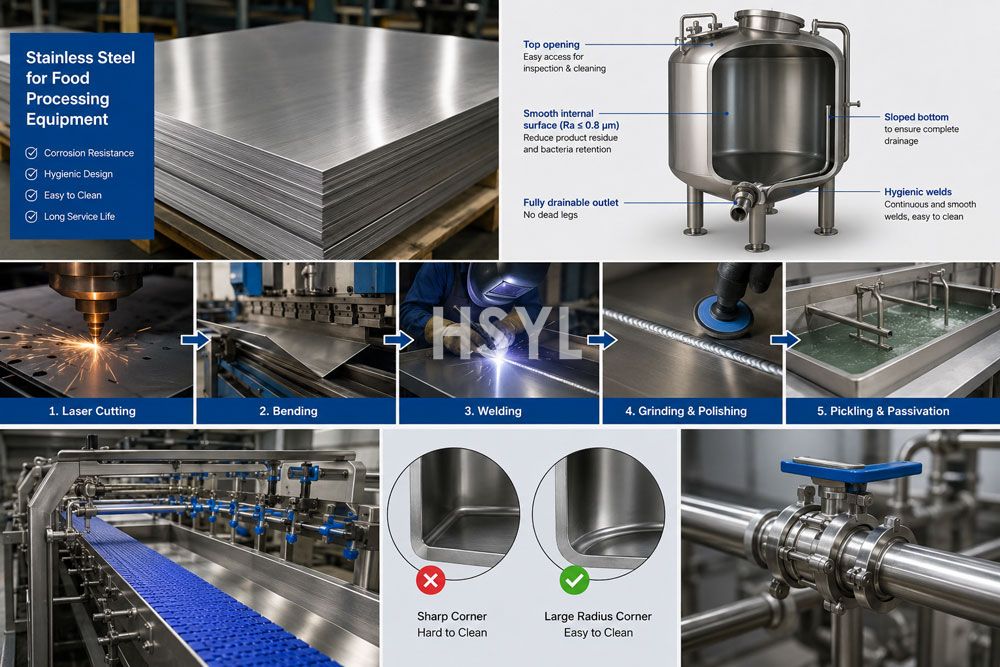
Stainless steel is the standard material for industrial food processing equipmen...
Read more →
Most commercial kitchen layout problems trace back to a single planning failure:...
Read more →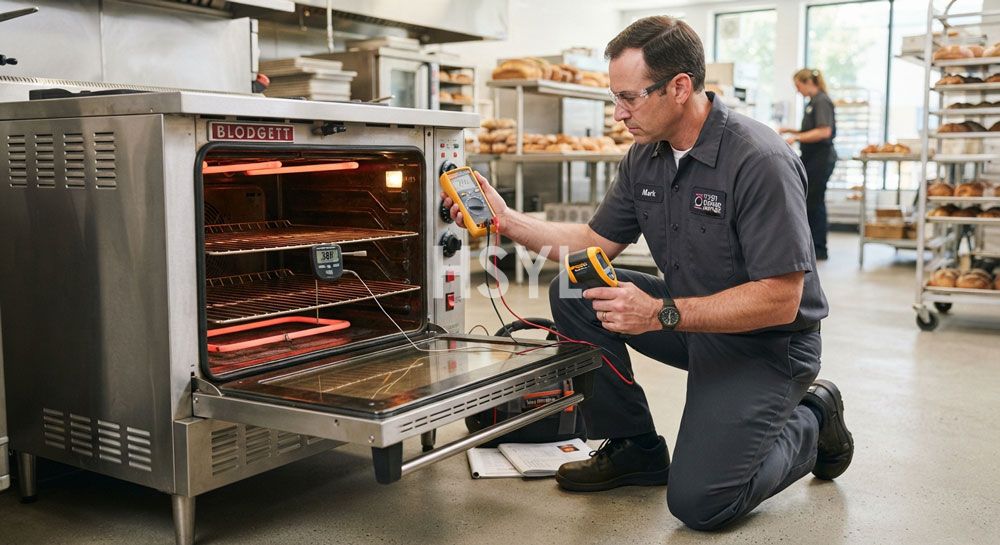
The croissants came out of the oven at 7:42 on a Tuesday morning with bottoms ba...
Read more →
Stainless steel is the default material for commercial kitchen equipment, but no...
Read more →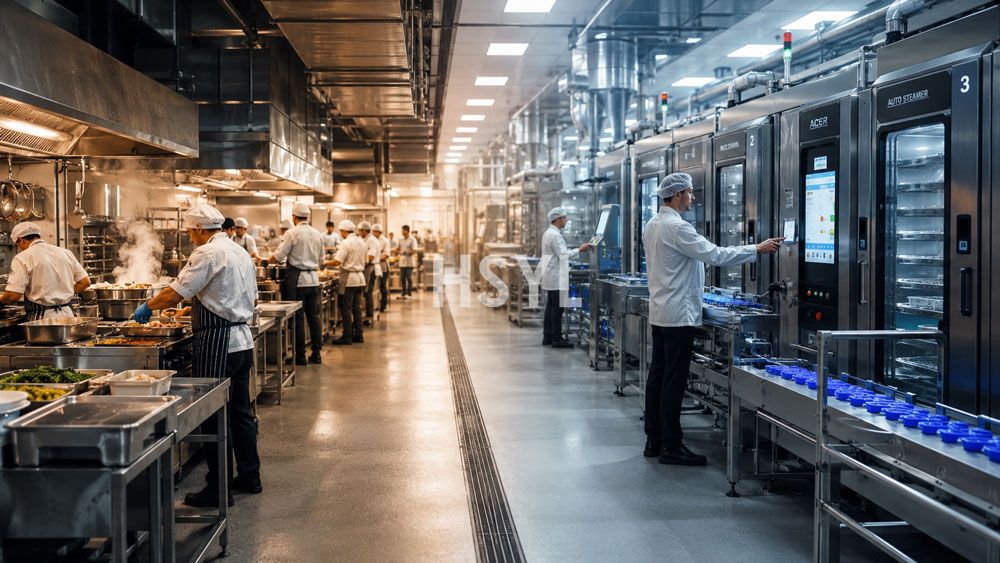
Central kitchen operators rarely question whether to automate — the question is ...
Read more →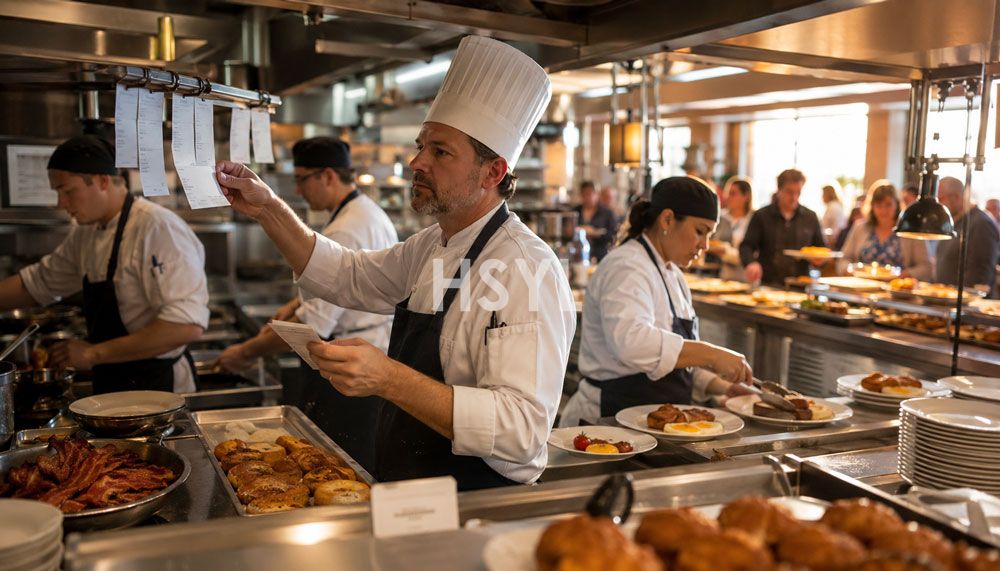
Hotel breakfast service is one of the most demanding operational windows in comm...
Read more →Our professional team will provide you with the optimal food processing equipment solution. Contact us today for a detailed consultation.