

Market & Trends
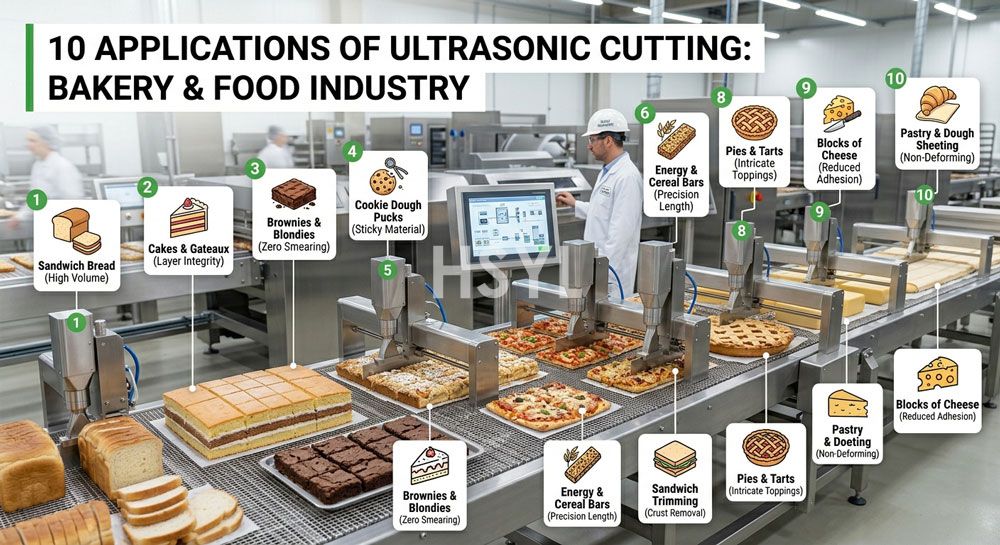
10 Applications of Ultrasonic Cutting in Food Industry
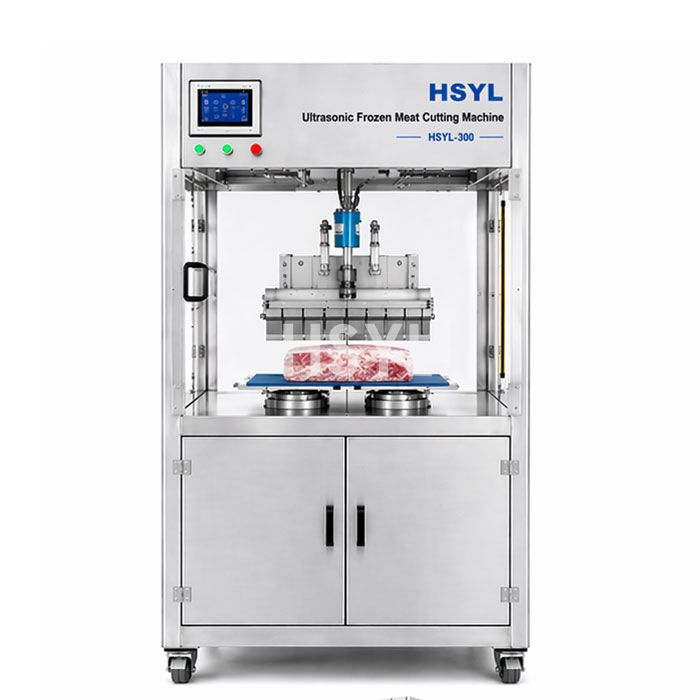
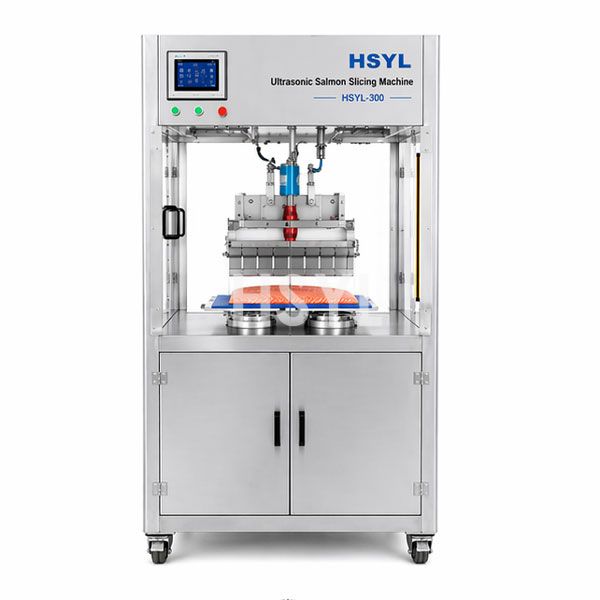
10 food applications of ultrasonic cutting: cheesecake, frozen meat, salmon, ene...
Read more →End-to-end design, manufacturing, and delivery—empowering you to achieve efficient, compliant, and highly profitable production in any global market.
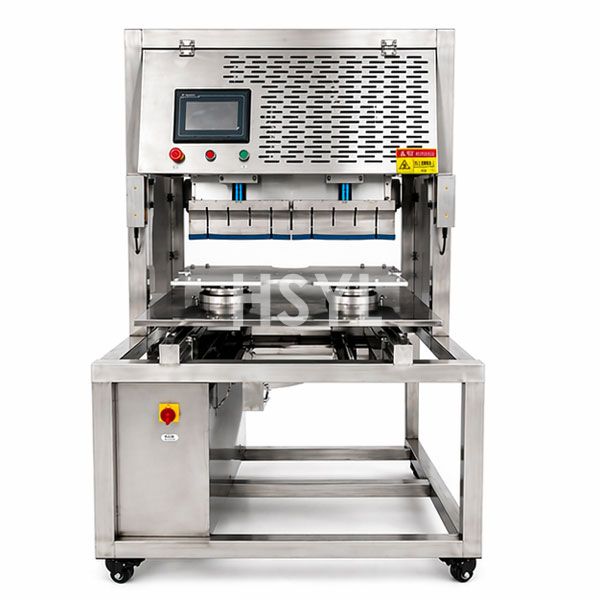
A high production ultrasonic cake cutting machine combines ultrasonic blade vibration with controlled positioning to portion cakes for commercial bakery production. Equipment selection should address both the appearance of each portion and the output that can be maintained throughout a production run.
Applications to evaluate include sheet cakes for individually packed portions, layered cakes, brownies and round cakes divided into wedges. Product height, filling consistency, coatings and temperature determine the appropriate cutting configuration.
Ultrasonic vibration can reduce cutting force and blade adhesion, helping limit compressed layers and dragged fillings. Confirm the result on representative products at the intended production speed.
High production capacity depends on the complete operating cycle: feeding the cake, locating it, completing the cutting pattern and transferring the portions to the next operation.
| Performance Measure | What to Confirm |
|---|---|
| Cutting cycle rate | Blade cycles under the specified product and motion settings |
| Finished portion output | Acceptable portions produced per hour, including normal handling and routine stops |
| Portion dimensions | Length, width, height or wedge geometry checked against the agreed drawing |
| Portion weight | Weight distribution measured separately from dimensional accuracy |
| Shift output | Expected production after scheduled cleaning, product changes and other planned downtime |
For a timed trial, calculate hourly output by dividing the number of acceptable portions by the elapsed minutes and multiplying by 60. Record the product, cutting pattern, staffing and stops so the result can be reproduced.
A machine processing a simple rectangular pattern may achieve a different output when cutting taller cakes, smaller portions or products requiring more positioning movements.
A fast cutting cycle is useful only when cakes arrive consistently and finished portions can leave the station without damage.
Review cake spacing, conveyor height, tray or board handling and the method used to separate cut portions. Where packaging requires individual pieces, include the equipment or manual work needed to establish the correct spacing and orientation.
Agree how the cutting station responds to an empty infeed or a stopped packaging machine. Assess any buffer area against the product’s permitted handling time and temperature conditions.
Projects involving several cutting stages can also review the ultrasonic cutting production line.
Inspect samples throughout the trial rather than relying only on the first cake. Check for filling smears, coating damage, compressed layers, incomplete separation and product movement during transfer.
For weight-sensitive portions, record cake thickness, total cake weight and filling distribution. Consistent cutting geometry helps control portion size, but dimensional accuracy alone does not establish a weight tolerance.
Select trial products that represent normal production variation, including the tallest cake, the stickiest filling and the most demanding coating or inclusion.
Confirm the adjustments needed when changing cake dimensions or portion patterns. Depending on the configuration, changeover may involve recipe selection, guides, supports, blades or product orientation.
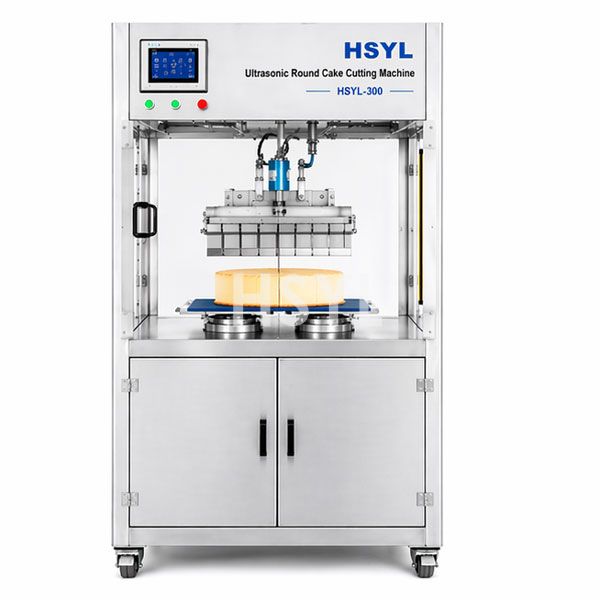
For dedicated radial portioning, review the ultrasonic round cake cutting machine.
Cleaning access and component protection should be specified with the machine configuration. Reduced sticking does not remove the need to clean blades and food-contact surfaces. Confirm permitted detergents, water exposure and cleaning methods for each assembly.
Send HSYL your cake dimensions, product photographs, cutting temperature, portion drawing and required daily output. Include shift length, product mix, feeding method and packaging requirements.
Use these details to define the equipment configuration, representative trial products, acceptance criteria and installation scope.
International certifications including GMP, FDA, CE, and HACCP ensure your products succeed worldwide.
Average payback period of 18 months, 25% lower energy consumption, and 300% higher production capacity.
End-to-end support—from feasibility studies to after-sales maintenance—so you can focus on your core business.
Why choose us? Three core pillars ensure maximum return on your investment.
Fully customized design from the ground up, strictly compliant with the highest global standards (GMP, FDA, CE), ensuring a perfect fit for your unique requirements—ideal for high-standard markets such as Europe and the Middle East.
One-stop service covering feasibility studies, equipment manufacturing, system integration, installation, commissioning, and operator training—simplifying even the most complex projects. Especially suited for fast-growing markets in Southeast Asia.
Our systems feature rapid changeover capabilities and energy-efficient design, enabling you to adapt effortlessly to market shifts while minimizing operational costs and maximizing ROI.
From individual equipment to complete production lines, our products cover every aspect of food processing, ensuring that your turnkey projects have the most reliable technological foundation.
Global certifications including CE, FDA, and GMP
Tailored solutions based on your specific needs
From installation and commissioning to after-sales support
Green manufacturing to reduce operational costs
Covering 12 core industries, each solution has been validated through practical experience and tailored to your specific needs

Advanced seafood processing lines for fish, shrimp, and crab. Includes grading, ...
View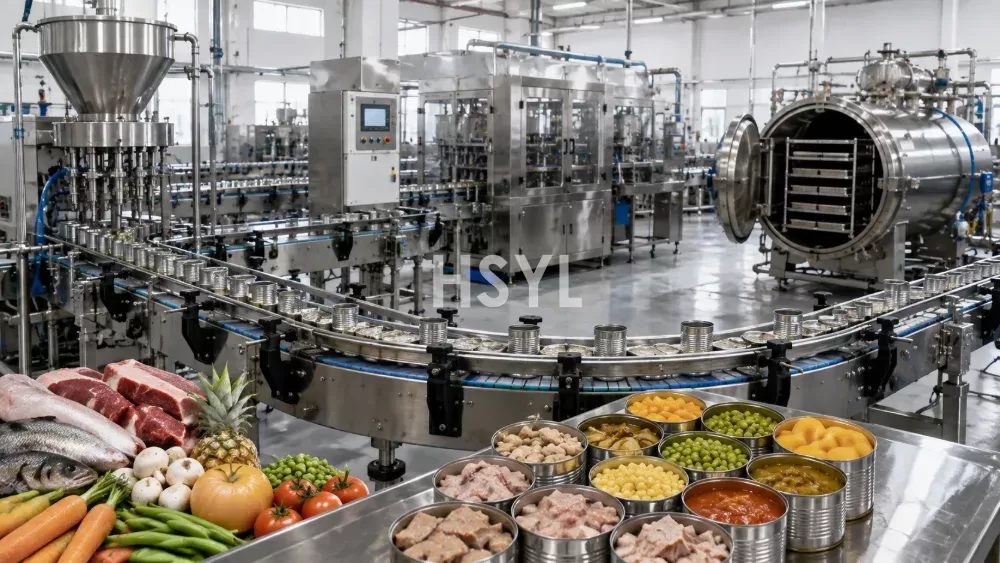
Canned food production line manufacturer for fish, meat, fruit and vegetable can...
View
Industrial processing lines for tomato paste, chili sauce, and mayonnaise. High-...
View
Professional meat processing equipment solutions. Automated lines for sausage, h...
ViewBacked by real-world case studies, showcasing our successful experience across industries and regions.
Latest technological trends and professional insights
10 food applications of ultrasonic cutting: cheesecake, frozen meat, salmon, ene...
Read more →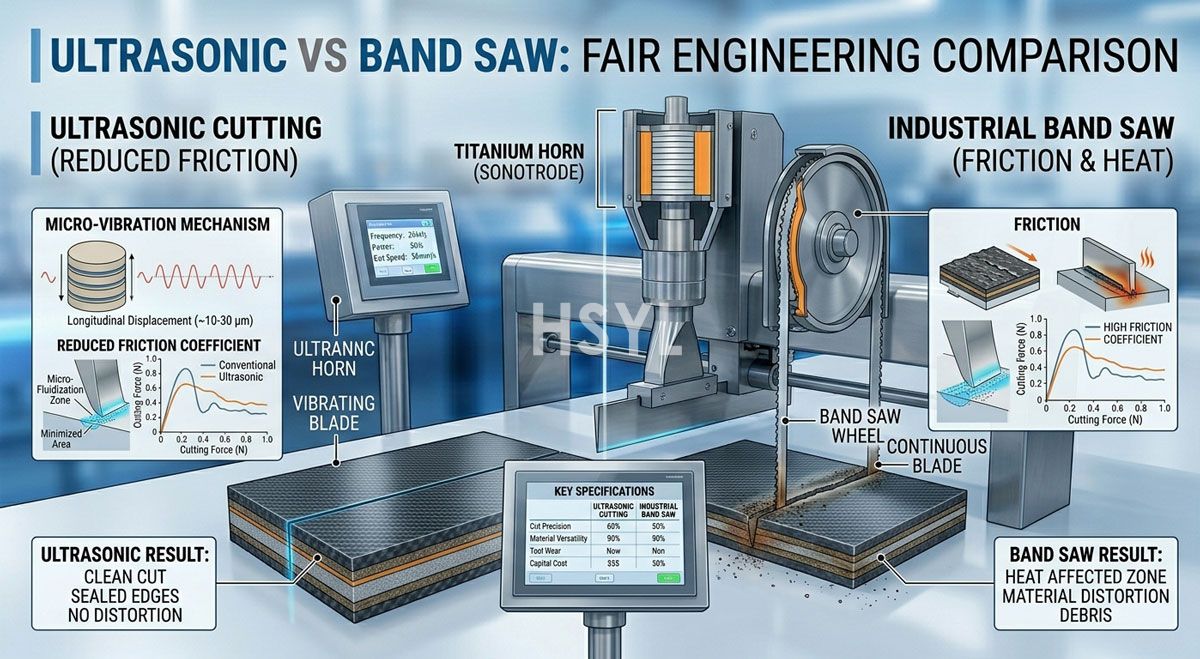
Ultrasonic vs band saw cutting: yield, blade life, capital cost, product quality...
Read more →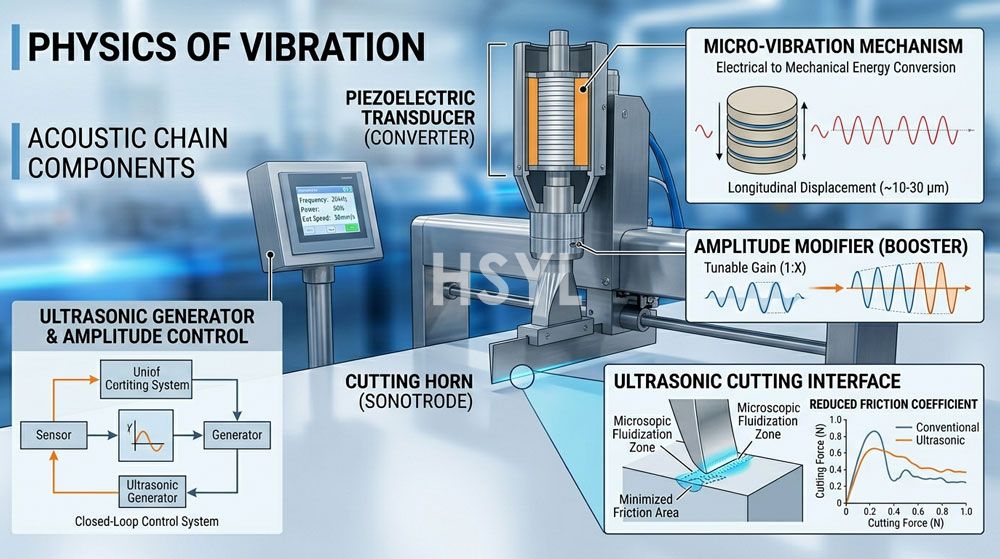
How ultrasonic cutting works: piezoelectric crystals, resonance, blade-edge cavi...
Read more →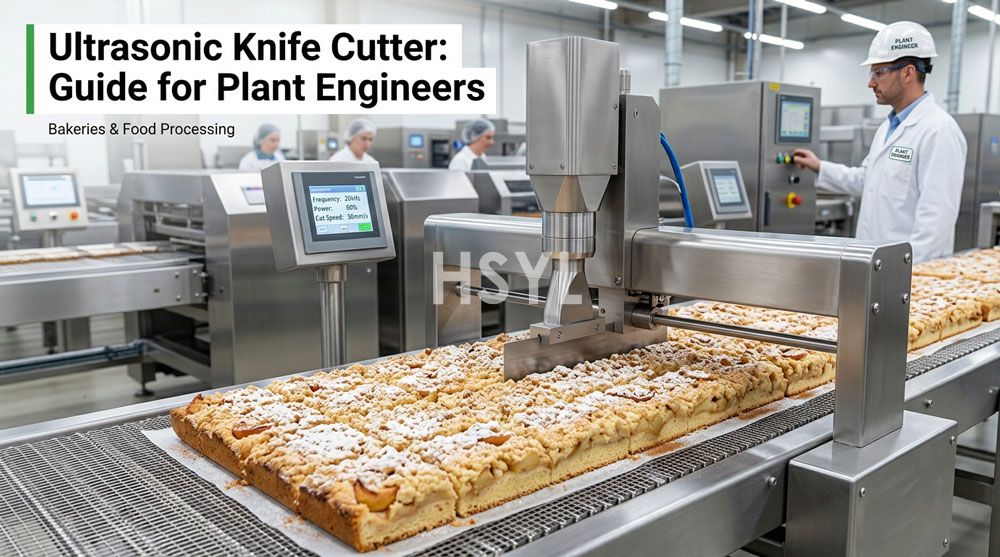
The ultrasonic knife cutter is not a single technology. It is a system composed ...
Read more →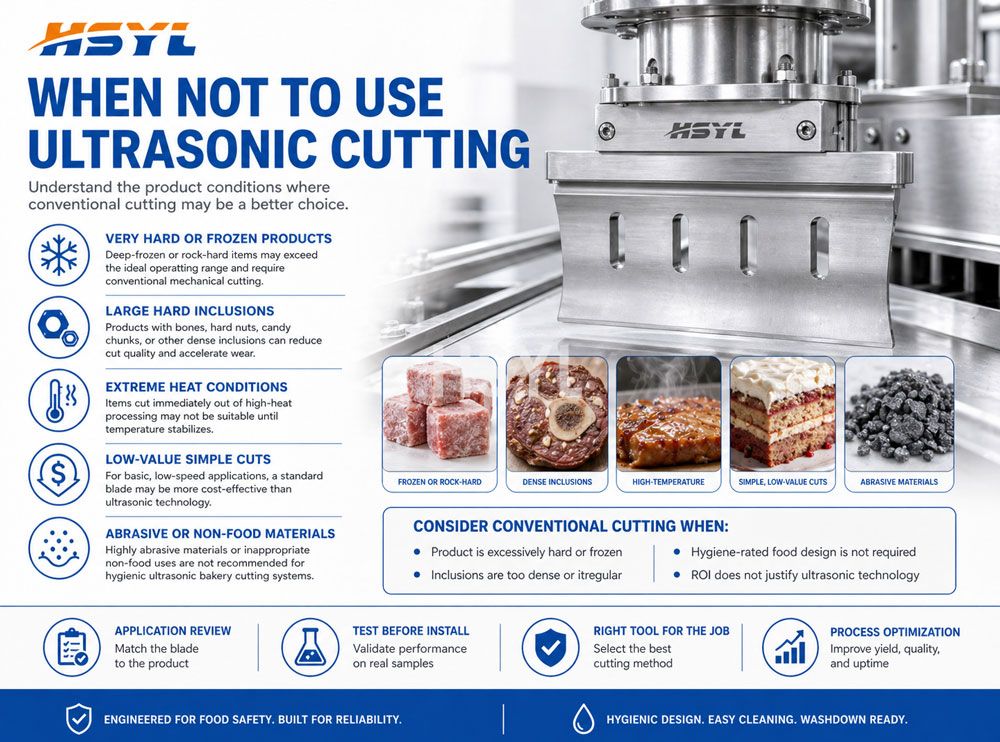
Ultrasonic technology operates by vibrating a titanium sonotrode between 20kHz a...
Read more →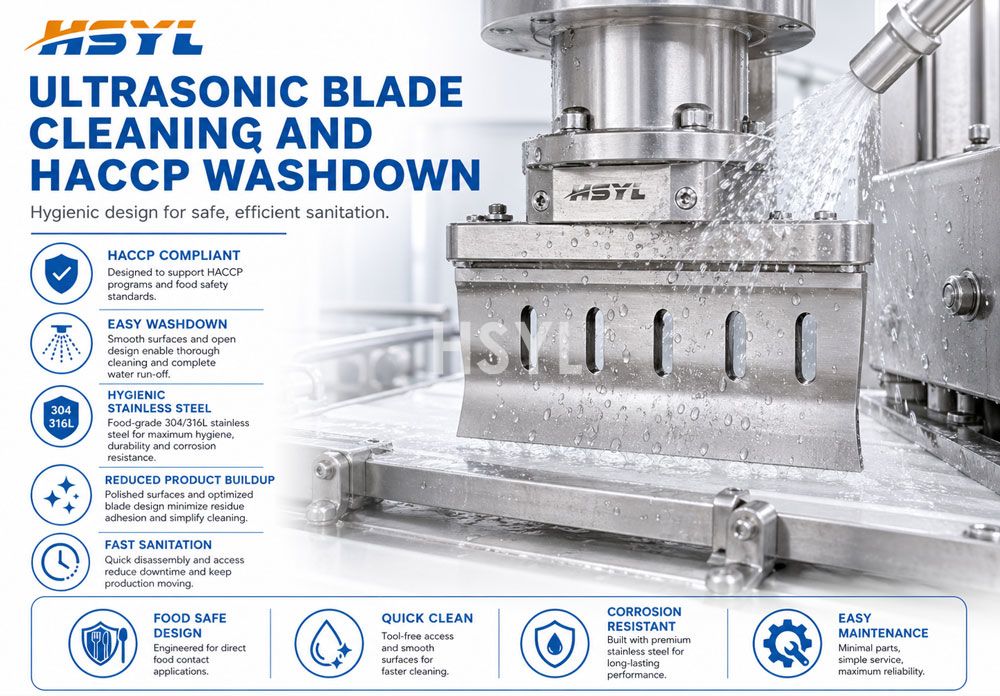
Engineer's guide to ultrasonic blade washdown procedures. Analyze sanitation con...
Read more →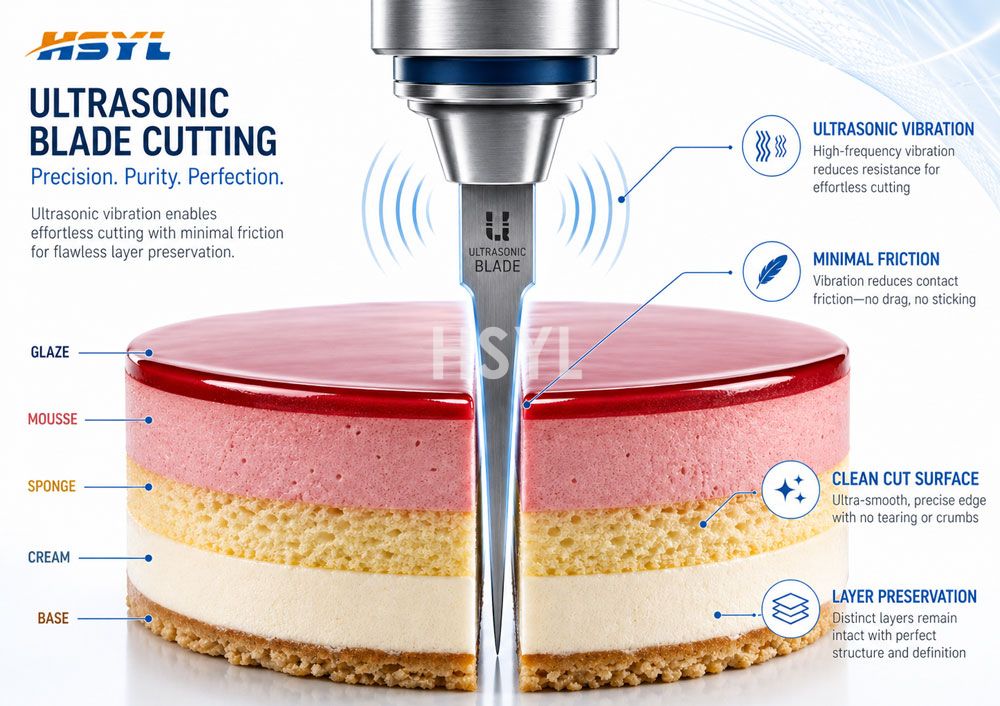
Calculate the true ROI of ultrasonic cutting equipment in industrial bakery line...
Read more →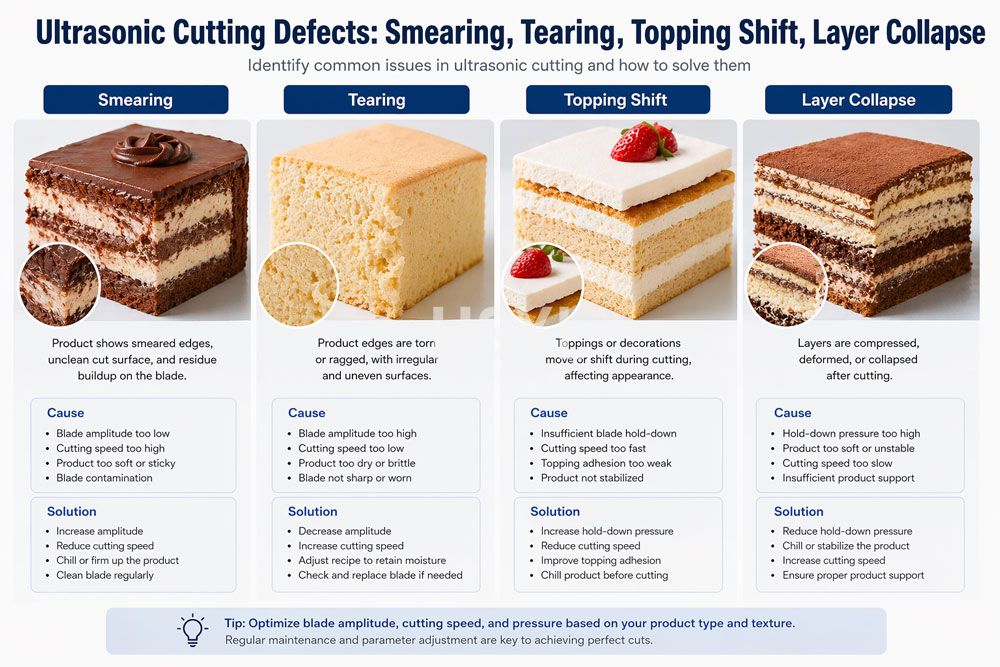
Engineering deep-dive into ultrasonic cutting defects: smearing, tearing, and la...
Read more →Our professional team will provide you with the optimal food processing equipment solution. Contact us today for a detailed consultation.