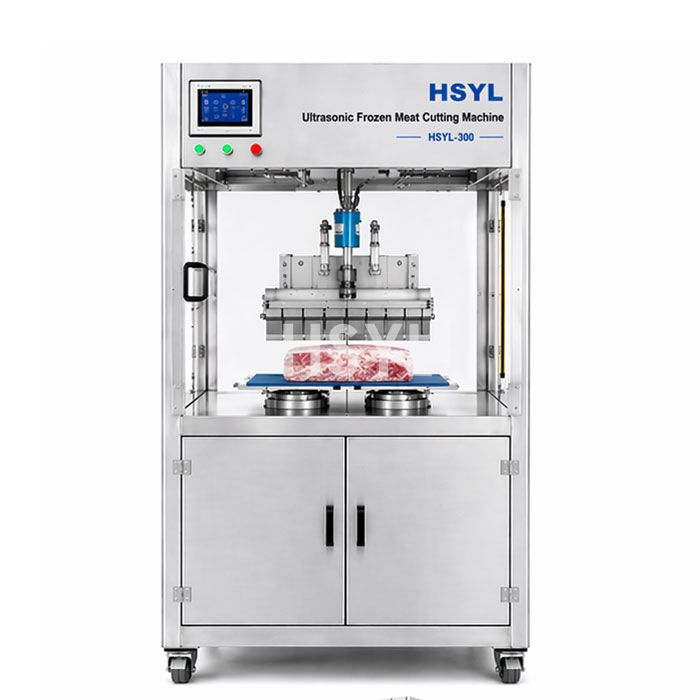
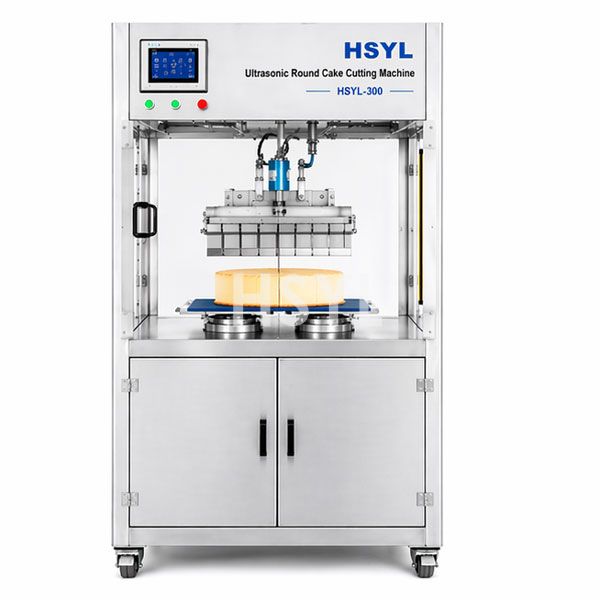
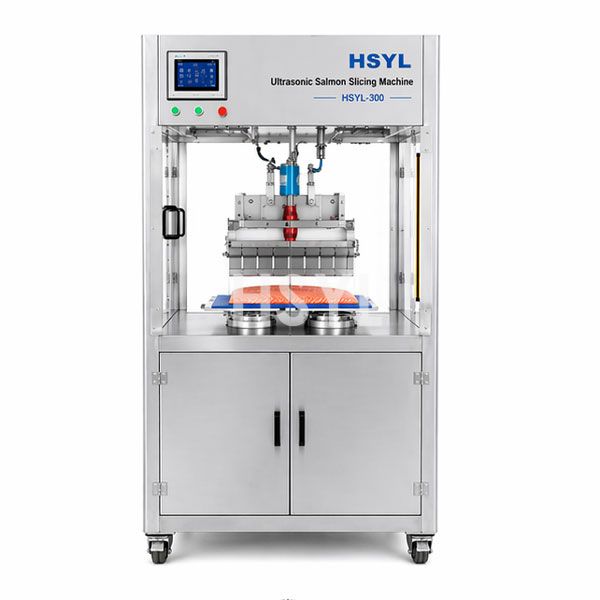
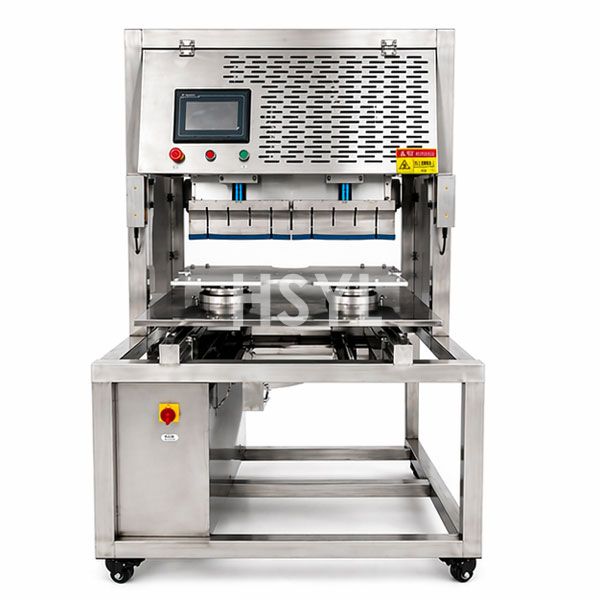
Bakery Ultrasonic Automatic Candy Cutting Machine Factory

End-to-end design, manufacturing, and delivery—empowering you to achieve efficient, compliant, and highly profitable production in any global market.

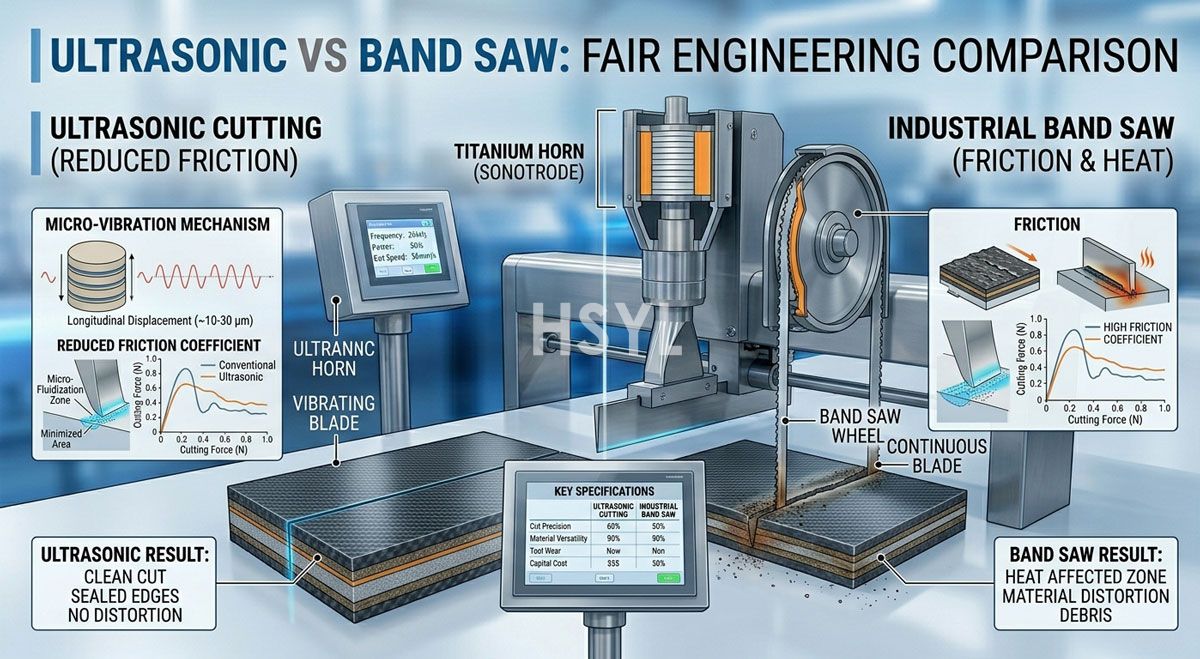
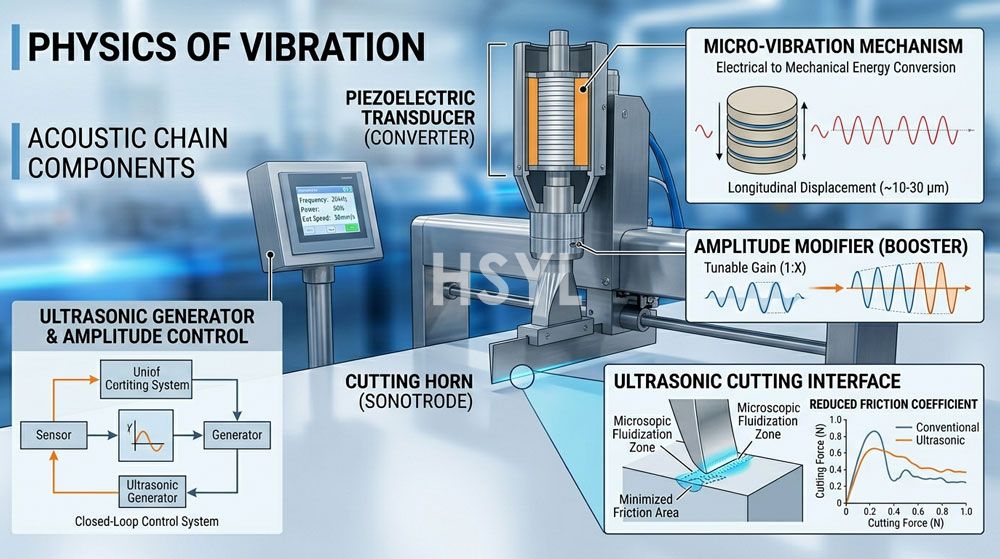
Sugar adhesion is the primary yield and throughput killer in confectionery portioning. When a conventional stainless blade contacts glucose-heavy nougat at 22°C or a caramel slab at ambient temperature, the surface tension of the inverted sugar matrix causes the product to bond to the blade edge within seconds. Each subsequent cut drags rather than slices, deforming portion geometry, pulling surface coatings, and depositing residue that hardens into abrasive crystalline deposits within minutes. HSYL's automatic ultrasonic candy cutting machines eliminate this failure mechanism at the physics level — a piezoelectric transducer stack drives a titanium alloy blade at 20,000 to 40,000 vibration cycles per second, reducing the effective blade-product friction coefficient from a static µ of 0.45–0.65 down to a measured dynamic µ of 0.04–0.10 on glucose-based substrates.

Defeating Sugar Crystallization and Caramel Adhesion on High-Speed Confectionery Lines

The engineering challenge in candy portioning is not simply "stickiness" — it is the thermodynamic reality that sucrose and glucose syrups exist in a semi-crystalline, viscoelastic state at typical factory temperatures between 18°C and 28°C. At this state, they flow slowly under compression and bond aggressively to any metallic surface with micron-scale surface roughness. Conventional blades, even when water-misted, accumulate sugar within surface micro-scratches (Ra values of 4–12 µm are typical on production blades after 50 hours of service), and that accumulated sugar acts as both an adhesive and an abrasive, accelerating edge wear and increasing drag forces on subsequent cuts.

  • The ultrasonic blade horn is electropolished to a surface roughness of Ra below 0.4 µm, removing the microscopic anchor points where glucose chains initiate bonding.
  • The 60–120 µm vibration amplitude actively ejects sugar micro-deposits from the blade surface at each cut cycle, functioning as a continuous self-cleaning mechanism without requiring water or oil misting systems.
  • For chocolate-enrobed candy bars, the high-frequency vibration fractures the brittle chocolate shell along a controlled acoustic stress line before the blade contacts the interior filling — eliminating the shattering and corner chipping that plague conventional guillotine systems at cut speeds above 40 cuts/min.
  • Nougat blocks containing whole roasted nuts (almonds, hazelnuts) — a particularly abrasive cutting challenge — are portioned cleanly as the vibrating blade navigates the nut-matrix interface without the lateral deflection that causes portion-weight deviation on conventional equipment.

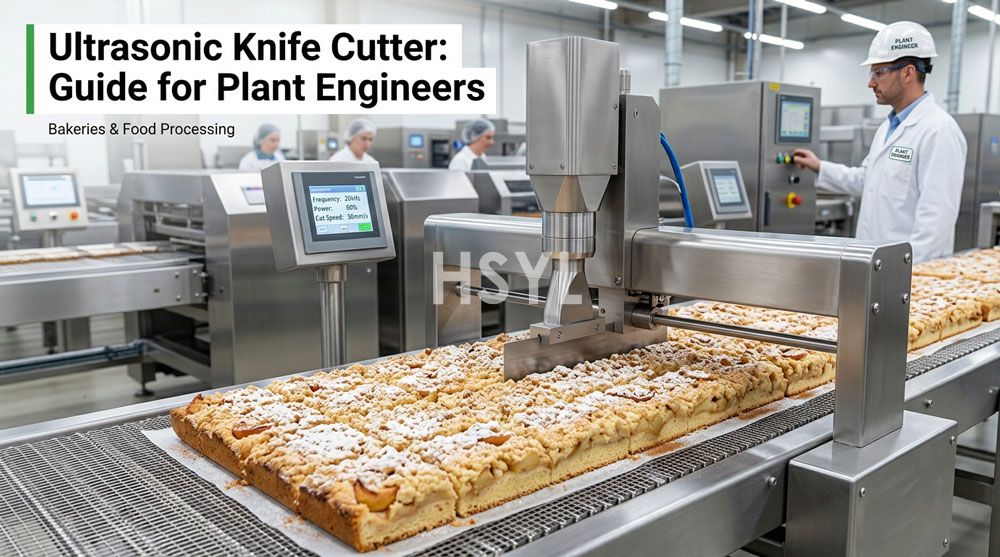
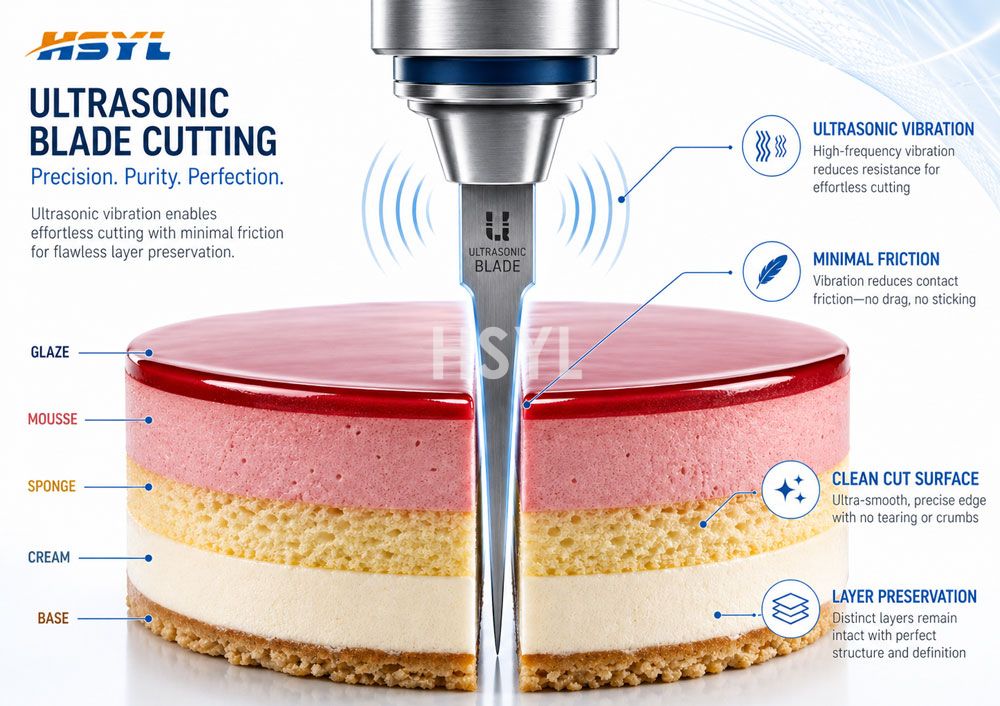
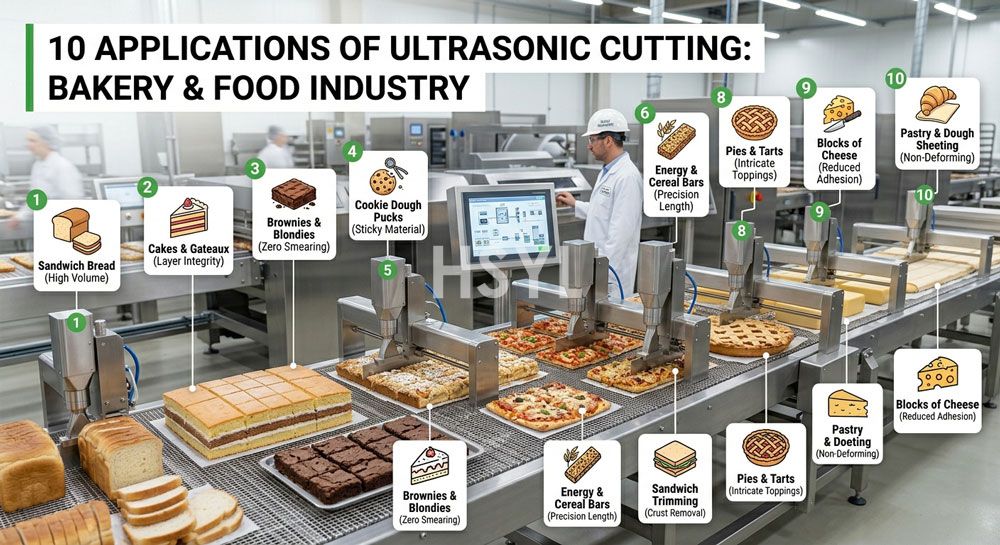
For bakery operations integrating this machine downstream of a automated cake production line, the ultrasonic cutter receives product at 6–10°C chilled temperature where cream and ganache layers are at their most structurally stable, and the acoustic cutting mechanism preserves layer definition that conventional wires collapse through compression.

Engineering Parameters for Confectionery and Bakery Cutting Applications

ParameterSpecification
Blade Vibration Frequency20 kHz / 28 kHz / 40 kHz (application-matched)
Blade Amplitude (Peak-to-Peak)60 – 120 µm (digitally adjustable via generator)
Acoustic Generator Power500 W – 1,500 W per transducer station
Servo Positioning Accuracy±0.1 mm across full cut width
Maximum Cut Frequency40 – 120 cuts/min (product-dependent)
Conveyor Infeed Width300 mm – 1,000 mm (custom configurations available)
Product Temperature Range-5°C to +35°C
Blade Contact MaterialTi-6Al-4V titanium alloy or SUS316L (electropolished Ra < 0.4 µm)
Control SystemSiemens S7 / Mitsubishi PLC, 7–10" HMI, up to 50 stored recipes
Hygiene RatingIP65 enclosures, tool-free blade removal in < 90 seconds, CE certified

Substrate Compatibility Across Confectionery and Bakery Product Families

  • Nougat and torrone blocks (glucose content 35–55%, nut inclusions) — most demanding adhesion scenario; 40 kHz frequency with 100–120 µm amplitude recommended
  • Soft caramel and toffee slabs (fat content 12–22%, processing temperature 20–26°C) — 20 kHz with misting-free dry cut at traversal speeds of 0.2–0.35 m/s
  • Chocolate-enrobed bars (shell thickness 1.5–4 mm) — 28 kHz fractures shell without chipping; interior ganache or praline cut simultaneously in single stroke
  • Hard candy and boiled sweet blocks (Brix 95–98, brittle crystalline state) — lower amplitude 60–80 µm prevents micro-fracture propagation beyond the cut plane
  • Fudge and marzipan (high sugar, plastic-flow rheology at 20°C) — self-cleaning vibration eliminates the blade fouling that occurs within 8–12 cuts on conventional equipment
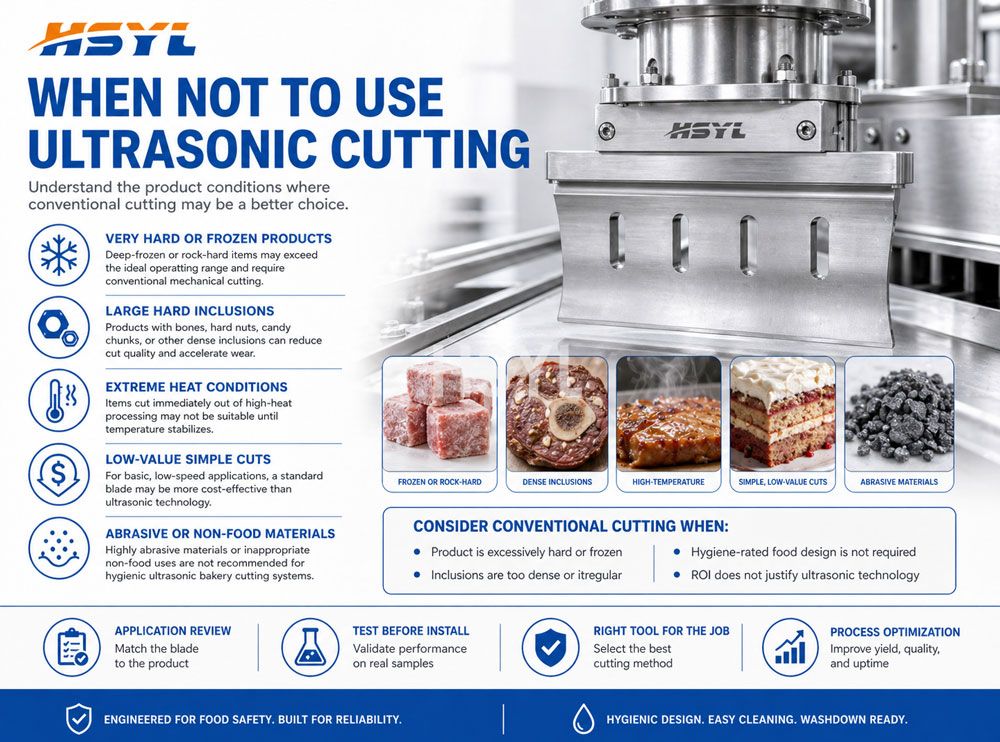
  • Multilayer cream cakes and Swiss rolls (chilled at 4–8°C) — acoustic mechanism preserves cream layer integrity; cut face Ra below 1.5 µm suitable for premium retail presentation

The servo-driven gantry stores individual cutting parameters for each substrate as named PLC recipes, allowing operators to switch between a nougat SKU and a chocolate bar SKU with a single HMI touchscreen selection — no physical blade adjustment or traversal speed recalibration required. For operations requiring fully integrated line solutions, the double-blade ultrasonic cake cutting machine demonstrates HSYL's multi-blade gantry architecture for high-throughput parallel portioning of bakery slabs.

Commercial Output Configurations and Factory ROI Benchmarks

  1. Retail-weight-compliant nougat and caramel bar portions (40–120 g declared weight) with mean over-weight give-away reduced from 3.2 g to under 0.6 g per piece through ±0.1 mm servo accuracy — recoverable raw material value of $18,000–$55,000 annually at typical confectionery ingredient costs.
  2. Chocolate-enrobed bar portioning at 80–100 cuts/min with zero shell shattering, eliminating the rework and downgrade losses that represent 4–8% of production volume on conventional guillotine lines.
  3. Clean-label bakery slice presentation — Ra below 1.5 µm cut surfaces on cream layer cross-sections that pass optical vision-check systems at rejection rates below 0.8%, suitable for premium retail modified-atmosphere packaging.
  4. Continuous production cycles of 10–14 hours between full blade cleaning events, compared to 15–30 minute forced cleaning intervals on conventional blades in high-glucose confectionery environments — recovering 2.5–4 hours of productive machine time per shift.
  5. Multi-SKU confectionery facility flexibility: single machine processes nougat, caramel, chocolate bar, and fudge product formats on the same line within a single shift, with recipe changeover time under 3 minutes via HMI touchscreen selection.

Why Do Global Leaders Choose Our HSYL Solutions?

Global Compliance

International certifications including GMP, FDA, CE, and HACCP ensure your products succeed worldwide.

Guaranteed ROI

Average payback period of 18 months, 25% lower energy consumption, and 300% higher production capacity.

Hassle-Free Service

End-to-end support—from feasibility studies to after-sales maintenance—so you can focus on your core business.

Beyond Equipment Supply: We Deliver Certainty and Future Profitability

Why choose us? Three core pillars ensure maximum return on your investment.

Engineering Excellence & Customization

Fully customized design from the ground up, strictly compliant with the highest global standards (GMP, FDA, CE), ensuring a perfect fit for your unique requirements—ideal for high-standard markets such as Europe and the Middle East.

End-to-End Turnkey Solutions

One-stop service covering feasibility studies, equipment manufacturing, system integration, installation, commissioning, and operator training—simplifying even the most complex projects. Especially suited for fast-growing markets in Southeast Asia.

Flexibility & High Energy Efficiency

Our systems feature rapid changeover capabilities and energy-efficient design, enabling you to adapt effortlessly to market shifts while minimizing operational costs and maximizing ROI.

Industry Solution Matrix

Covering 12 core industries, each solution has been validated through practical experience and tailored to your specific needs

Seasoning & Sauce Production Solutions

Seasoning & Sauce Production Solutions

Industrial processing lines for tomato paste, chili sauce, and mayonnaise. High-...

View
Snack Food Production Solutions

Snack Food Production Solutions

Complete snack food processing solutions. From puff snacks to fried chips. HSYL ...

View
Bakery & Cereal Production Solutions

Bakery & Cereal Production Solutions

Industrial bakery lines for bread, biscuits, and cakes. Also offering breakfast ...

View
Cosmetic Production Solutions

Cosmetic Production Solutions

Professional manufacturing equipment for cosmetics. Vacuum emulsifying mixers an...

View
Beverage & Beer Processing Solutions

Beverage & Beer Processing Solutions

Turnkey solutions for juice, water, and carbonated drinks. Complete craft beer b...

View
Pet Food Production Solutions

Pet Food Production Solutions

Industrial pet food processing Solutions. Twin-screw extruders for dry dog food,...

View
Meat Processing Solutions

Meat Processing Solutions

Professional meat processing equipment solutions. Automated lines for sausage, h...

View
Dairy Processing Solutions

Dairy Processing Solutions

Turnkey dairy processing solutions for milk, yogurt, and cheese. Sanitary stainl...

View

Proven Results: Successful Delivery of Key Projects Worldwide

Backed by real-world case studies, showcasing our successful experience across industries and regions.

View all 50+industry turnkey cases

Frequently Asked Questions

How does the ultrasonic blade prevent nougat and caramel from sticking without water or oil misting
The piezoelectric transducer drives the blade at 20,000 to 40,000 vibration cycles per second, creating a dynamic friction coefficient between 0.04 and 0.10 at the blade-sugar interface. At this frequency, glucose chains physically cannot bond to the blade surface long enough to accumulate, and the micro-vibratory energy continuously ejects any residual sugar deposit at each stroke. This self-cleaning effect allows dry cutting of high-glucose substrates like nougat and caramel without the water condensation or oil contamination that misting systems introduce into the product surface.
What blade material should I specify for cutting hard candy with high sugar crystallization abrasion
For hard candy and boiled sweets with Brix values above 90, the Ti-6Al-4V titanium alloy blade is the correct specification. Titanium alloy has a Vickers hardness of approximately 340 HV compared to 200 HV for standard austenitic stainless, providing significantly greater resistance to the micro-abrasion caused by sugar crystal contact. The blade is electropolished to Ra below 0.4 µm to eliminate surface anchor points where crystallization initiates.
Can the machine cut chocolate-enrobed candy bars without cracking or shattering the chocolate shell
Yes. At 28 kHz, the acoustic energy fractures the brittle chocolate shell along a controlled stress line ahead of the physical blade contact, preventing the lateral crack propagation that causes corner chipping on guillotine systems. The interior ganache, praline, or caramel filling is cut simultaneously in a single stroke, and cut face quality on the chocolate shell remains presentation-grade without manual trimming.
What is the cleaning protocol for sugar residue between production batches
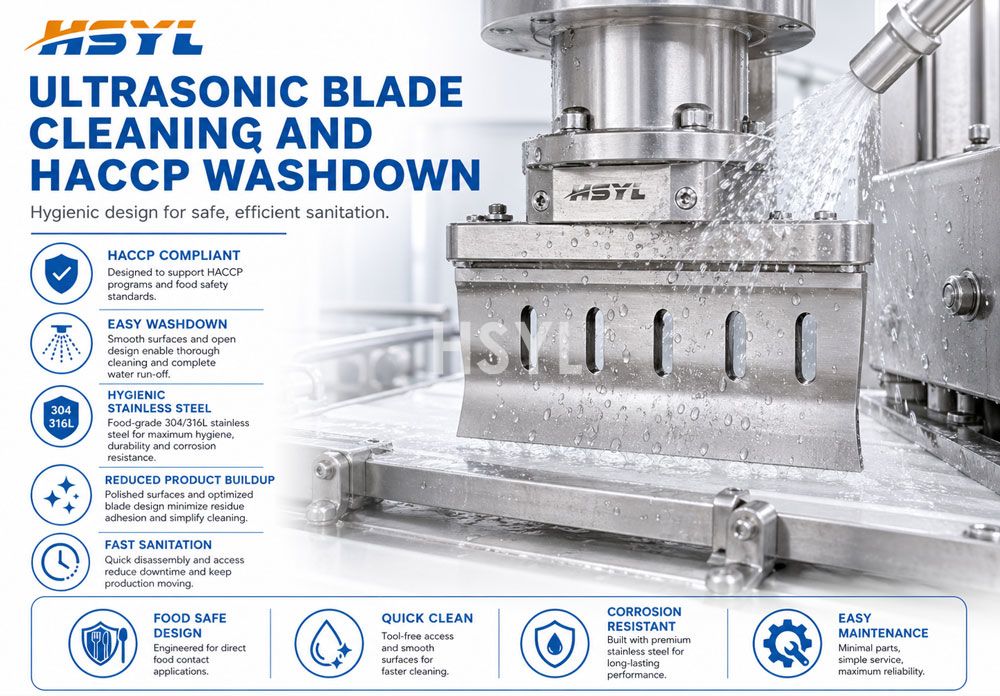
Because the self-cleaning vibration mechanism substantially reduces sugar accumulation, planned cleaning intervals extend to 10–14 hours of continuous production rather than the 15–30 minute forced stops required on conventional blades. When cleaning is required, tool-free blade removal takes under 90 seconds. The SUS316L or Ti-6Al-4V blade is fully CIP-compatible using hot water rinse at 65°C followed by food-grade sanitizer, achieving ATP bioluminescence counts below 10 RLU per 25 cm² on all food-contact surfaces.
How long does a titanium blade last in a high-glucose confectionery cutting application
Under two-shift continuous production on nougat or caramel substrates without abrasive inclusions, titanium blade service intervals of 1,500 to 2,500 operating hours between edge re-profiling are achieved in our validated factory installations. For products containing whole roasted nuts, service intervals of 600–1,000 hours are more typical due to nut-matrix abrasion. Re-profiling involves precision grinding the cutting edge back to the original 15-degree included angle and re-polishing to Ra below 0.4 µm.
Can portion weight accuracy meet retail chain declared-weight compliance requirements
The servo-driven gantry maintains positional repeatability of ±0.1 mm across the full cut width, reducing mean over-weight give-away from a typical 2.5–3.5 g on conventional mechanical systems to under 0.6 g per portion. For declared-weight confectionery products between 40 g and 200 g, this accuracy is sufficient to comply with EU Directive 76/211/EEC and equivalent retail chain weight tolerance specifications without requiring downstream checkweigher-triggered rejection feedback loops.
What generator power is required for cutting dense nut-loaded nougat versus soft caramel
Dense nougat blocks containing 30–40% by weight of whole almonds or hazelnuts require a generator output in the range of 1,000–1,500 W per transducer station to sustain consistent blade amplitude under the variable load presented by nut-matrix interfaces. Soft caramel and fudge substrates with lower mechanical resistance operate effectively at 500–800 W. HSYL's digital generator automatically adjusts output to maintain constant blade amplitude as load varies across a single cut, ensuring uniform cut quality from slab edge to center.

Industry Insights

Latest technological trends and professional insights

Need a Custom Solution?

Our professional team will provide you with the optimal food processing equipment solution. Contact us today for a detailed consultation.